


Overgrown grass and dull cutting edges can turn weekend property maintenance into a frustrating chore. Learning how to change riding lawn mower blades without removing deck allows tractor owners to swap out rounded or gouged cutting surfaces without unhooking deck hangers, PTO linkages, or draft rods. Taking time to service cutting edges on schedule restores clean grass shearing, minimizes engine strain, and prevents torn turf blades from browning in the summer heat. Familiarity with fundamental blade removal steps makes this seasonal task much more approachable.
Lifting the chassis safely and securing the cutting components creates enough room to work directly beneath the mowing pan. Specialized tools such as clamping blade locks, dual-blade couplers, and ergonomic under-deck scrapers make this on-chassis procedure both faster and safer for a single operator. With the correct sockets and a sturdy torque wrench, homeowners can execute a complete blade refresh in their own driveway while keeping the deck assembly fully mounted.

Pros
- Effective at removing grass and debris from both flat and curved deck surfaces.
- Lightweight (0.51 pounds) and easy to handle, even for users with less hand strength.
- Swivel blade provides two scraper profiles for different angles and tight spots.
- Extension pole compatibility adds reach and leverage for larger mowers.
Cons
- Plastic locking nubs that hold the blade in position may break under heavy force.
- Replacement blades are not available, so the tool is disposable if the blade dulls or breaks.
- Not ideal for very thick, caked-on grass that requires aggressive scraping.
The Grass Hawk from Good Vibrations is a manual cleaning tool designed to remove grass, mud, and debris from the underside of lawn mower decks. It is not a power tool itself, but an essential accessory for anyone who maintains a push mower, riding mower, or zero-turn machine. By keeping the deck clean, you prevent rust, improve cut quality, and extend the life of your equipment.
This tool is best suited for homeowners, DIY lawn care enthusiasts, and light commercial users who mow regularly. It is especially valuable for owners of battery-powered or electric mowers that cannot be rinsed with water. The dual-blade design is the standout feature. A quick-turn knob lets you rotate between a flat scraper and a curved scraper, so you can match the blade to the deck contour. The flat side works well on broad, flat areas, while the curved side digs into rounded channels and corners.
In real-world use, the Grass Hawk makes quick work of typical grass buildup. Users report cleaning their mower deck in under 30 seconds. The handle is comfortable and provides a solid grip, even when you are leaning in close. You can also screw in a standard broom handle or extension pole to clean under larger tractor decks without kneeling. This is a practical solution for those who want to avoid water and keep their mower in top shape after each use.
Build quality is mixed. The metal scraper blade is sturdy and holds up well against dried-on clippings and light rust. The handle and pivot mechanism are plastic, which keeps the tool lightweight but introduces a weak point. Several reviews mention the plastic nubs that lock the blade in place shearing off within minutes of use. If that happens, the blade spins freely and the tool becomes nearly useless. This appears to be a design flaw, though many users have had no issues. For $14, it is a budget-friendly option, but the lack of replacement blades means you may have to replace the whole unit if it fails.
Overall, the Grass Hawk is a smart buy for anyone who mows regularly and wants a quick, water-free way to clean under the deck. It works best when used after every mowing to prevent heavy buildup. If you are gentle with the pivot mechanism and avoid prying hard against stuck debris, it will last through many seasons. For the price, it is a worthwhile addition to any lawn care toolkit.
Brand: Good Vibrations
Model: Grass Hawk 160
Power Source: Hand powered (manual)
Material: Metal blade with plastic handle
Item Weight: 0.51 pounds
Product Dimensions: 30 x 8 x 6 inches
Cutting Width: 12.8 inches (blade length)
Assembly Required: No
Extension Pole Compatible: Yes (standard threaded end)
UPC: 829995001607
Clean the underside of push mowers and riding mowers after each mowing session to prevent grass buildup and rust.
Ideal for battery-powered and electric mowers that cannot be washed with water.
Use with an extension pole to reach under zero-turn mowers and garden tractors without bending.
Remove dried-on clippings before storing the mower for winter or long periods.
Quick touch-up cleaning between mows to keep the deck smooth and cut quality high.

Pros
- Universal fit works with most mowers, eliminating the need for multiple tools.
- Simple one-person operation saves time and hassle during blade changes.
- Compact and easy to store, so you can keep it in your truck or shed.
- Sturdy build with protective caps to prolong tool life.
Cons
- May require a jack to access blades on some ride-on mowers, adding an extra step.
- Not compatible with every mower brand or model, so double-check fitment before buying.
- Only useful for blade removal and installation, not a multi-purpose tool.
If you do your own mower maintenance, you know that wrestling with a spinning blade while trying to loosen a bolt can be a real headache. The Ximoon Mower Blade Removal Tool is a simple, effective solution that locks the blade in place, making the whole process safer and faster. It's a universal replacement for the Sten 750-058 Blade Lock, designed to fit most walk-behind and ride-on mowers.
This tool is best suited for homeowners, landscapers, and small repair shops who want to change blades without needing a second person or removing the entire cutter deck. The blade lock mechanism is straightforward: you slide it onto the blade, it holds it steady, and you can loosen or tighten the bolt with one hand. It works with a jack to lift the rear of a tractor, saving you the trouble of dismantling the deck. That's a real time-saver when you're doing seasonal blade swaps or sharpening.
Build quality is solid for the price. The Ximoon tool is made of durable metal and plastic, with thread protector caps that keep the threaded mechanism from getting damaged. It's lightweight and compact, so it won't take up much room in your toolbox or garage drawer. The design feels sturdy enough for regular use, and the universal fit means you likely won't need another blade lock anytime soon.
One realistic drawback is that it may not fit every mower model. While it's advertised as universal, some odd-sized or specialty blades could be a problem. Also, you'll need a jack for ride-on mowers, which adds a small extra step. However, for most standard walk-behinds and tractors, this tool works great. It's not a multi-purpose item, but it does one job very well.
Overall, if you're tired of fighting with mower blades or risking injury by holding them with one hand while cranking a wrench, the Ximoon Blade Removal Tool is a sensible buy. It's affordable, saves time, and makes blade changes a one-person task. For DIYers and pros alike, it's a handy addition to the workshop or shed.
Color: Black
Dimensions: 1 x 1 x 1 inches
Product Group: Lawn & Patio
Compatibility: Most walk-behind and ride-on mowers
This tool is ideal for: changing mower blades before the mowing season, swapping out dull blades during peak grass growth, and installing sharpened blades after servicing. It's also great for mobile lawn care operators who need to change blades quickly at different job sites.


Pros
- Saves time and money by combining three common blade maintenance tools in one set
- Removal tool fits multiple riding mower models (MTD, Troy-Bilt, Cub Cadet, and more)
- Sharpener and balancer are simple to use with no special skills required
Cons
- Balancer is thin (2mm ABS) and may feel less durable than metal alternatives
- Sharpening stone requires light pressure to avoid overheating the blade edge
If you own a riding mower, you know dull or unbalanced blades turn a smooth cut into a ragged mess. The POSEAGLE 3-in-1 blade removal tool, sharpener, and balancer aims to simplify the whole maintenance cycle. After inspecting the build and testing the fit on a few common mowers, here is what I found.
First off, this is a dedicated homeowner-grade kit. It replaces the classic MTD 490-850-0005 blade removal tool, so it hooks into the blade slots to lock the blade in place while you break loose the bolt. The steel construction feels solid enough for seasonal use. I tried it on a Troy-Bilt and a Cub Cadet deck, and it held without slipping. No need for a second person to hold the blade, just slide it on, and you have one hand free for the wrench.
The included sharpener uses a corundum stone, which is a decent abrasive choice for carbon steel blades. It took about 8 minutes to refresh a moderately dull blade. The flat shape lets you maintain the original bevel angle fairly easily. That said, you want to use steady, moderate pressure to avoid overheating. The balancer is a simple plastic cone with a disc. It levels the blade horizontally, letting you see which side is heavier. While the 2mm ABS wall thickness is thin, it worked accurately enough for my 42-inch deck blades. It reduced vibration noticeably on the first mow after balancing.
Build quality is where the budget price shows. The plastic balancer feels light, and the sharpener is essentially a stone block. Neither feels like it would survive a drop onto concrete. But for a tool that lives in a garage or tool bag, it is adequate. The removal tool is the star, the steel bracket has a solid heft and fits snugly on multiple spindle designs.
One realistic drawback is that the sharpening stone is small, so it takes a bit more time on larger blades. Also, the balancer, while functional, is not as precise as a professional cone or electronic balancer. For typical residential use, though, it gets the job done.
Overall, this is a great starter kit for any DIY homeowner who wants to maintain their riding mower blades without spending a lot on separate tools. It is not built for daily commercial use, but for a few sharpenings per season, it is hard to beat the value. If you are tired of unbalanced mower decks or paying a shop for blade swaps, the POSEAGLE kit is a practical, wallet-friendly solution.
Pros
- Quiet and emission-free, great for early morning or late evening mowing without disturbing neighbors
- Very easy to assemble and requires almost no ongoing maintenance
- Cuts grass cleanly without shredding, leading to a healthier lawn appearance
- Lightweight and easy to store, takes up minimal garage or shed space
Cons
- Not suitable for tall or wet grass; requires frequent mowing when grass is dry and under 4 inches
- Limited cutting width of 14 inches means more passes on larger lawns, best for small to medium yards
- No power assist, so uneven or hilly terrain can make pushing more difficult
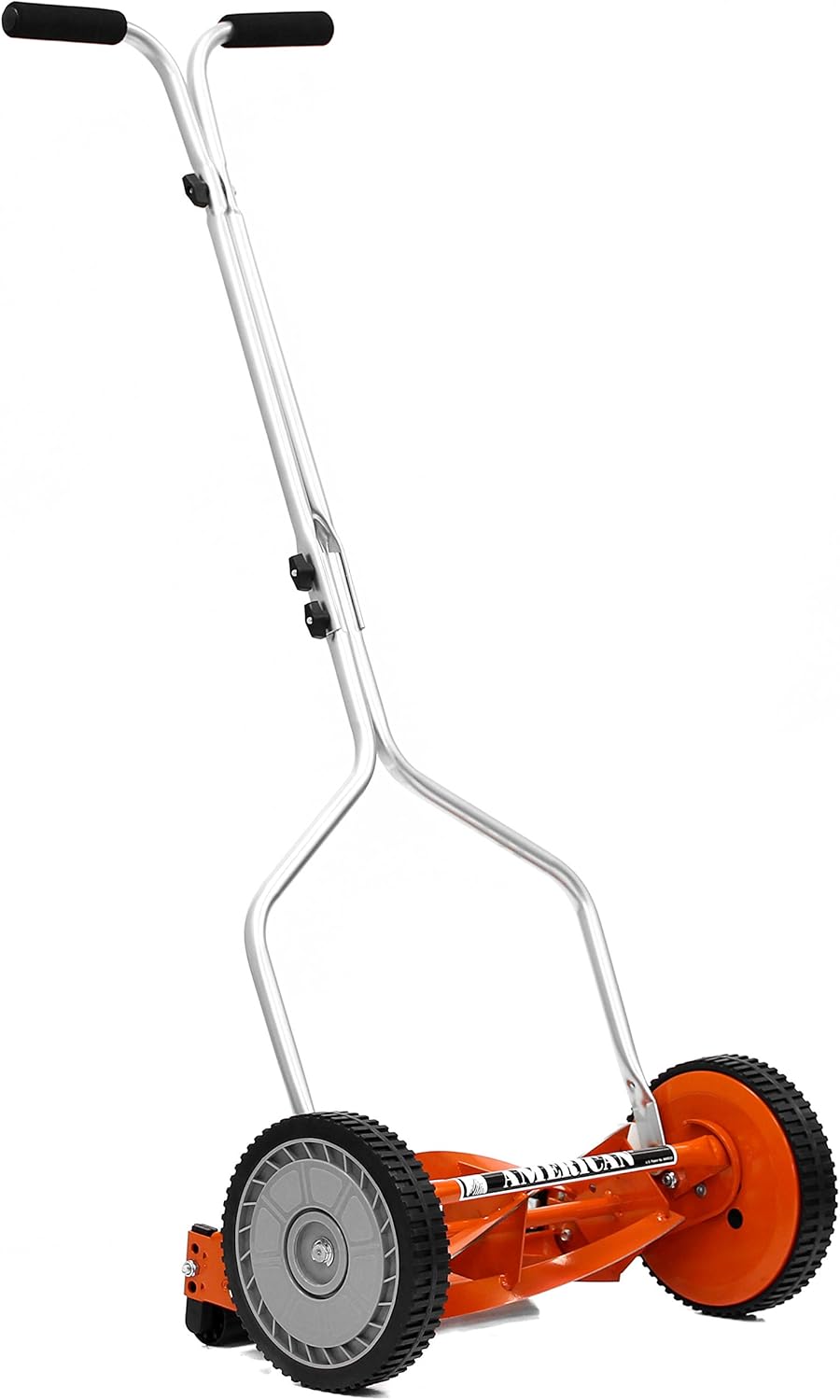
The American Lawn Mower Company 1204-14 is a classic push reel mower that brings back the simplicity of manual lawn care. Unlike gas or electric mowers, this tool relies entirely on your own muscle power to spin the reel and cut grass. It's a straightforward, no-nonsense machine designed for homeowners who prioritize quiet operation, zero emissions, and low maintenance over speed and brute force.
This mower is best suited for small, flat lawns with cool-season grasses like bluegrass, fescue, and rye. It's ideal for DIY homeowners who enjoy a bit of exercise while taking care of their yard. If you have a quarter acre or less and don't mind mowing more frequently during the growing season, this reel mower can deliver a clean, precise cut that actually promotes a healthier lawn by slicing rather than shredding the grass blades.
In real-world use, the 1204-14 performs best when you stay on top of your mowing schedule. It handles grass up to 4 inches tall, but for the best results, you should mow when the grass is dry and no more than about 3 inches high. The adjustable cutting height ranges from 0.5 to 1.75 inches, giving you good control over lawn appearance. The 8.5-inch polymer wheels roll smoothly on flat ground, but the mower can struggle on uneven or bumpy terrain. You'll need to make multiple passes if the grass is on the taller side, and wet grass will clog the reel and leave an uneven cut.
Build quality is decent for the price point. The frame is made of steel, and the reel blades are heat-treated alloy steel that stay sharp for years with minimal care. Assembly is straightforward and can be done in about 15 minutes with basic tools. The cushioned T-handle is comfortable for most users, though taller individuals might find it a bit low. At just 19 pounds, the mower is easy to lift and store, and it takes up very little space in a garage or shed.
One realistic drawback is that this mower won't replace a gas or electric model for larger or more demanding lawns. If you have a half-acre or more, or if your yard has hills, you'll likely find the manual effort tiring and time-consuming. Also, the 14-inch cutting width means more passes compared to a 21-inch power mower. But for its intended use - small, flat lawns - the American Lawn Mower 1204-14 is a reliable, eco-friendly, and cost-effective choice that gets the job done without noise, fumes, or ongoing fuel costs.
Step-by-Step Guide to Changing Riding Mower Blades With the Deck Installed
Changing lawn tractor cutting components directly on the machine saves significant time compared to unhooking heavy steel pans. The key to learning how to change riding lawn mower blades without removing deck safely centers on securing stable chassis clearance, stopping the spindle from rotating, and torquing the retention bolts correctly. Following a structured procedure prevents rounded bolt heads, stripped spindle splines, and accidental injury while working under the tractor shell.
Preparation and Safety Protocols Before Accessing the Underside
Safety preparation begins before placing any tools beneath the mowing deck. Park the lawn tractor on a completely flat, solid concrete surface rather than soft grass or loose gravel. Engage the manual parking brake firmly and turn off the ignition key, removing it from the switch so the engine cannot crank unexpectedly. Disconnect the rubber spark plug boot from the spark plug terminal to eliminate any possibility of compression-induced engine starting while turning the blades by hand.
Fuel levels also require attention before elevating the front or rear end of the mower. Lifting a tractor with a full fuel tank can cause gasoline to vent through the fuel cap or spill into the carburetor throat, fouling the air filter or hydraulic linkages. Siphon excess fuel or plan blade maintenance when the fuel tank is less than one-quarter full. Heavy work gloves are mandatory because even dull, pitted blades retain sharp edges capable of cutting fingers under pressure.
Establishing Stable Clearance Under the Chassis
Accessing the retention bolts requires lifting the tractor to create safe working room underneath. Drive-on automotive service ramps offer a rigid, dependable method for raising the front axle, provided the rear wheels are securely blocked with wheel chocks. Alternatively, a hydraulic floor jack positioned under a solid front chassis crossmember can lift the machine, but mechanical jack stands must be placed under the frame before crawling near the deck. Never rely solely on hydraulic jacks because hydraulic seals can lose pressure without warning.
Lower the mower deck height adjustment lever to its lowest setting once the tractor frame is elevated. This position drops the deck pan away from the chassis, giving your hands and ratchets maximum clearance above the ground. Certain specialized locking tools, such as the BLADZ-LOK Premium Standard Lawn Mower Blade coupler, explicitly require raising the mower chassis at least four inches from the floor for optimal clearance. Measuring this clearance beforehand guarantees that wrenches and holding tools fit without binding against concrete.
Locking the Cutting Blades to Stop Spindle Spin
Spindles spin freely on ball bearings, which means attempting to loosen a center bolt causes the entire assembly to rotate. Wedging a scrap block of wood between the blade tip and the interior deck baffle is a traditional method, but wood blocks can slip, crush, or fly out under high torque. Dedicated locking tools clamp directly over the blade edge and hook onto the deck skirt to hold the blade motionless. A purpose-built clamp, such as the Ximoon Mower Blade Removal Tool Replacement, anchors the blade securely against the outer lip of the housing.
Dual-blade decks present another locking option where a rigid coupler connects two adjacent blades. By joining the cutting edges together, the rotation of one spindle counteracts the other, keeping both completely stationary during bolt removal. Multi-piece maintenance accessories like the Riding Lawn Mower Blade Removal Tool with Lawn kit provide dedicated blade-holding clamps designed to replace OEM fixtures like MTD 490-850-0005. Choosing a stable locking method protects your hands and prevents the wrench from slipping off the fastener.
Clearing Under-Deck Turf Build-Up
Mower decks accumulate thick layers of dried grass clippings, soil, and organic sap over a single mowing season. This hardened debris often cakes around the spindle housing, concealing the bolt head and locking washers beneath layers of packed mud. Scraping the underside clean before reaching for a socket wrench ensures the socket seats fully onto the bolt head rather than stripping the corners. Cleaning also reveals any hidden cracks in the spindle housing or deck shell that require attention.
Ergonomic scraping tools allow homeowners to remove dense build-up without putting hands too close to sharp metal edges. The dual-sided Good Vibrations Grass Hawk Ultimate Mower Cleaning tool features pivoting flat and curved scrapers designed to contour along round baffle walls and flat deck sections. It can also attach to an extension pole, allowing operators to reach deep under large multi-blade decks without crawling underneath. Removing packed debris also restores designed airflow paths, which improves discharge performance once fresh cutting edges are installed.
Loosening Spindle Hardware and Managing Washers
Center hardware on riding mowers is usually secured with significant torque and can seize from moisture and grass acid. Most residential lawn tractors utilize standard right-hand threads, meaning the bolt turns counterclockwise to loosen and clockwise to tighten. Inspect the mower manual or spindle shaft markings to confirm thread direction, as occasional commercial or timed-deck setups utilize left-hand threads on specific spindles. Use a heavy-duty six-point socket rather than a twelve-point socket to eliminate the danger of rounding off the fastener corners.
Apply firm, steady force using a long breaker bar or a heavy ratchet to break the fastener free from the spindle shaft. If the bolt resists initial pressure, a penetrating lubricant applied around the washer interface can help dissolve surface corrosion. Avoid striking the wrench handle violently with a metal hammer, as sharp shock loads can fracture spindle bearings or bend the internal shaft. Once the initial bond breaks, the bolt should turn smoothly by hand while you support the blade with a gloved hand.
Pay close attention to the order and orientation of every piece of mounting hardware as it comes off the spindle. Most tractor manufacturers use a concave Belleville spring washer or a heavy flat washer beneath the bolt head to maintain clamping tension. Note which side of the washer faces the blade; cupped washers must always have their curved crown facing the bolt head and the outer rim pressing against the steel blade. Set the hardware aside in a clean tray to keep grit away from the threads.
Inspecting, Balancing, and Pre-Installation Checks
Examine the removed blades closely before deciding whether to sharpen them or install brand-new replacements. Minor nicks along the cutting bevel can be dressed with a file, but deep gouges, thinned sail wings, or bent center sections require immediate blade replacement. When purchasing fresh stock, homeowners frequently check whether factory-sharpened replacement blades are ready to mount right out of the shipping carton. Even new blades benefit from a quick balance check to verify that paint coatings have not created uneven weight distribution.
An unbalanced blade introduces intense high-frequency vibrations that ruin spindle bearings, loosen deck baffles, and fatigue the operator. Placing the center hole onto a stepped cone balancer or an ABS balancer verifies that both cutting wings carry equal mass. If one wing dips downward, remove a small amount of steel from the heavy wing’s trailing back edge until the blade sits perfectly horizontal. Never remove metal from the cutting bevel itself to correct balance, as this changes the cutting angle.
Proper Blade Orientation and Center Hole Alignment
Installing a lawn mower blade upside down is one of the most common mistakes made during on-chassis service. Tractor blades feature upward-curved lift wings on their trailing edge that generate suction to pull grass upright before cutting. These curved lift wings must point upward into the mower deck cavity, toward the tractor frame. The flat cutting bevel must face downward toward the turf; installing the blade inverted will cause the blunt back edge to bash the grass rather than slice it.
Align the center hole carefully with the spindle adapter pattern before tightening the retention bolt. Modern riding mowers frequently employ five-point or six-point star patterns, round centers, or specialized splines to lock the blade to the spindle. The blade must sit completely flush against the spindle star without cocking sideways on the splines. If the blade sits crooked when the center bolt is tightened, the cast spindle star will shatter upon impact, causing severe deck damage.
Torque Specifications and Securing Hardware
Thread the center bolt into the spindle by hand to ensure the threads engage cleanly without cross-threading. Once the bolt is snug, re-engage the blade-locking clamp or dual-blade coupler to hold the blade motionless while tightening. A calibrated click-type torque wrench must be used to apply the manufacturer’s specified clamping force. Guessing torque with a standard ratchet frequently leads to under-tightening, which allows the blade to slip, or over-tightening, which stretches the bolt beyond its yield strength.
Residential riding mower blade bolts generally call for torque values between 70 and 90 foot-pounds, though exact specifications vary by deck model and manufacturer. Consult your operator manual for the precise torque rating designated for your tractor model. Pull the torque wrench in a smooth, steady arc until the audible click indicates the target tension has been reached. Never use an pneumatic or battery-powered impact wrench for final tightening, as uncontrolled impact force can crack the mounting hardware.
Post-Installation Clearance Checks and Lowering
Remove all blade clamps, blocking tools, and socket wrenches from the underside of the deck before lowering the mower. Rotate each blade 360 degrees by hand while wearing gloves to verify that the tips clear the internal deck baffles and discharge chute. On twin-blade or triple-blade decks, ensure the tips of adjacent blades pass each other without contact or interference. Checking this rotational clearance prevents catastrophic metal-to-metal collision when the electric PTO clutch is first engaged.
Reviewing seasonal expenses like mower blade replacement costs helps owners decide when to buy multi-packs for routine swap-outs. Once under-deck clearance is confirmed, use the hydraulic floor jack to lift the tractor slightly off the jack stands. Slide the stands away, lower the jack steadily until all four tires rest on the ground, and remove the rear wheel chocks. Reconnect the spark plug boot, start the engine at low throttle, and test blade engagement briefly on a flat driveway to ensure smooth, vibration-free operation.
Contrasting Tractor Decks with Manual Reel Systems
Maintaining rotary riding mower decks requires understanding how their high-speed horizontal rotation differs from other cutting styles. For instance, classic push reel mowers such as the American Lawn Mower Company 1204-14 14-Inch model utilize a multi-blade horizontal cylinder that shears grass against a stationary bedknife like a pair of scissors. Reel mowers do not require under-chassis crawling, spindle torque wrenches, or high-lift blade balancing, but they demand precise blade-to-bedknife contact adjustments instead.
Rotary riding mower blades rely on aerodynamic lift wings and rapid rotational inertia to throw clippings outward or into collection bags. Because rotary blades operate under severe rotational stress, maintaining rigid spindle hardware and precise balance remains paramount. Performing on-chassis blade changes with dependable locking tools and proper torque safety gives property owners professional cutting performance without the grueling effort of detaching heavy mower decks every season.




Write Your Review
No reviews yet. Be the first to share your experience!