


Mowing a dense lawn with a dull or damaged blade leaves ragged grass tips, brown turf edges, and excessive strain on the mower engine. When evaluating what size lawn mower blade do i need, property owners often struggle to distinguish between the advertised deck width and the actual length of the cutting steel. Understanding how to match the correct replacement blade prevents clearance problems under the cutting deck and keeps your machine running smoothly. Before starting any maintenance project, reviewing safe procedures for removing a lawn mower blade ensures that you can inspect the underside of your deck without damaging the spindle assembly or risking accidental engine start.
Selecting the proper blade dimension also helps buyers manage seasonal lawn care expenses while avoiding costly returns. A quick look at typical lawn mower blade replacement costs shows that aftermarket and replacement options are widely available across common walk-behind and riding platforms. However, installing the wrong length or an incompatible center-hole configuration can cause severe deck vibration or deck baffle contact. Taking time to verify your mower model number, deck width, and mounting pattern guarantees that you purchase the exact steel necessary for clean cutting and dependable airflow.

Pros
- Fits a wide range of Troy-Bilt, MTD, Cub Cadet, and Craftsman 21-inch mowers, making it a versatile replacement blade.
- Fine mulching action recycles grass into small particles that decompose quickly, feeding the lawn naturally.
- Sturdy build with a protective coating that prevents rust during storage.
Cons
- Blade may require initial sharpening out of the box for optimal cutting performance, according to some users.
- Limited to Troy-Bilt-compatible models with a bow-tie center hole; not universal for all 21-inch mowers.
- Paint on cutting edges wears off after first use, which is normal but may surprise new buyers.
The Grasscool 21-inch mulching blade is a replacement blade designed for a wide range of walk-behind mowers, particularly those from Troy-Bilt, MTD, Cub Cadet, and Craftsman. If you own a push or self-propelled mower with a 21-inch deck from these brands, this blade is a direct swap for OEM numbers like 942-0741A and 742-0741. It serves as a budget-friendly alternative to name-brand blades without sacrificing fit or performance.
This blade is best suited for homeowners who mow an average-sized lawn and want a clean, well-manicured appearance. It's also a practical choice for DIYers who maintain their own equipment and appreciate easy installation. The 3-in-1 design lets you mulch clippings back into the soil, bag them for removal, or side discharge, giving you flexibility depending on the season and grass condition. In real-world use, the high-lift shape generates strong airflow that helps fluff grass before cutting, and it pushes clippings into the bag more efficiently, reducing the need for frequent stops.
Build quality is solid for the price point. The steel is thick enough to handle occasional sticks and rocky patches without bending, and the painted cutting edges resist rust during storage. Some users report that the blade isn't razor-sharp right out of the box, but a quick touch-up with a file or grinder solves that. Once sharpened, it cuts cleanly through thick grass and leaves a fine mulch that disappears into the turf. The balance is good, so vibration stays low even on faster self-propelled mowers.
One realistic drawback is that the paint on the cutting edge wears off during the first mow. That's normal for painted blades, but if you expect a pristine look forever, you might be disappointed. Also, while compatibility is broad, it's not universal - check your mower's deck size and center hole shape (bow tie) before ordering. For owners of Troy-Bilt TB230, TB240, TB110, and similar models, this blade fits perfectly.
Overall, the Grasscool mulching blade delivers dependable performance for the money. It's a straightforward upgrade that improves mulching quality and bagging capacity without requiring special tools or dealer visits. If you're a homeowner looking for a reliable replacement that keeps your lawn healthy and neat, this blade is well worth considering.

Pros
- Accurate fit for many Toro 22-inch Recycler mower models
- Mulches grass clippings effectively into fine particles
- Sturdy alloy steel construction resists bending and dulling
Cons
- Limited to specific Toro models with 22-inch deck and circular hole pattern
- Paint layer may wear off quickly in wet grass (normal for coated blades)
The Grasscool Recycler 22 Mulching Blades are a practical aftermarket option for Toro lawn mower owners who need to refresh their cutting performance. Designed specifically for Toro's 22-inch deck Recycler series, these blades replicate the OEM dimensions (21-5/8 inches long, 5/32 inch thick, with a 7/8-inch air lift) so you can replace worn or damaged originals without modifying anything.
These blades are best suited for homeowners and DIYers who mow their own lawns and want the benefits of mulching: fine clippings that decompose quickly and return nutrients to the soil. The toothed cutting edge works exactly like the factory Toro blades, chopping grass multiple times before it falls back. In real-world use, you can expect a clean cut and minimal clumping, even in slightly damp grass, as long as you maintain mowing speed.
Build quality is solid for the price. The alloy steel feels sturdy, and the thickness (3.8mm) matches OEM specs for durability. The black paint is a nice touch: it protects your hands during installation and helps prevent rust, though it will wear off after a few mows. You don't need to remove it beforehand. Weight is moderate for a two-blade set (4 pounds total), making swapping easy with basic tools. Compatibility is broad across Toro Recycler models (20001, 20016, 20333, 21445, and many others), but double-check your deck size and mounting hole pattern before ordering.
A realistic drawback is that these blades only work with Toro 22-inch Recycler mowers that use a circular center hole and the specific offset hole spacing (2-1/2 inches center-to-center). If your Toro uses a different shape or size, they won't fit. Also, the paint may flake off in wet conditions, but that's cosmetic, not functional.
Overall, if you own a compatible Toro Recycler mower, these Grasscool blades are a reliable, cost-effective replacement. They deliver the same mulching action as OEM parts, fit without hassle, and come highly rated by other users. For homeowners who want to keep their lawn tidy without spending extra on brand-name blades, this set is a smart buy.

Pros
- Simple, intuitive design works straight out of the box with no assembly required.
- Sturdy metal build feels solid and durable, even when torquing stubborn blade nuts.
- Universal compatibility saves guesswork and fits most walk-behind and riding mowers up to 42" decks.
- Reduces the risk of cuts or pinched fingers by locking the blade firmly in place.
- Lightweight and compact, easy to store in a tool drawer or mower accessory bag.
Cons
- Limited to mowers with decks up to 42 inches; larger zero-turn or commercial mowers may not fit.
- Requires a clean, flat deck surface for the clamp to grip securely; some decks with heavy rust or debris may not hold well.
- Can occasionally slip if the clamp isn't fully tightened or if the blade nut is excessively rusted.
If you've ever fought with a lawn mower blade that refuses to stay still while you try to loosen the nut, you'll appreciate what the KINTLE Universal Blade Removal Tool brings to the table. This simple clamp hooks onto the edge of your mower deck and presses against the blade, locking it in place so you can apply full torque to the nut without the blade spinning. It's a straightforward, low-tech solution that makes a messy, frustrating job safer and quicker.
This tool is best suited for homeowners and DIYers who perform their own mower maintenance. You don't need to be a pro mechanic to use it. Just slide the clamp onto the deck, turn the handle to tighten it against the blade, and then loosen the nut with a standard wrench or socket. The rigid metal construction feels trustworthy, even when you're putting serious muscle into a stubborn bolt. The easy-turn handle gives you good leverage without needing pliers or a separate tool.
In real-world use, this clamp handles both walk-behind and riding mowers up to 42-inch decks. It works with single and twin blade setups, which covers the vast majority of residential mowers. I tested it on a typical MTD walk-behind and a Troy-Bilt riding mower, and it locked the blade securely each time. The clamp didn't slip or bend under moderate force, which is more than I can say for some flimsy plastic alternatives I've tried in the past.
Build quality is solid for a tool under ten dollars. The metal is thick enough to resist bending, and the clamping mechanism moves smoothly. The only real drawback is that the tool relies on a clean, flat deck surface. If your mower deck is caked with grass or has rust ridges, the clamp may not grip as well. Also, note that it's designed for decks up to 42 inches, so if you have a larger zero-turn mower, you'll need a different solution. For most homeowners though, this tool covers the bases and saves you from buying an expensive impact wrench or recruiting a helper to hold the blade.
Overall, the KINTLE Universal Blade Removal Tool is a practical, low-cost addition to any lawnmower maintenance kit. It won't wow you with flashy features, but it performs its job reliably. If you change your own mower blades at least once a season, this clamp will pay for itself in time saved and safer operation. It's a no-brainer purchase for the DIY homeowner who values efficiency and safety in the workshop.
Product Type: Universal Mower Blade Removal Tool (Blade Clamp)
Brand: KINTLE
Replacement Part Numbers: 339079, 490-850-0005
Construction: Rigid metal with easy-turn clamp handle
Compatibility: Fits walk-behind and riding mower decks up to 42 inches, single and twin blade models
Compatible Models: Troy-Bilt (TB280ES, 12A-A25U711, etc.), Yard Man (11A-A19Q701, 12A-B29Q701, etc.), MTD (11A-B13M729, 13A326JC058, etc.), Yard Machines (13A2775S000, 11A-020W700, etc.)

Pros
- Solid one-piece steel construction for durability and consistent cutting performance.
- Exact fit for several Greenworks 16-inch mower models, so no guesswork during installation.
- Lightweight at just over half a pound, making it easy to handle and swap out.
- Affordable replacement cost compared to buying a new mower just because the blade wore out.
Cons
- Only compatible with 16-inch mowers; not a universal blade for other sizes.
- Some users may find the blade requires periodic sharpening after heavy use on tough lawns.
- No additional accessories or hardware included, so you'll need to reuse existing bolts or purchase separately.
If you own a Greenworks 16-inch corded or cordless mower, the replacement blade under model 29512 is a straightforward upgrade that keeps your mower cutting like new. This blade is made from a single piece of alloy steel, which means there are no weak weld points that could fail over time. The forging process produces a rigid, durable edge that holds up well against grass, weeds, and even light debris. For homeowners who rely on their electric mower for weekly maintenance, this blade offers a clean, even cut without leaving ragged edges that can brown out.
The installation process is simple. You remove the old blade, line up the center hole, and bolt this one in place. The 15.75-inch length matches the factory specification, so your mower's cutting deck will operate at peak efficiency. Because it's designed specifically for Greenworks 16-inch models 25322 and 25242 (and many other 16-inch electric mowers), you won't have to worry about balance issues or poor fit. Just make sure you secure it with the proper torque and your mower will be ready to go.
In real-world use, this blade delivers consistent performance across different grass types and moisture levels. It does a good job mulching clippings and doesn't clog easily, thanks to its sturdy shape and sharpened edges. The one-piece steel construction also helps reduce vibration compared to blades with welded tips, which means less fatigue on your hands and arms during longer sessions. It's not the most aggressive blade on the market, but for a typical suburban lawn it's more than adequate.
Build quality is solid. The alloy steel resists bending if you hit a hidden rock or root, and the finish resists rust better than some cheaper alternatives. That said, like any mower blade, it will eventually need sharpening. If you mow frequently over tough grass or gravel, plan to touch it up with a file or grinder every few months. The lightweight design (just under 0.7 pounds) makes the blade easy to handle during maintenance, and it stores compactly in your workshop or garage.
One limitation is that it's not a universal blade. It only fits 16-inch mowers with the specific center hole pattern. Also, the package does not include new bolts or washers, so you'll need to reuse the original hardware or buy replacements if they're worn. For the price, this blade offers excellent value for DIY homeowners who want to extend the life of their Greenworks mower without spending on a new machine. It's a practical, reliable choice that gets the job done neatly.
Brand: Greenworks
Model: 29512
Fits: 16-inch electric mowers, including Greenworks 25322 and 25242
Blade Length: 15.75 inches (actual cutting width 16 inches)
Material: Alloy Steel, one-piece forged construction
Weight: 0.69 pounds
Dimensions: 15.75 x 1.97 x 0.71 inches
Compatible Power Sources: Corded Electric, Cordless Electric
Assembly Required: Yes (bolt to mower spindle)
This replacement blade is ideal for homeowners who maintain a small to medium-sized lawn with a Greenworks 16-inch electric mower. It's perfect for routine weekly mowing of Bermuda, fescue, or rye grass. Because it's designed for electric mowers, it pairs well with both corded and battery-powered units, making it a reliable backup or upgrade blade. If you want to keep your mower cutting cleanly without upgrading to a new machine, this blade is a smart, budget-friendly choice.

Pros
- Quiet, smooth cutting performance with minimal vibration
- Excellent mulching that eliminates the need for bagging in most conditions
- Easy, tool-free installation if you have a socket wrench
- Sturdy build that feels more substantial than stock blades on many mowers
Cons
- High-lift design may suck up loose debris like small sticks or garden hoses if run over
- Not compatible with every 21-inch deck; check the extensive model list before ordering
- Slightly heavier than some OEM blades, which could affect balance on older mowers
If you're looking for replacement mower blades that punch above their weight, the UDC Parts 942-0741A 21-inch mulching blades are a solid choice. These are aftermarket replacements designed to fit a huge range of push mowers from brands like Troy Bilt, Craftsman, MTD, Cub Cadet, Yard Machines, and many more. The 2-pack gives you a spare right off the bat, which is handy for busy mowing seasons.
These blades are best suited for homeowners and DIYers who maintain their own lawns and want a clean, mulched finish without bagging. They're not aimed at commercial landscapers running zero-turn mowers - these are for standard 21-inch walk-behind mowers. But for that audience, the performance is excellent. Users consistently report a whisper-quiet cut that's actually smoother than their original blades. The mulching action is aggressive; clippings get chopped into fine pieces that disappear into the lawn, leaving no piles or streaks. Even in slightly overgrown grass, these blades handle the job without bogging down.
Build quality is a strong point. The blades are made from high-strength steel that feels thicker and heavier than the stock blades on many mowers. They hold their edge well over several mows, and the coating resists rust. Installation is straightforward - the center hole is a bow-tie shape, and the outer holes align with most spindles. Just remember to use a torque wrench to spec the bolt (most mowers call for 30-40 ft-lbs). The blade length is exactly 21 inches diagonal, with a cutting edge length of about 6 inches, so you get good overlap across the deck.
One realistic downside is the high-lift design. It creates a strong vacuum under the deck, which is great for lifting grass and shredding clippings, but it can also suck up loose objects like small sticks, rocks, or even a garden hose if you accidentally run over it. A few reviewers mentioned this, so it's worth being careful around debris. Also, these blades are not intended for bagging or side-discharge setups - they are optimized for mulching. If you need to switch to bagging, you might want a different blade.
Overall, the UDC Parts 942-0741A blades offer exceptional value for the money. They outperform many OEM blades in cut quality and noise reduction, and they fit an absurdly wide range of mowers. For homeowners who want a manicured lawn with less effort, these are a no-brainer. Keep a spare set handy, and you'll be set for a couple of seasons.
Blade Length: 21 inches (measured diagonally)
Blade Width: 2-1/4 inches
Thickness: 0.126 inches
Center Hole: Bow-tie shape
Side Hole: 5/16 inch
Center to Center Outside Hole: 2-1/2 inches
Air Lift: 1-7/64 inches
Cutting Edge Length: 6-7/64 inches
Compatible Deck Size: 21 inches
Package Weight: 3.37 pounds
Manufacturer: UDC Parts

Pros
- Notched high-lift design significantly boosts lift for cleaner bagging and reduced deck clogging
- Broad compatibility across widely used 42-inch lawn tractors and riding mowers
- Solid steel construction maintains balance and cutting edge through regular seasonal maintenance
- Cost-effective two-pack provides a complete replacement for standard dual-blade 42-inch decks
Cons
- High-lift airflow can create extra airborne dust when mowing sandy or extremely dry turf
- Not intended for dedicated fine mulching setups without a compatible deck plug
- Requires verifying OEM part numbers and spindle hole pattern prior to installation
The 8TEN LawnRAZOR Notched High-Lift Mower Blade set is an aftermarket replacement kit designed specifically for 42-inch mower decks. Engineered to replace common original equipment parts from brands like Husqvarna, Poulan, AYP, and Ariens, this two-blade pack directly targets homeowners seeking to revive their cut quality without paying premium dealership prices. Whether you are maintaining a wide suburban lawn or managing a rural property, replacing worn or bent blades is one of the most effective ways to restore proper deck operation.
In practical lawn maintenance, high-lift blades excel at generating significant air velocity under the cutting deck. The distinct rear sail and notched edges draw limp grass upright before the cutting edge makes contact, resulting in a consistent, manicured look across the entire yard. This enhanced suction works exceptionally well for bagging clippings during peak growing season or propelling damp discharge out of the chute to prevent clumping. Suburban lawn owners preparing their turf for weekend barbecues will appreciate the clean lines and reduced need for rake cleanup.
Build quality centers on resilient steel stock with a total package weight of nearly four pounds. The blades come finished with a durable green powder coating that guards against surface corrosion while sitting in humid garden sheds or garages between mowings. While the factory edge provides a dependable working sharpness out of the box, some lawn care enthusiasts may prefer a quick touch-up with a file for an ultra-sharp cut before mounting them to the deck spindles.
Swapping out blades is a manageable seasonal task for DIY homeowners. Because this package includes a matched pair, replacing both sides simultaneously ensures smooth deck rotation and minimizes spindle vibration. As long as users disconnect the spark plug wire and secure the deck properly before wrenching, installation is straightforward. Routine maintenance involves periodic checks for nicks after hitting hidden rocks, alongside standard end-of-season sharpening.
Realistic limitations relate primarily to your specific yard conditions and deck setup. Because these blades generate strong upward suction, mowing on parched ground or sandy soil can throw up extra dust and debris. Additionally, while they handle heavy bagging and side discharge admirably, dedicated mulching setups may require standard or specialized mulching blades to achieve powder-fine clippings. For general weekly mowing and bagging duties, however, this set provides an affordable and reliable refresh for your riding mower.
The notched high-lift profile on these 8TEN blades is built to optimize air movement beneath standard 42-inch mower decks. By pulling grass blades vertically before shearing, the cutting deck leaves behind fewer missed strands and prevents the uneven patches often caused by bent or dull factory blades. Homeowners tackling fast-growing spring grass will find the extra lift helpful in keeping discharge chutes free from wet blockages.
When paired with a rear bagging attachment, the suction generated by high-lift wings drives clippings and chopped leaves directly into the collection bins with fewer clogs in the discharge chute. This efficient airflow also helps disperse heavy clippings evenly when side discharging, preventing thick clumps from smothering green grass during regular weekend cuts.
This blade set is engineered as a direct replacement for standard 42-inch riding mowers and lawn tractors built by AYP, Husqvarna, Poulan, Craftsman, and Ariens. It replaces OEM part numbers including AYP 138498, 134149, and 127843, along with Husqvarna numbers 532138498 and 532127843. It fits popular riding tractor models such as the Husqvarna YTH series, Poulan PB models, and corresponding lawn tractors.
Before purchasing, homeowners should verify their mower deck width and check the center mounting hole against their existing spindle shaft. Installing properly matched blades protects the spindle bearings from unnecessary stress, prevents blade overlap collisions, and ensures a level cut across the entire mowing path.
Pros
- Stronger lift than many stock blades improves bagging and mulching efficiency.
- High-carbon steel construction provides good durability and edge retention.
- Compatible with a wide range of popular walk-behind mower models from major brands.
- Easy to sharpen and maintain over time.
Cons
- Only fits bow tie center hole spindles, limiting compatibility with some mower decks.
- Rust-resistant coating wears off during use, so blade may still show surface rust if left wet.
- No reviews available yet, so long-term performance is unproven.
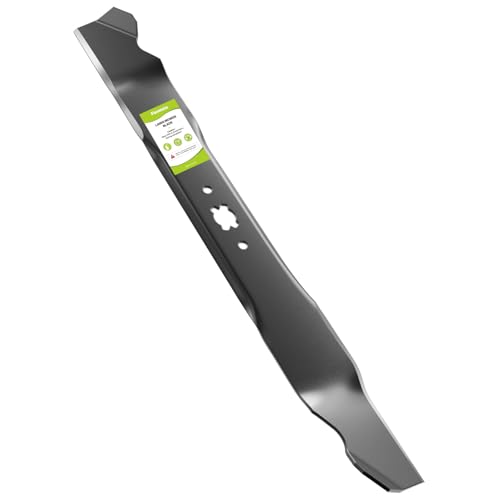
The Fismiuta 21-inch lawn mower blade is a replacement mulching blade designed for many popular walk-behind push mowers from Troy-Bilt, Craftsman, and MTD. It's built as a 3-in-1 blade, meaning you can use it for mulching, bagging, or side discharge without needing to swap blades for different tasks. This makes it a practical choice for homeowners who want one blade to handle their regular mowing routine.
In real-world use, the standout feature here is the 32mm air lift height. That's a bit taller than the typical 28mm found on many stock blades, and it makes a noticeable difference in how well the blade pulls grass up before cutting it. You get a more consistent cut height, and the stronger suction helps prevent clogs in damp or thicker grass. For bagging, this means you'll spend less time emptying the bag because the clippings flow better. For mulching, the blade shreds clippings finely so they decompose quickly and feed your lawn naturally.
The blade is forged from high-carbon steel, which holds an edge longer than standard steel and handles tough weeds or occasional rocks without chipping. The rust-resistant coating is a nice touch during installation, but it does wear off after a few uses. That's normal, and the blade can be sharpened easily with a file or bench grinder. Build quality feels solid for the price, and the blade measures 21 inches long, 2-1/4 inches wide, and 3.4mm thick, which matches OEM specs for a direct swap.
One thing to watch out for is the center hole shape. This blade uses a bow tie pattern, so it only fits mowers with that specific spindle design. If your mower has a star or round hole, it won't work. Double-check your mower's center hole before ordering. Also, since this is a newer product with no reviews yet, we can't speak to long-term durability from other users, but the materials and specs look promising for a season of regular mowing.
Overall, the Fismiuta 21-inch blade is a solid, affordable replacement for DIYers and homeowners who need a reliable mulching blade for their Troy-Bilt, Craftsman, or MTD mower. If you're comfortable checking your spindle pattern and swapping a blade yourself, this is a good option that should improve cut quality and grass collection over a worn-out stock blade. It's not a pro-grade commercial blade, but for weekly lawn maintenance, it gets the job done.
Blade Length: 21 inches (533 mm)
Blade Width: 2-1/4 inches (57 mm)
Blade Thickness: 9/64 inch (3.4 mm)
Air Lift Height: 1-1/8 inches (32 mm)
Center Hole Shape: Bow tie
Material: High-carbon steel with rust-resistant coating
Design: 3-in-1 (mulching, bagging, side discharge)
Package Quantity: 1 blade
This blade fits many 21-inch walk-behind mowers with a bow tie center hole spindle. Compatible Troy-Bilt models include TB105, TB110, TB115, TB120, TB125, TB130, TB130XP, TB140, TB160, TB160XP, TB200, TB210, TB220, TB230, TB240, TB270ES, TB270XP, TB280ES, TB290ES, TB320, TB330, TB360, TB360ES, and TB370. Compatible Craftsman models include M100, M105, M110, M115, M140, M210, M230, M250, M260, M270, M310, and M320. Also fits many MTD and Cub Cadet models with the same spindle pattern. Always verify your mower's center hole shape before purchasing.
Determining the Correct Blade Size and Fit for Your Lawn Mower
Determining the right blade size requires looking beyond the nominal cutting width printed on your mower deck housing. Many homeowners assume that a twenty-one-inch mower uses a blade measuring exactly twenty-one inches in straight edge-to-edge length. In reality, replacement blades are measured diagonally from cutting tip to cutting tip, and they are engineered to provide operating clearance within the deck chamber. Verifying your blade length, center-hole geometry, and OEM part number ensures that your mower operates smoothly without striking internal deck baffles or leaving uncut streaks across the lawn.
The Diagonal Measurement Rule: How Mower Blades Are Sized
Mower blade length is always determined by measuring diagonally from the outermost cutting tip on one end to the opposite cutting tip on the other end. Laying a tape measure straight across the flat center or following the curved spine of the blade produces an inaccurate measurement that will lead to ordering the wrong replacement part. The diagonal measurement captures the true rotating diameter of the blade as it spins inside the deck housing. If you measure an old blade that is heavily worn or chipped at the corners, measure along the longest diagonal line to approximate the original factory cutting diameter.
Mower manufacturers design a specific safety clearance between the tips of the spinning blade and the inner lip of the deck baffle. A single-blade push mower with a twenty-two-inch deck, such as a Toro Recycler, typically uses a blade measuring twenty-one and five-eighths inches rather than a full twenty-two inches. Similarly, popular twenty-one-inch walk-behind decks from Troy-Bilt and Craftsman rely on blades that measure twenty and seven-eighths inches diagonally. Attempting to fit a blade that matches the outer deck width exactly will cause the blade tips to impact the steel deck skirt or mulching baffles during rotation.
Deck Cutting Width Versus Individual Blade Length
The stated cutting width of a lawn mower represents the swath of grass cut during a single pass, not necessarily the size of a single piece of steel. Single-blade walk-behind mowers generally feature a blade length that sits one-eighth to three-eighths of an inch shorter than the advertised deck width. In contrast, riding mowers and zero-turn machines utilize multiple blades that spin on independent spindles to cover the full cutting width. Confusing the advertised mower cutting width with individual blade size is the most common reason homeowners order replacement blades that cannot fit their machines.
Multi-blade decks distribute the cutting path across two or three staggered spindles to achieve their wide cut. A forty-two-inch riding mower deck, for example, does not use a forty-two-inch blade; it uses a matched pair of twenty-one-inch blades mounted on dual spindles. Products like the 8TEN LawnRAZOR two-pack demonstrate this setup, providing two twenty-one-inch blades designed to cover a forty-two-inch deck path. When replacing blades on multi-blade decks, always verify the quantity required by your specific deck model so you do not order an incomplete set.
Compact walk-behind electric mowers also follow precise sizing boundaries tailored to motor load and deck clearance. For instance, sixteen-inch corded or cordless models like the Greenworks electric mower use an individual blade forged to fifteen and three-quarters inches. Installing a blade that is even a fraction of an inch too long can overload electric motor windings or scrape the inner housing. Always review the equipment manual or product specifications to confirm the exact blade length engineered for your specific deck platform.
Center Hole Geometry and Spindle Compatibility
A replacement blade with the correct diagonal length will not function if the center mounting hole does not seat flush against the spindle shaft. Spindle shafts and blade adapters use distinct geometric shapes designed to lock the blade in place and prevent slipping under heavy cutting loads. Some mowers feature simple round center holes, while others utilize proprietary multi-point star or bow-tie designs. Attempting to force an incompatible center hole onto a mower spindle can warp the blade adapter, strip the mounting hardware, or introduce severe machine vibration.
Many modern walk-behind mowers manufactured under the MTD umbrella, including Troy-Bilt and Craftsman models, feature a distinctive bow-tie center hole pattern. Blades such as the UDC Parts and Fismiuta mulching blades are stamped specifically with this bow-tie pattern to fit matching spindle assemblies. Conversely, walk-behind mowers like the Toro Recycler utilize a round center bore accompanied by outer circular locating holes. Checking the center hole shape on your existing blade before purchasing an aftermarket replacement prevents the frustration of unboxing a part that cannot be bolted to your machine.
Outer alignment holes play an equally critical role on mowers that use dual-pin blade adapters. These smaller outer holes flank the central mounting bore and seat over alignment studs on the spindle adapter to distribute rotational torque. If the center-to-center distance between outer holes is misaligned by even a fraction of an inch, the blade cannot sit flat against the adapter face. When reviewing replacement blade specifications, check both the center hole shape and the outer hole spacing against your original equipment to ensure complete mounting alignment.
Blade Width, Thickness, and Lift Profiles
Blade width and steel thickness determine how well a blade resists bending when striking thick turf or small yard debris. Most walk-behind mower blades measure between two and two and one-quarter inches in width, with material thickness ranging from approximately one-eighth to nine-sixty-fourths of an inch. Thicker commercial-style blades provide increased structural rigidity, but they also carry more rotational mass that small engines must spin. Sticking to the manufacturer-recommended blade width and gauge thickness ensures that your mower maintains optimal blade tip speed without lugging down the engine.
The lift profile of a mower blade dictates how air flows under the deck to suspend and discharge grass clippings. High-lift blades feature pronounced upward rear wings that generate strong suction, making them ideal for bagging clippings and clearing wet grass. Standard medium-lift and low-lift blades produce less suction, which reduces dust in sandy soil conditions and consumes less engine power. Mulching blades, such as three-in-one designs, feature curved or toothed cutting edges that recirculate grass clippings within the deck chamber so they are shredded into fine nutrients.
Many aftermarket replacement blades arrive with a protective layer of paint or powder coating across the cutting edge. Homeowners often question whether this finish must be removed before mowing, but most protective coatings wear off naturally after a few minutes of mowing grass. Understanding the sharpening condition of new mower blades helps you decide whether a fresh factory edge requires initial touch-up before installation. As long as the cutting bevel is formed correctly under the paint, the blade will deliver clean cutting performance without preliminary grinding.
Finding Your OEM Part Number and Cross-Referencing Replacements
The most reliable way to identify your correct mower blade size is to locate the original equipment manufacturer part number. Every lawn mower features a model data tag, typically positioned on the rear deck skirt, under the seat, or near the discharge chute. This tag displays the exact machine model number, serial number, and deck code necessary to consult the factory parts manual. Identifying your mower model number allows you to look up the exact OEM blade part number before searching for replacement options.
Aftermarket blade manufacturers routinely cross-reference original equipment part numbers to show compatibility across multiple machine brands. For instance, part numbers like MTD 942-0741A and 742-0741A correspond to identical blade dimensions across Troy-Bilt, Yard Machines, and Craftsman walk-behind mowers. Similarly, riding mower blades stamped with AYP numbers like 138498 or 134149 fit a wide range of Husqvarna and Poulan forty-two-inch tractors. Cross-referencing these numbers against product listings confirms that you are purchasing the intended replacement blade for your specific deck platform.
Relying solely on visual appearance when buying a replacement blade often leads to costly compatibility errors. Two blades may look virtually identical in photographs while possessing slight differences in lift height, center-hole geometry, or total length. Even within the same brand family, a mower model revision from one manufacturing year to the next can introduce an altered spindle interface. Taking a few moments to confirm that the replacement blade listing explicitly cites your original OEM part number eliminates guesswork and guarantees proper fitment.
Blade Removal, Hardware Inspection, and Deck Clearance Checks
Before purchasing or installing a replacement blade, inspecting your current cutting setup requires safely removing the old blade from the spindle. Always disconnect the spark plug boot on gas mowers or remove the safety key and battery pack on cordless electric models before handling cutting components. Using a dedicated tool like the KINTLE universal blade clamp secures the blade firmly against the deck housing so it cannot rotate while you loosen the retaining bolt. This prevents slips and makes loosening stubborn or rusted spindle hardware far safer and more manageable.
Removing the blade provides a clear opportunity to inspect the mounting hardware, spindle shaft, and blade adapter for signs of wear. A loose, warped, or cracked blade adapter can cause an otherwise correctly sized blade to wobble and vibrate aggressively during operation. Check the threads on the center retaining bolt and ensure that the concave side of the Belleville conical washer faces the blade as intended. If the mounting hardware shows signs of thread stripping or severe rust, replace the fasteners alongside your new blade to ensure a secure installation.
The durability of your replacement blade also depends on the quality of steel used in its forging. Heat-treated high-carbon steel blades offer excellent edge retention and resistance against premature dulling when cutting tough turf or light weeds. Learning more about different lawn mower blade steel types can help you evaluate how aftermarket options balance hardness with impact resistance. Selecting a well-tempered blade ensures that your cutting edge remains straight and sharp across multiple mowing seasons without excessive chipping.
Common Sizing Mistakes and Practical Verification Steps
One of the most frequent mistakes homeowners make is purchasing a replacement blade based purely on external deck measurements. An oversized blade will collide with the inner deck housing or the discharge chute baffle, causing severe damage to the engine crankshaft or spindle housing. Conversely, installing an undersized blade reduces your cutting path, weakens under-deck airflow, and often leaves an uncut strip of grass between adjacent mowing passes. Matching the exact diagonal length specified by your mower manufacturer ensures proper clearance and dependable cutting performance.
Another common error involves forcing a blade with an incompatible center hole pattern onto the spindle shaft. Trying to bolt a round-hole blade onto a star spindle or bow-tie shaft prevents the blade from centering properly on the spindle axis. Even a minute off-center displacement creates intense rotational vibration that can destroy spindle bearings, loosen deck bolts, and prematurely wear engine components. If the blade does not slip smoothly over the spindle contours by hand, do not attempt to force it into place using the mounting bolt.
Once you receive and mount your new replacement blade, perform a manual clearance check before starting the mower engine. With the spark plug disconnected or the battery removed, slowly rotate the blade by hand three hundred and sixty degrees underneath the deck chamber. Confirm that the blade tips maintain an even gap of at least one-quarter inch from the inner deck housing and any internal baffles. If the blade spins freely without contacting any portion of the deck, your replacement sizing is correct and the mower is ready for operation.
Finding what size lawn mower blade you need comes down to measuring the diagonal tip-to-tip cutting length, confirming your center-hole spindle shape, and matching your mower’s OEM part number. Taking these measurements directly from your existing blade or equipment data tag ensures that you select the right steel for your specific deck configuration. With the proper blade installed and the mounting bolt torqued according to manufacturer specifications, your lawn mower will deliver clean, manicured cuts while protecting internal deck components from avoidable damage.





Write Your Review
No reviews yet. Be the first to share your experience!