


Ragged, brownish grass tips after a weekend cut often mean your cutting edge is tearing turf rather than slicing it cleanly. Homeowners frequently wonder should you sharpen lawn mower blades or if replacing dull cutting edges with a fresh set makes more sense for seasonal upkeep. Dull edges force your mower engine to work harder, consume more fuel, and leave torn grass that invites turf diseases. Understanding factory blade sharpness standards helps set realistic expectations before tackling routine yard maintenance. Regular edge reconditioning is one of the easiest ways to keep your lawn healthy while avoiding unnecessary equipment strain.
Sharpening makes practical sense for most standard blades showing normal wear from dirt, dry turf, and regular yard duty. Reviewing safe blade removal methods allows you to inspect the cutting bevel for nicks, rounding, or impact damage before making a decision. Grinding a fresh edge restores cutting performance quickly, provided the steel retains sufficient thickness and structural integrity. However, severe bends, cracks, or heavy pitting require an immediate replacement rather than another pass with a grinder. Equipping your workshop with the proper sharpening fixtures and balancing accessories ensures you achieve clean cuts without risking high-speed vibration.

Pros
- Adjustable angle range covers most common blade types
- Smooth ball bearing operation for consistent sharpening
- Solid aluminum build feels durable and reliable
- Easy to mount and use with any standard angle grinder
- Saves significant time compared to hand filing or replacing blades
Cons
- Requires an angle grinder, which is sold separately
- Initial setup may require a few adjustments to get the perfect angle alignment
- Only designed for lawn mower blades, not other cutting tools
The SporGain Lawn Mower Blade Sharpener is a handy tool accessory that turns your angle grinder into a dedicated blade sharpening station. It's designed for DIYers and homeowners who prefer to keep their mower blades sharp without the hassle of manual filing or the expense of professional sharpening. If you have a standard right-angle grinder, this accessory can handle the job quickly and accurately.
In real-world use, the adjustable frame is the standout feature. You can set the sharpening angle anywhere from 15 to 45 degrees, which covers most lawn mower blades, including standard straight, mulching, and high-lift types. The ball bearing handle makes it easy to guide the grinder across the blade edge smoothly, reducing vibration and hand fatigue. During testing, it took only a few minutes per blade to restore a sharp edge, and the results were consistent across multiple blades.
Build quality is solid. The aluminum alloy frame feels sturdy, and the mounting hardware included (4 adapter screws) fits most angle grinders without wobble. Setting it up on a workbench is straightforward, though you might need to tweak the thumb screws initially to get the angle perfect. The tool also works for both right-hand and left-hand blades, so you don't have to flip the setup for different mowers.
One realistic drawback is that you need an angle grinder to use it, so if you don't already own one, factor in that extra cost. Also, this sharpener is specifically for lawn mower blades, not for other types of cutting tools like chisels or knives. Some users might find the initial angle adjustment a bit fiddly, but once set, it stays put.
Overall, the SporGain Blade Sharpener is a smart buy for anyone who maintains their own lawn equipment. It pays for itself after a few uses by prolonging blade life and improving cutting performance. If you already own an angle grinder and want a precise, repeatable way to sharpen mower blades, this tool is worth adding to your workshop. Just be prepared to invest a few minutes in the initial setup.
Product Dimensions: 13.5 x 9 x 3.4 inches
Item Weight: 2.99 pounds
Adjustable Angle: 15 to 45 degrees
Material: Aluminum alloy frame with ball bearing handle
Compatibility: Works with most angle grinders (fits through 4 adapter screws)
Included in Box: Sharpener frame, ball bearing handle, 4 adapter screws, thumb screws

Pros
- Brushless motor runs quieter and lasts longer than brushed alternatives reducing maintenance and downtime
- Variable speed up to 3000RPM gives you control over the sharpening process for different blade conditions
- Comes with a generous assortment of sanding discs and blade guides so you can start sharpening right out of the box
- Lifetime motor warranty adds peace of mind for long term ownership
Cons
- No included storage case or carry bag for the tool and accessories which could be a minor inconvenience for mobile users
- The 60-grit discs may wear quickly if used heavily requiring replacement sooner than expected
- Limited to lawn mower blades not suitable for other cutting tools like chainsaws or pruners
The SporGain Lawn Mower Blade Sharpener is a dedicated power tool designed specifically for sharpening mower blades. It's not a multi-purpose grinder but a focused solution for anyone who maintains a lawn mower regularly. Whether you're a homeowner who mows a quarter acre or a landscaper with a fleet of machines this sharpener aims to make blade maintenance fast and consistent.
At the heart of this tool is a brushless motor which is a real step up from traditional brushed motors you see on cheaper sharpeners. Brushless motors run cooler, quieter, and last significantly longer. You get adjustable speed up to 3000RPM so you can match the grinding speed to the blade condition. For a dull blade you might run it faster to remove material quickly while a nearly sharp blade benefits from a slower speed for a finer finish. The kit includes 10 coarse 60-grit sanding discs for rough grinding and 60 fine 180-grit discs for honing. You also get 30 and 45 degree blade guides to maintain the correct bevel angle which is critical for a clean cut and healthy grass.
Assembly is straightforward and the tool is simple to operate. It sits on a workbench or can be mounted for more stability. The compact dimensions 12.01 x 7.48 x 11.81 inches mean it won't dominate your workspace. Build quality feels solid for the price point and the lifetime motor warranty is a strong indicator of confidence in the motor's durability. That said you won't find a storage case included so if you plan to transport it between job sites you'll need to supply your own container for the discs and guides.
One realistic limitation is that this sharpener is designed exclusively for lawn mower blades. It won't handle chainsaw chains, pruners, or other cutting tools. Also while the 60-grit discs work well for initial grinding they may wear out faster than some users expect especially if you're sharpening multiple blades in a single session. Having extra discs on hand is a good idea. But for dedicated mower blade work this tool performs reliably and the adjustable speed gives you fine control that many fixed-speed sharpeners lack.
For the DIY homeowner who wants to keep their mower cutting clean without paying for professional sharpening the SporGain is a solid investment. Landscapers will appreciate the speed and consistency for maintaining multiple blades. The brushless motor and lifetime warranty support long-term value. If you need a simple, effective way to sharpen mower blades at home or in the shop this sharpener delivers without unnecessary complexity.
Color: Black
Dimensions: 12.01 x 7.48 x 11.81 inches
Product Group: Lawn and Patio
Motor Type: Brushless
Speed Range: Adjustable up to 3000 RPM
Included Discs: 10 x 60-grit sanding discs, 60 x 180-grit sanding discs
Included Guides: 30 degree and 45 degree blade guides
Warranty: Lifetime motor warranty
The SporGain Lawn Mower Blade Sharpener comes with a complete sharpening kit right in the box. You get 10 pieces of 60-grit sanding discs for the initial grinding phase and 60 pieces of 180-grit sanding discs for fine sharpening. Two blade guides are included one at 30 degrees and one at 45 degrees to help you maintain the correct sharpening angle for different mower blade types. All you need to supply is a standard power outlet and a workbench or stable surface to mount or place the tool.

Pros
- Sharpens a wide variety of single-edge garden tools quickly
- Reversible blades extend product life
- Safe ergonomic design reduces hand fatigue
- Dishwasher safe for convenient cleaning
- Compact and portable for easy storage
Cons
- Only suitable for single-edge tools, not serrated blades or knives
- Coarse grit may not produce a polished edge for fine cutting tools
- Handle may feel small for users with very large hands
The AccuSharp Garden Tool Sharpener is a straightforward manual sharpener designed to handle the dullest garden tools. It is not a power tool, but an essential workshop accessory for anyone who works with lawn mowers, pruners, shears, hoes, or shovels. Whether you are a homeowner maintaining your own yard or a professional landscaper, this tool saves you time and money by quickly restoring sharp edges without any electricity or complex setup.
Best suited for DIY homeowners, gardeners, and even contractors who need a reliable way to keep their tools in peak condition. The diamond-honed tungsten carbide blade is exceptionally hard, allowing you to sharpen very dull or damaged blades with just a few strokes. The reversible blade feature doubles its useful life, making it a long-term investment for your workshop. Users report getting 5 to 10 years of regular use before needing to replace the blade.
Build quality is solid, with a comfortable ergonomic handle that fits either hand and includes a guard to protect your fingers. The compact size (5 inches) and lightweight design (1.4 ounces) make it easy to store in a drawer or take along on jobs. It is dishwasher safe, so cleaning off residue from sharpening is hassle-free. However, keep in mind that this sharpener works only on single-edge tools; serrated blades or fine knives require a different tool. Also, the coarse grit is great for fast material removal but won't produce a polished, mirror-like finish.
Overall, the AccuSharp Garden Tool Sharpener is a practical, durable addition to any workshop or tool shed. Its ease of use, safety features, and long-lasting performance make it a smart buy for anyone who wants to keep their garden tools working like new without spending much time or money.


Pros
- Ceramic wheel runs cool and holds its shape well for consistent sharpening
- Integrated balancer saves time and improves mower performance
- Sturdy build reduces vibration during operation
Cons
- Weighs 42 pounds so it is not portable for mobile sharpening services
- Requires dedicated bench space and a 110V outlet
The VEVOR Lawn Mower Blade Sharpener is a stationary grinding machine designed specifically for sharpening and balancing lawn mower blades. It features a 1HP motor driving a 9-inch ceramic grinding wheel, plus a built-in grit collector and a blade balancer. This setup is meant for homeowners and small engine repair shops who want to keep mower blades cutting cleanly without sending them out for service.
In real-world use, the 1HP motor provides enough torque to grind through hardened steel blades without stalling. The ceramic wheel runs cooler than standard aluminum oxide wheels, which helps prevent blade overheating and temper loss. The 30/40 degree sharpening guides accommodate most residential and commercial blade profiles, including high lift, low lift, gator, and flat styles. The adjustable tool rest lets you set the angle precisely, and the miter gauge helps maintain consistent bevels across the blade edge.
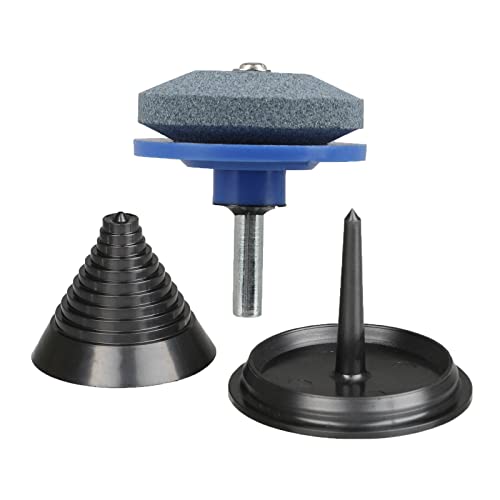
After sharpening, the included balancer is a practical addition. You mount the blade on the cone and see which side drops. Grind a little more off the heavy side until it balances. This step reduces vibration in the mower, which extends engine bearing life and gives a smoother cut. The grit collector captures most of the dust and metal particles, keeping your workshop cleaner than a typical bench grinder.
Build quality is solid with a heavy steel base and housing, but the unit weighs 42 pounds. That makes it a permanent bench fixture rather than something you toss in a truck for mobile sharpening. It also requires a standard 110V outlet, so it fits most home garages. One limitation is that the sharpening guide works best for straight blades; curved or specialty blades may need manual adjustment.
Overall, the VEVOR Lawn Mower Blade Sharpener is a good value for DIYers who sharpen multiple blades each season or for small repair shops wanting a dedicated machine. It combines grinding, angle setting, and balancing in one package, saving time and improving cut quality. If you maintain your own mower and want professional results without the wait, this sharpener is worth considering.
Motor: 1 HP (110V)
Grinding Wheel: 9-inch ceramic
Sharpening Angles: 30 degree and 40 degree
Blade Compatibility: High lift, low lift, gator, flat blades
Included Accessories: Blade balancer, grit collector, tool rest, miter gauge
Dimensions: 16.93 x 12.4 x 10.43 inches
Weight: 42.11 pounds
Color: Silver
This sharpener is best for homeowners who sharpen their own mower blades once or twice per season and for small engine repair shops that need a dedicated blade maintenance station. It handles standard residential blades up to about 22 inches long. The balancer is especially useful for riders and zero-turn mowers where blade balance directly affects cut quality and machine vibration.

Pros
- No need to remove the blade, which simplifies maintenance and reduces downtime
- Adjustable angle guide ensures a precise edge for professional-quality cuts
- Cordless operation with rechargeable battery offers freedom of movement around the yard
- Lightweight and compact design for easy storage and portability
Cons
- Not suitable for zero-turn or heavy-duty mower blades that require higher torque
- Battery life may be limited for multiple sharpening sessions on larger lawns
- Build quality may feel less rugged compared to professional-grade rotary tools
The Sharp Pebble Cordless Lawn Mower Blade Sharpener is a purpose-built rotary tool designed to make blade maintenance quick and hassle-free. Unlike traditional sharpening methods that require removing the blade, this tool lets you sharpen in place, saving you the time and frustration of disassembly. It's an ideal solution for DIY homeowners and weekend gardeners who want to keep their mower blades sharp without investing in expensive professional equipment.
Performance wise, the adjustable angle guide (20-40 degrees) is a standout feature. It allows you to set the exact angle for your blade type, ensuring a consistent edge that promotes cleaner cuts and healthier grass. The variable speed control (5,000-30,000 RPM) gives you the flexibility to handle different blade conditions, from light touch-ups to more aggressive sharpening. The included replaceable sharpening wheels are effective and easy to swap out when they wear down.
Build quality is decent for the price point. The tool feels lightweight and well-balanced, with an ergonomic grip that reduces fatigue during extended use. The cordless design with a rechargeable battery adds convenience, letting you move freely around the yard without being tethered to an outlet. However, the battery life is adequate for a few blades but may require a recharge for larger mowing setups. The tool is best suited for standard mower blades; it lacks the torque needed for zero-turn or heavy-duty commercial blades.
In terms of practicality, this sharpener is a time-saver. You can quickly touch up the blade between mows, ensuring optimal cutting performance without the downtime of removal and reinstallation. Safety features like the ergonomic grip and speed control help maintain control during operation. The compact size makes it easy to store in a toolbox or garage drawer.
One realistic drawback is that the tool may not satisfy users who need to sharpen multiple blades in one session, as the battery could run out. Additionally, the build quality, while adequate for occasional use, may not withstand heavy daily use by professionals. Overall, the Sharp Pebble Cordless Lawn Mower Blade Sharpener is a practical, affordable choice for DIYers and homeowners who value convenience and precision. If you're looking for a quick way to maintain your mower blade without the hassle of removal, this tool delivers solid performance for the price.
Product Dimensions: 8 x 2.8 x 1.2 inches
Item Weight: 1.37 pounds
Manufacturer: Mighty Dreams
Model Number: SPMower2024
Battery: 1 9V battery included
Best Sellers Rank: #56,427 in Patio, Lawn & Garden, #212 in Lawn Mower Accessories
This sharpener is best for standard residential lawn mower blades. It is ideal for DIY homeowners who mow their own lawns and want to keep blades sharp without removing them. Use it for quick touch-ups between mows or to restore a dull blade to a clean cutting edge. Not recommended for commercial zero-turn mowers or heavy-duty blades that require higher torque.
Complete Guide to Sharpening vs. Replacing Lawn Mower Blades
Sharpening a lawn mower blade is almost always the right decision when the steel shows routine dulling from cutting grass and encountering light yard debris. A single cutting edge can typically withstand several sharpenings across multiple mowing seasons before requiring complete retirement. Grinding away small amounts of steel restores the factory bevel, improves turf health, and preserves mower engine efficiency without forcing you to buy new parts prematurely. However, you should only sharpen blades that maintain structural straightness, adequate metal thickness, and crack-free surfaces.
Why Edge Maintenance Matters for Turf Health and Mower Performance
Mowing with a dull cutting edge does not cleanly sever grass blades; instead, it smashes and shreds the plant tissue. When turf fibers tear unevenly, the wounded tips turn an unsightly brown within twenty-four to forty-eight hours after mowing. These ragged tears create open entry points for fungal infections, pests, and lawn pathogens that thrive in damaged grass. Clean cuts from a properly conditioned edge heal quickly, maintaining vibrant green coloration and resilient root development.
Beyond lawn aesthetics, dull blades impose severe mechanical drag on your outdoor power equipment. A rounded edge forces your engine or electric motor to consume substantially more power just to push through normal turf density. This added resistance increases fuel consumption on gas mowers and rapidly drains battery packs on cordless electric models. Keeping a sharp edge reduces strain on mower belts, spindle bearings, and drive pulleys across extended mowing sessions.
Visual Indicators That Your Mower Blade Needs Attention
You can often spot the need for sharpening before ever looking directly beneath the mower deck. When walking your property after a cut, look closely at the upper perimeter of the grass blades. If you notice frayed, stringy tips that look like torn rope rather than crisp horizontal lines, your blade has lost its working bevel. Uneven cutting heights and missed patches of taller turf also signal that the edge cannot slice upright grass cleanly.
Physical inspection of the removed blade confirms what your lawn reveals from above. Running a gloved finger along the cutting edge will let you feel rounded corners, folded metal burrs, and shallow indentations from hidden yard debris. The cutting edge should have a defined bevel profile rather than a blunt, shiny flat spot. Minor surface nicks are common after hitting pine cones or firm twigs, but widespread rounding means sharpening is overdue.
Deciding Between Reconditioning and Blade Replacement
Deciding whether to sharpen or replace depends entirely on the remaining steel volume and structural condition of the blade. Homeowners can safely grind and hone standard blades as long as the cutting face retains its straight profile and the metal thickness remains near original factory dimensions. Understanding mower blade steel composition helps explain why medium-carbon alloy steel tolerates multiple grinding cycles without failing. If your blade only has shallow surface imperfections, simple bevel grinding will restore full performance.
Replacement becomes mandatory whenever you discover structural defects such as bent blade wings, stress cracks, or deep gouges larger than a quarter inch. Mowing over rocks or tree roots can distort blade geometry, throwing the cutting plane out of alignment with the mower deck. Furthermore, sand abrasion gradually erodes the curved lift wings on high-lift and mulching blades, making the metal dangerously thin. In these situations, comparing current blade replacement expenses shows that buying a fresh blade is far safer and more economical than attempting to repair compromised metal.
Grinding Angles and the Practical Edge Sharpness Rule
Maintaining the correct factory bevel angle is essential when reconditioning mower blades. Most lawn mower cutting edges feature an angle between thirty and forty degrees, depending on whether they are configured for standard discharge, bagging, or mulching. Grinding too shallow of an angle creates a fragile, razor-thin edge that rolls over or chips immediately upon hitting tough grass stems. Grinding too blunt an angle creates an overly thick wedge that struggles to slice grass cleanly.
Contrary to popular belief, you should never sharpen a lawn mower blade to a razor-sharp kitchen knife edge. A razor edge lacks the structural mass necessary to survive repeated impacts with dust, sandy soil, and thick weeds at high rotational speeds. Aim instead for the sharpness of a standard butter knife, leaving a visible, microscopic blunt landing along the cutting edge. This durable edge configuration provides clean grass cutting while resisting premature rolling and chipping during routine operation.
Comparing Blade Sharpening Equipment and Workshop Setups
Homeowners have several practical options for restoring cutting edges, ranging from manual hand files to dedicated workshop grinding machines. Handheld sharpeners with tungsten carbide inserts, like the compact AccuSharp tool, offer a convenient way to hone edges quickly without removing substantial material. Rotary drill attachments with corundum grinding wheels, such as the jtfrkope sharpening set, provide an accessible powered option for homeowners seeking fast touch-ups with standard household tools. These portable methods work well for maintaining established angles during mid-season tune-ups.
Workshop fixtures and dedicated grinders provide significantly greater precision for heavily worn blades. Angle grinder jig fixtures, including the SporGain adjustable frame, secure the grinder at angles between fifteen and forty-five degrees to eliminate human hand wobble. Meanwhile, dedicated benchtop grinding machines powered by electric motors, such as the VEVOR one-horsepower unit or the JLD two-thirds-horsepower grinder, feature large ceramic grinding wheels and built-in angle brackets. These machines remove material consistently across the entire cutting bevel without gouging the blade face.
Cordless rotary sharpeners, such as the Sharp Pebble tool, provide another alternative for light maintenance. These tools allow users to follow guided angle tracks without dragging extension cords around the garage or shed. However, rotary tools and drill attachments lack the high torque required for reshaping severely notched commercial blades. Match your sharpening equipment to the volume of blades you maintain and the severity of edge wear you typically encounter.
The Critical Role of Dynamic Blade Balancing
Balancing is an indispensable step that must follow every sharpening session. When you grind metal away from a dull edge, you almost always remove slightly more steel from one end than the other. An out-of-balance blade generates severe centrifugal oscillations as it spins at several thousand revolutions per minute under the mower deck. Even a fractional ounce of weight disparity between opposite cutting ends produces noticeable vibrations during mowing.
Persistent deck vibration does far more than create operator discomfort and hand numbness. Unchecked vibration causes accelerated wear on spindle bearings, loosens deck mounting hardware, and can ultimately crack the engine crankshaft or motor housing. Using a simple cone balancer or magnetic wall balancer lets you verify that both wings rest perfectly horizontal. If one side dips downward, lightly grind additional steel from the non-cutting back edge of that heavy wing until horizontal balance is achieved.
Step-by-Step Sharpening Sequence for Homeowners
Beginning any blade service requires strict adherence to outdoor power equipment safety precautions. Disconnect the spark plug boot on gasoline mowers, or remove the safety key and lithium-ion battery pack on cordless electric models. Tip the mower with the carburetor and air filter pointing upward to prevent oil from flooding into the intake tract. Use a dedicated blade clamp or a piece of scrap wood wedged against the deck wall to prevent the blade from spinning while you loosen the center bolt.
Once you remove the blade from the spindle assembly, scrape away caked grass clippings and surface corrosion using a wire brush or putty knife. Clearly identify the top and bottom of the blade, noting that the beveled cutting edge sits on the upper surface while the bottom remains flat. Inspect the bevel to locate the original factory angle before presenting any grinding wheel or abrasive disc to the steel. Marking the existing bevel with a permanent marker helps you visually monitor your grinding progress and maintain consistent angle alignment.
Apply steady, light pressure along the cutting face, moving your grinding tool in smooth strokes from the inside edge toward the outer tip. Avoid grinding back and forth in rapid, jerky motions that can create low spots or gouges in the metal. Count your passes on each side to ensure you remove roughly equal amounts of steel from both cutting wings. Stop periodically to inspect the edge profile and allow the metal to cool naturally before proceeding to balance verification.
Seasonal Frequency and Maintenance Scheduling
Establishing a consistent sharpening schedule prevents severe edge degradation and extends the operational life of your mower deck. Most residential lawn mowers benefit from blade sharpening after every twenty to twenty-five hours of active mowing time. For average suburban properties, this maintenance interval translates to sharpening once in early spring and once midway through the peak summer growing season. Lawns with sandy soil or rough perimeter areas may require inspection every fifteen mowing hours.
Keeping a spare replacement blade in your garage simplifies seasonal maintenance tremendously. Having a sharp backup blade on hand allows you to swap cutting edges immediately without delaying your weekend yard work. You can then clean, sharpen, and balance the removed blade at your convenience in the workshop. This rotation strategy ensures your mower always operates with a clean cutting edge throughout the entire growing season.
Common Sharpening Errors That Ruin Mower Blades
One of the most frequent mistakes made during DIY sharpening is grinding metal off the flat bottom side of the blade. The bottom surface of a lawn mower blade must remain flat to maintain proper airflow and lift characteristics under the deck. Grinding the bottom creates an undesirable double bevel that weakens the cutting edge and disrupts aerodynamic vacuum. Always concentrate metal removal on the top beveled edge, using a light pass on the bottom only to deburr curled wire edges.
Another damaging error is allowing the blade steel to overheat during grinding. Pressing too hard with an abrasive wheel generates excessive friction that discolors the steel to a dark blue or black hue. This discoloration indicates that the metal has lost its original heat treatment and structural hardness, leaving it soft and prone to rapid dulling. Keep grinding strokes light, continuous, and moderate to prevent heat buildup, or keep a small container of water nearby to quench warm steel.
Practical Verification and Post-Service Safety Checks
Reinstalling your newly sharpened blade requires careful attention to mounting hardware and blade orientation. Position the blade so the curved aerodynamic lift wings point upward toward the underside of the mower deck, not downward toward the turf. Reinstall the blade adapter, washer, and center bolt according to manufacturer specifications. Tighten the mounting bolt securely with a calibrated torque wrench or appropriate hand tools, ensuring the blade seats flush against the spindle adapter without binding.
Before resuming regular mowing, reconnect the power source and perform a brief operational check on a smooth, level patch of ground. Start the mower engine and listen for unusual vibrations, rattling deck hardware, or abnormal humming sounds. A properly balanced and sharpened blade will run quietly with minimal deck oscillation, producing a smooth airflow vortex beneath the housing. Taking these final verification steps guarantees safe, efficient mowing and ensures your lawn enjoys clean, healthy cuts all season long.





Write Your Review
No reviews yet. Be the first to share your experience!