


Excessive mower deck vibration can quickly turn routine lawn maintenance into a punishing chore while wearing down spindle bearings and engine crankshafts. When an uneven cut or severe shaking appears right after sharpening, uneven weight distribution along the cutting wings is almost always the root culprit. Homeowners frequently need to know how to balance a lawn mower blade without a balancer when standard garage equipment is not immediately on hand. Learning improvised workshop methods lets you verify rotational symmetry before bolting your cutting assembly back onto the spindle.
Balancing rotary blades restores smooth operation and keeps grass tips cleanly sliced rather than raggedly torn. While dedicated cone or magnetic balancers provide dedicated precision, simple household items like a level finish nail or a smooth screwdriver shank can offer a functional preliminary check. Pairing careful weight removal with matching the right mower blade dimensions helps safeguard your outdoor power equipment throughout the mowing season. Proper attention to blade geometry ensures your mower deck operates smoothly without premature mechanical fatigue.

Pros
- Extremely affordable and widely compatible with most residential mower blades.
- Simple to use: just chuck it in a drill and run along the blade edge.
- Including both sharpener and balancer means you get a complete blade maintenance solution.
- Lightweight and portable, perfect for small workshops and home garages.
Cons
- Requires a drill to operate, so you need one on hand.
- Manual balancing takes a bit of patience to get right compared to electronic balancers.
- Not ideal for heavy commercial use or high-volume shops where speed is critical.
The Arnold BSK-1 is a straightforward sharpening and balancing kit designed for lawn mower blades. It turns your regular electric drill into a reliable sharpening tool, making it easy to maintain a clean cutting edge without investing in a dedicated grinder. The kit includes a cone-shaped sharpening stone and a simple static balancer, both built to handle blades from walk-behind mowers, lawn tractors, and zero-turn machines.
This kit is best suited for homeowners and DIYers who prefer to handle their own mower maintenance rather than taking blades to a shop. It's also useful for small engine mechanics who need an affordable backup method. But if you're a professional landscaper sharpening dozens of blades a week, you'll likely want a faster, more automated system.
In real-world use, the sharpener works quickly. Chuck it into a drill, run the stone along the blade's edge at a shallow angle, and you'll see burrs form within seconds. The vibration-free claim holds up -- the stone spins smoothly, which helps avoid gouging the blade. The balancer is straightforward: hang the blade on the cone and see which side drops. Rotate a few times to confirm. It's not fancy, but it effectively reveals if the blade is heavy on one side.
Build quality is typical for a budget tool. The sharpening stone is abrasive and should last through several sharpenings. The balancer is made of plastic and a metal cone. It's lightweight (just over two ounces) and stores easily in a drawer. For the price, durability is acceptable for occasional weekend usage. You won't hesitate to toss it in a toolbox or tool bag.
The main drawback is that you need a drill, and the process is manual. Balancing requires patience -- you'll have to grind off material from the heavy side and recheck. It's not as precise as a professional blade balancer, but it's more than enough to get a decently balanced blade. Overall, the Arnold BSK-1 is a smart buy for anyone who wants to keep their mower cutting cleanly on a budget. It's a practical addition to any workshop, especially if you already own a drill.
Color: Black
Dimensions: 3 x 7 x 10 inches
Weight: 0.24 pounds
Product Group: Outdoors
Binding: Lawn & Patio

Pros
- Sturdy metal build that won't crack or warp like plastic balancers.
- Accurately detects even small imbalances for improved cut quality.
- Works with a wide variety of blade center hole sizes thanks to the stepped cone design.
- Easy to use: place blade, watch gravity, and remove material from the heavy side.
Cons
- Some users report that the cone steps may not fit every blade perfectly, though most find a suitable step.
- Requires a bit of trial and error to center the blade precisely on the cone.
- The balancer itself has a narrow base that can tip if bumped during use.
The Oregon Precision Mower Blade Balancer (model 42-100) is a simple, no-fuss tool that belongs in every mower maintenance kit. After you sharpen your blade, tossing it back on the mower without checking balance is a gamble. Even a tiny imbalance can cause excessive vibration, rough cutting, and accelerated wear on your mower's engine and spindle bearings. This compact metal balancer solves that problem with a straightforward gravity-based design.
Best suited for homeowners who sharpen their own blades as well as professional landscapers, the balancer works with virtually any rotary mower blade. The stepped metal cone accommodates different center hole sizes, so it fits push mowers, riding mowers, and zero-turn machines from brands like Stihl, Husqvarna, Troy-Bilt, and more. The zinc die-cast body feels solid and substantial easily outlasting cheap plastic alternatives that can crack or warp over time.
Using the Oregon balancer is refreshingly simple. Place the blade flat on the cone, let it settle, and gravity will tell you if one side is heavier. If the blade dips, grind a bit more material off that side and recheck. The process takes only a minute or two but makes a real difference in how your mower runs. Users consistently report noticeably less vibration and a cleaner, more even cut after balancing.
One realistic limitation is that the cone steps might not align perfectly with every blade's center hole, though most users find a step that works. Also, the balancer has a narrow base, so you'll want to set it on a stable surface to avoid tipping. But these are minor tradeoffs for a tool that costs under ten dollars and can extend the life of your mower's engine and deck.
If you maintain your own mower blades, the Oregon Precision Blade Balancer is a smart, low-cost investment. It helps you get professional-level results at home, reduces vibration that leads to premature wear, and keeps your lawn looking its best. For the price and performance, there's little reason not to add one to your workshop gear.
Brand: Oregon
Model: 42-100
Material: Zinc die-cast metal
Weight: 0.2 pounds
Dimensions: 10 x 6 x 1 inches
Power Source: Manual
Color: Original Version
Compatibility: Fits most push mower and riding mower blades
Pros
- Eight internal N52 magnets provide strong magnetic retention for steel mower blades
- Infinitely adjustable interface fits a wide variety of blade center holes without extra tools
- Hidden magnet design prevents debris collection on the magnetic surface
- Compact 6.5 x 4.25 x 5.31-inch frame fits conveniently on any level work surface
- Manufacturer offers customer service support with replies within 24 hours
Cons
- Requires a flat, level bench or mounting platform to ensure accurate static balancing
- Specific minimum and maximum center-hole diameter limits are not documented in the listing
- Balancing tool only; does not include blade-removal or blade-sharpening equipment
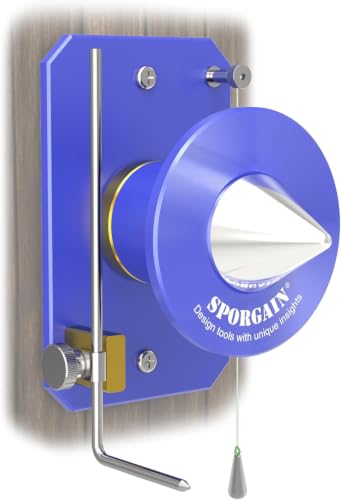
The SporGain Lawn Mower Blade Balancer is a dedicated benchtop blade-care tool designed to verify static balance across a wide range of rotary mower blades. Measuring 6.5 by 4.25 by 5.31 inches and finished in Denim Blue, the unit relies on an internal magnetic alignment system to suspend and check blades after grinding or regular seasonal maintenance. By incorporating eight powerful N52 magnets into an enclosed housing, this tool helps DIYers and equipment owners confirm that their replacement, mulching, or high-lift blades are evenly weighted prior to reinstallation.
This balancer is primarily suited for homeowners, property managers, and DIY small-engine maintenance enthusiasts who service their own push mowers, lawn tractors, or zero-turn mowers. Imbalanced blades frequently create severe deck vibration, which can lead to premature wear on spindle bearings, deck welds, and engine components. For buyers who sharpen their blades at home, an accessible magnetic balancer provides a critical quality-check step before mounting hardware is torqued back into place.
A notable design feature is the tool's hidden magnetic structure, which nests eight N52 magnets securely inside the alignment hub. Rather than exposing bare magnetic surfaces to metal shavings, filings, and abrasive grit from sharpening, the enclosed configuration protects the magnets while maintaining sufficient magnetic pull to support the blade. Paired with this is an infinitely adjustable centering mechanism, which the manufacturer states fits blades of most center-hole dimensions without needing distinct stepped adapters or loose plastic rings.
Practical ownership of the SporGain balancer requires minimal preparation, but buyers should ensure the device sits on a completely level, vibration-free surface during inspection. In standard operation, a clean, deburred blade is positioned onto the adjustable hub where the magnets engage the steel core. If one side dips, material must be incrementally removed from the heavy side until horizontal equilibrium is achieved. Blades should always be inspected when disengaged and disconnected from the mower, adhering strictly to machine safety guidelines.
While the infinitely adjustable hub provides broad versatility, the product documentation does not specify the precise minimum or maximum inner-diameter tolerances for uncommon or proprietary center holes. Prospective buyers with oversized commercial hubs or unusual star patterns should double-check physical compatibility before purchasing. Overall, for operators seeking an accessible, magnet-assisted balance tool for standard residential and light-duty commercial blades, the SporGain balancer offers practical workshop utility at a modest profile.
The SporGain balancer relies on an internal array of eight N52 neodymium magnets to hold mower blades securely on the alignment axis. Neodymium magnets of the N52 grade provide a dense magnetic field, ensuring that standard carbon steel and hardened mower blades remain firmly seated while pivoting freely for static balance checks.
By enclosing the magnets within a hidden design, the tool minimizes direct exposure to abrasive grinding dust, metal filings, and ambient moisture. This design choice helps protect the magnets from physical chipping and ensures smooth rotation when assessing horizontal level across the blade wings.
Unlike static cone balancers that require specific stepped increments, the SporGain tool features an infinitely adjustable alignment mechanism. This setup is designed to accommodate various center-hole configurations found across walk-behind, lawn tractor, and zero-turn mower decks without relying on interchangeable adapter bushings.
While the mechanism is engineered to seat most common round and shaped center holes, buyers should note that exact diameter boundaries are not listed by the manufacturer. Ensuring that the blade is cleaned of caked grass, dirt, and loose paint before mounting is essential for obtaining smooth, repeatable balance readings on the adjustable spindle.
Using a blade balancer is a vital safety and maintenance procedure that prevents rotational imbalance from damaging spindle assemblies, mower decks, and engine crankshafts. Blades should only be balanced after the lawn mower has been completely shut down, the spark plug boot disconnected, and the blade safely removed following manufacturer torque and safety procedures.
Care for the SporGain balancer itself involves keeping the unit clean and storing it in a dry workshop environment. Wiping away fine steel filings with a non-magnetic cloth after each sharpening session prevents buildup around the hub, preserving the smooth movement of the balancing mechanism over time.

Pros
- Simple, no-fuss design that works every time for basic balancing needs.
- Metal build feels solid and should hold up to years of garage use.
- Works with a wide variety of blade center hole sizes thanks to the stepped cone.
- Costs less than a coffee and delivers real performance improvement.
Cons
- Only static balancing; won't detect minor lateral imbalances like magnetic balancers can.
- May not fit blades with non-circular or odd-shaped center holes (e.g., some mulching or gator blades).
- Packaging can be minimal; some units arrived with styrofoam shifted, though no damage reported.
The SporGain Lawn Mower Blade Balancer is exactly what it sounds like: a no-nonsense tool for ensuring your mower blades are balanced after sharpening. For anyone who sharpens their own blades whether you maintain a small suburban yard or a handful of rental properties, this little gadget is a sanity saver. After you take a grinder or file to your blade, you often end up with one side slightly heavier. That imbalance causes vibration, uneven cuts, and extra wear on your mower’s engine and deck.
This balancer solves that problem simply. You set the blade on the tapered metal cone, and the heavy side drops down. Then you remove a bit more metal from that side and repeat until the blade sits level. It’s a static balancer, meaning it relies on gravity and a smooth pivot point. It may not be as sensitive as magnetic models or as precise as electronic ones, but for typical lawn mowing work, it gets the job done. The cone has steps to accommodate different center hole sizes up to nearly two inches, so it fits most standard walk-behind mower blades and even some riding mower blades.
Build quality is impressive for the price. The base and cone are made of metal, not plastic, so they won’t crack or warp. It’s small enough to toss in a tool bag or leave in a drawer. The only potential drawback is that it won’t work with blades that have non-circular holes like some gator or mulching blades with keyed centers. Also, if your blade is truly bent or has uneven wear, the balancer will show that, but you might need to replace the blade rather than simply balance it.
In real-world use, this balancer makes a noticeable difference. Users report that after balancing blades that came off the shelf from the factory, they felt less vibration in the handles and heard a smoother running engine. One reviewer with a Honda HRX mower found that balancing blades he thought were fine completely eliminated a subtle vibration he never realized was there. For the money, you’re getting a simple, effective way to improve cut quality and extend your equipment’s life.
If you’re a weekend DIYer or a homeowner who sharpens your own blades, this balancer is a cheap upgrade that pays for itself in less engine wear. Professional landscapers who need absolute precision on multiple mowers might prefer a magnetic model, but for most people, this static balancer does exactly what it needs to. A solid buy.
Product Dimensions: 2.4 x 2.4 x 2.1 inches
Item Weight: 3.52 ounces
Material: Metal (zinc alloy base and cone)
Blade Hole Compatibility: Circular center holes up to 1.97 inches (largest step)
Base Diameter: 2.36 inches
Color: Silver
Includes: One blade balancer only

Pros
- Durable zinc alloy build won't crack or warp like cheap plastic cones
- Universal stepped design centers easily on most residential mower blades
- Zero assembly required: ready for immediate use out of the box
- Two-pack provides solid value for workshop and mobile maintenance setups
Cons
- Requires a completely flat, level workbench surface to give an accurate balance check
- Does not offer the micro-precision of premium wall-mounted magnetic bearing balancers
- Static friction can occasionally mask minor weight differences on very light blades
The Silcpall 2-Pack Blade Balancer is a static balancing accessory designed for anyone who sharpens their own lawn mower blades. After grinding out nicks or restoring a bevel with an angle grinder or bench grinder, one side of the blade frequently ends up heavier than the other. Bolting an unbalanced blade back onto your mower creates violent vibrations that chew through spindle bearings, loosen deck hardware, and put unnecessary strain on the engine crankshaft. This tool offers a simple check to make sure both cutting wings carry equal weight.
Unlike the fragile plastic balancers that warp or break when dropped on a concrete garage floor, this model is cast from solid zinc alloy. The metal construction gives it sufficient heft to stay put and naturally resists rust in humid shop environments. Its stepped concentric design fits snugly into standard round and irregular blade center holes. You simply set the balancer on a flat surface, place the center hole over the appropriate step, and observe whether the blade rests level or dips to one side. If a wing drops, you simply grind a bit more metal from that side until it sits flat.
In terms of practical workshop use, this tool is ideal for seasonal maintenance on push mowers, zero-turn units, and lawn tractors. However, because it relies strictly on gravity, your working surface must be truly level. Testing on an unlevel workbench can easily lead to false readings. It also lacks the low-friction sealed bearings found on professional shop-grade wall-mounted balancers, meaning minute balance differences might not always register on very light blades.
For homeowners and DIY groundskeepers who want a quick, dependable way to verify their blade sharpening jobs without spending commercial shop money, the Silcpall balancer gets the job done cleanly. The metal construction ensures it will last for seasons of regular use, and having two in the pack means you can keep one by your grinder and stash the other in your field toolbox.
This tool is ideal for post-sharpening checks on standard residential push mower blades, commercial walk-behind decks, and riding mower high-lift blades. It works equally well after using an angle grinder, bench grinder, or hand file.
It also serves well in mobile landscaping trailers and small engine repair carts where space is limited and wall mounting a large magnetic balancer is not practical.

Pros
- Wide compatibility with multiple blade hole types and brands
- Helps achieve smoother cutting and less vibration after sharpening
- Lightweight and easy to store in any workshop or garage
- Affordable price point for hobbyists and homeowners
Cons
- Plastic adapters may fit loosely on some balancer spindles, affecting precision
- Requires a level surface and careful visual inspection for accurate results
- Not as robust as metal balancing tools for heavy-duty commercial use
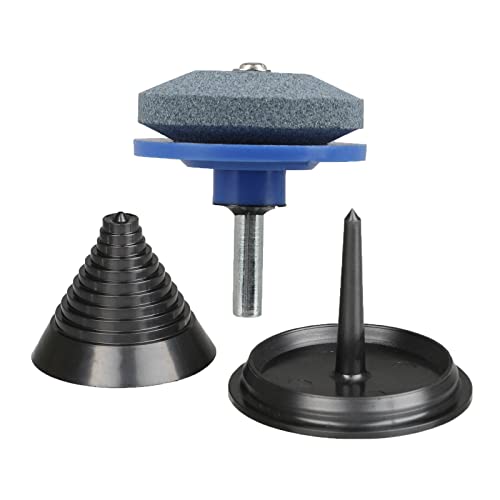
The LIZEWEI Lawn Mower Blade Balance Adapter Set is a practical accessory for anyone who sharpens their own mower blades. It includes a universal precision blade balancer plus five plastic adapters designed to fit different blade hole patterns: 5-point star, 6-point star, 7-point star, T-shirt holes, and bowtie holes (which also fit rectangular openings). This solves the common frustration of blades that won't center properly on the balancer's rounded steps, allowing for accurate balancing after sharpening.
This set is best suited for DIY homeowners, weekend lawn care enthusiasts, and small-scale property maintainers. If you regularly sharpen your reel or rotary mower blades and want to reduce vibration and engine wear, this kit provides a straightforward solution. It is not designed for high-frequency commercial use but handles typical residential lawn maintenance tasks with ease.
In real-world use, the system works as intended on a level surface. Place the appropriate adapter on the balancer spindle, set the blade on top, and observe if one end drops lower than the other. That indicates the heavier side needs more material removed. Several verified buyers report success balancing blades for brands like John Deere, Troy-Bilt, and Cub Cadet. The adapters effectively center the blade, making the process faster than balancing on a nail or screw.
Build quality is adequate for the price. The balancer is a simple tapered cone, and the plastic adapters feel reasonably sturdy. However, some users note that the adapters can have a slight slop on the balancer spindle, which may introduce minor inaccuracies. For the average homeowner, these tolerances are acceptable, but perfectionists might want to check fitment before purchase. The compact size (3.4 x 3.4 x 2.5 inches) makes it easy to store in a tool bag or drawer.
Overall, the LIZEWEI set offers good value for money. It addresses a specific pain point in blade maintenance and delivers on its promise of easier, more consistent balancing. If you are tired of guessing the center or using improvised methods, this inexpensive kit is a worthwhile addition to your workshop. Just be sure to use it on a stable, level workbench for best results.
Package Dimensions: 3.43 x 3.43 x 2.52 inches
Item Weight: 5 ounces
Manufacturer: LIZEWEI
ASIN: B0CHDH1QPL
Compatible Brands: Stihl, Oregon, Troy-Bilt, Cub Cadet, Honda, Lawn-Boy, Lawnmaster, Scotts, Snapper, Toro, and more
1 x 5-point star adapter
1 x 6-point star adapter
1 x 7-point star adapter
1 x T-shirt hole adapter
1 x Bowtie hole adapter (also fits rectangular holes)
1 x Universal precision mower blade balancer

Pros
- Strong magnet holds standard and commercial-grade blades securely
- Wall-mounted footprint keeps workbenches completely clear
- Universal cone profile centers various center hole shapes and sizes
- Straightforward design with no complicated electronic parts to fail
Cons
- Requires a strictly plumb wall or stud mount to give accurate readings
- Mounting fasteners may need adjusting based on your shop wall construction
- Not intended for non-standard hub geometries or heavy brush-clearing discs
The LAMBIS Magnetic Wall Mount Blade Balancer is a dedicated workshop maintenance fixture designed to verify the balance of rotary mower blades after grinding or filing. Whether you maintain commercial zero-turn fleets or keep your home lawn tractor in top shape, unbalance after sharpening is the primary cause of deck vibration and premature spindle failure. This unit acts as a direct replacement for familiar commercial balancer models 42-047 and 339075B, giving service technicians and DIY sharpeners a dependable check station.
Using the balancer is straightforward and quick. After sharpening your blade with an angle grinder or bench wheel, you place the center hole over the conical adapter. The internal magnet holds the blade firmly against the cone while allowing the blade ends to pivot freely on the center axis. If one wing dips, you know exactly which side needs another light grinding pass. The sensitive pivot mechanism reveals subtle weight differences that simple plastic cone balancers often miss due to friction.
From a workshop usability standpoint, the wall-mount format is a major plus. Bench space is always at a premium around grinder stations, so hanging this balancer on a nearby stud or tool board keeps your workflow clean and consistent. Its red powder-coated body holds up well against metal grit and general shop dirt. As long as you take the time to mount it completely plumb and level on a solid wall, the readings remain reliable cut after cut.
Keep in mind that the tool relies on gravity and a true vertical alignment. If your mounting post is tilted or exposed to heavy drafts, your readings can drift slightly. You also need to supply suitable fasteners for your specific wall material, whether that means lag screws into studs or anchors into concrete block.
For anyone sharpening multiple blades a season, the LAMBIS balancer pays for itself by sparing your mower deck from destructive vibration. It provides solid shop utility, commercial-style operation, and clear feedback without taking up any bench surface.
For the most reliable balance readings, mount the unit at eye level on a sturdy, plumb wooden wall stud or rigid masonry pillar. Use a torpedo level against the mounting plate to ensure it sits completely straight in both horizontal and vertical axes before driving your screws home.
Position the balancer within arm's reach of your bench grinder or flap disc station. Always wipe the blade's center bore and the balancer's conical adapter clean of metal filings and grass residue before mounting the blade, as foreign debris can tilt the blade and produce a false reading.
Rotary lawn mower blades spin at roughly 2,800 to 3,200 revolutions per minute under normal engine throttle. At those velocities, even a few grams of extra metal on one cutting wing creates substantial centrifugal force that rattles deck hardware and strains engine components. Balancing a blade without a dedicated shop tool is entirely feasible using everyday workshop items if you understand how gravity and friction interact with the blade center hole. The following methods, troubleshooting principles, and hardware guidelines provide a practical blueprint for leveling your blade after sharpening.
The Rotational Physics of Unbalanced Mower Blades
A spinning mower blade functions as a balanced kinetic flywheel beneath the cutting deck. When uneven sharpening grinds more steel from one wing than the other, the blade center of mass drifts away from the rotational axis of the spindle shaft. This eccentricity produces a violent harmonic vibration that travels directly up the spindle assembly, into the deck shell, and through the steering handle. Operators feel this imbalance as hand-numbing vibration, but the underlying machine suffers far more severe mechanical fatigue.
Over time, running an unbalanced blade wallows out spindle bearing housings, loosens deck mounting hardware, and can even fracture engine crankshafts on walk-behind models. The cutting quality also deteriorates because the heavy wing dips slightly lower while the lighter wing rides higher in the cutting chamber. This uneven plane produces a stepped or wavy appearance across your freshly mowed lawn. Verifying blade equilibrium before reinstallation prevents these structural issues and keeps your turf canopy uniform.
Crucial Safety Precautions Before Blade Removal and Handling
Safety must take precedence whenever your hands come near rotary cutting components. Before inspecting or servicing any mower blade, disconnect the spark plug boot on gas models or remove the safety key and lithium-ion battery pack on cordless electric units. This simple step eliminates any possibility of accidental engine cranking while you handle the cutting deck. Tilt walk-behind mowers so the carburetor and air filter point upward to prevent crankcase oil from flooding the combustion chamber.
Heavy leather work gloves protect your fingers against razor-sharp factory edges and burrs created during grinding. Wedge a scrap piece of two-by-four lumber between the blade wing and the inner deck baffle to lock the blade firmly in place while breaking the mounting bolt loose. Inspect the bare blade thoroughly for hairline cracks along the center hole, severe trailing-wing thinning, or permanent bends before attempting any balancing procedure. A cracked or bent blade poses a severe safety hazard and must be replaced immediately rather than balanced.
The Level Nail Method: Step-by-Step Procedure
The level nail method remains the most widely trusted improvised balancing technique for standard circular center holes. Locate a sturdy wooden wall stud, post, or workbench support leg in an area shielded from drafts and wind currents. Select a long, smooth finish nail or framing nail that lacks heavy threading, ridges, or surface rust. Drive the nail into the wood at a slight upward angle, leaving roughly two inches of shank protruding, then tap it gently until a small bubble level confirms the shank is perfectly horizontal.
Hang the mower blade through its center hole directly on the protruding nail shank. Position the blade so both cutting wings rest horizontally, then gently release your fingers to see which side moves downward. If the blade remains parallel to the floor without swinging, its weight is distributed evenly between both cutting ends. If one wing dips toward the floor, that side carries excess metal and requires further material removal before you bolt it back onto the machine.
The Screwdriver in a Vise Method
Homeowners with a bench vise can create a highly stable balancing fixture using a round-shank screwdriver. Clamp the handle or square base of a long screwdriver firmly between the vise jaws so the round steel shaft extends outward horizontally. Place a small torpedo level across the top of the exposed shank to verify that the tool sits completely level in both horizontal planes. Any tilt in the tool will cause the blade to slide off or falsely indicate an imbalance.
Slide the center hole of your sharpened blade onto the round screwdriver shank. Choose a screwdriver diameter that fits closely inside the blade opening without binding against the interior edges. Support the blade lightly with your fingertips in a horizontal orientation, then let go and watch for rotational drift. The heavier wing will slowly rotate downward toward gravity, while a balanced blade will stay resting horizontally or rotate only under a deliberate push.
The Dowel Pin and Table Edge Technique
A smooth wooden dowel or steel rod clamped to a sturdy tabletop offers another dependable workshop workaround. Position a round dowel across the edge of your workbench so several inches project past the perimeter of the table. Secure the inner portion of the dowel with a heavy C-clamp, ensuring the wood or metal remains undamaged and completely rigid. Use a pocket level to check the dowel for levelness before placing the cutting blade onto the cantilevered end.
Hang the blade vertically or horizontally depending on clearance, ensuring the ends do not contact the floor or nearby tools. Give the blade a slight manual nudge to verify that the center hole pivots freely without sticking on rough grain or wood splinters. When the blade settles, note whether the cutting wing returns to the exact same downward orientation repeatedly. Consistent settling in one direction confirms that the downward wing holds excess mass that must be ground down.
Where and How to Remove Excess Steel Correctly
Correcting an out-of-balance blade requires methodical metal removal from the correct zone of the heavy wing. Never grind steel away from the flat cutting edge or shorten the overall length of the blade tip. Altering the cutting bevel reduces cutting efficiency and changes the blade radius, which ruins grass cut uniformity. Instead, remove steel from the back side of the sail or the blunt trailing edge of the heavier wing using an angle grinder, bench grinder, or hand file.
Work in brief, conservative passes and cool the steel with water if it becomes excessively hot to preserve its heat treatment. After removing a thin layer of metal, clean away grinding dust and rehang the blade on your improvised balancing rig. Repeat this test-and-grind cycle incrementally until the blade floats horizontally without dipping. When performing regular maintenance, following sound principles for brushless electric mower blade care helps ensure your deck operates cleanly without taxing the electric motor or drive belt.
Friction and Sensitivity: The Inherent Weaknesses of Improvised Balancing
While improvised nail and screwdriver setups work well for rough field repairs, they suffer from mechanical friction. The broad contact patch between a nail shank and the inner wall of a center hole creates frictional drag that can prevent small weight disparities from pivoting downward. A blade might appear perfectly level on a nail despite carrying two or three grams of excess weight on one side. That hidden difference is small on the wall, but it becomes noticeable under high engine RPM.
Air drafts from open garage doors or heating vents can also push wide cutting sails and produce false readings on free-hanging blades. Furthermore, a nail only tests static equilibrium along a single pivot point rather than true rotational balance. If you sharpen multiple blades per season or manage commercial turf, understanding these friction limits explains why dedicated balancing tools remain popular among maintenance professionals. An improvised method serves as a viable safety baseline, but it lacks the ultra-fine sensitivity of specialized shop equipment.
Mounting Hole Geometries: Star, Bowtie, and Circular Center Patterns
A major challenge of DIY blade balancing arises when dealing with specialized center hole patterns. While older mowers and commercial decks frequently employ round center holes, many residential mowers feature 5-point, 6-point, or 7-point star holes, as well as bowtie or rectangular cutouts. These intricate shapes make it difficult to find a true geometric center when resting the blade on a smooth cylindrical nail or round screwdriver. The peaks and valleys of a star cutout catch on the nail shank, giving skewed balance indications.
Attempting to balance a star-center blade on a standard nail often leads to frustrating errors because the blade tilts on an offset contact point. Dedicated adapter accessories solve this exact issue by centering contoured holes on balancing cones. For example, multi-piece adapter sets like the LIZEWEI balance adapter set provide dedicated 5-point, 6-point, 7-point, and bowtie adapters that center irregular blades onto conical balancing pins. Having the proper centering adapter ensures your reading reflects real weight distribution rather than an off-center mounting error.
Transitioning from DIY Methods to Dedicated Cone Balancers
Homeowners who want greater precision without spending heavily often transition from nails to static cone balancers. Static cone balancers utilize a stepped conical tower that rests on a sharp center pin anchored into a stable base. Products such as the Oregon precision mower blade balancer, SporGain metal balancer, or Silcpall 2-pack feature stepped zinc die-cast or alloy cones that accommodate various circular hole diameters. Placing the blade onto the cone centers the opening automatically and suspends the metal with minimal contact resistance.
Complete sharpening kits like the Arnold BSK-1 kit or jtfrkope sharpener and balancer combination pair a static cone with drill-mounted grinding stones for comprehensive seasonal service. These stepped tools eliminate the friction problems inherent to horizontal nails, providing a much clearer visual indication of heavy wings. Combining a balanced cutting edge with a clean-cutting mower blade setup keeps your lawn looking manicured while protecting spindle bearings from high-frequency vibrations. Static cones offer an economical step up in accuracy for any homeowner garage.
Magnetic Wall Balancers vs Workshop DIY Setups
For the highest level of workshop accuracy, magnetic wall-mounted balancers represent the gold standard of blade maintenance. Units such as the SporGain precision magnetic balancer featuring eight embedded N52 magnets or the LAMBIS magnetic wall mount balancer suspend blades horizontally using high-strength magnetic attraction. The blade attaches to a magnetized cone supported by sealed ball bearings, virtually eliminating mechanical friction. Because the blade floats freely on a low-friction bearing spindle, even fractions of a gram cause the heavy wing to dip immediately.
Magnetic units also make it simple to detect bent blades that can deceive improvised nail rigs. If a blade is bent along its length, the tips will track at different heights relative to a stationary wall reference point as you rotate the assembly. While a simple nail or screwdriver can help you get through an emergency weekend mowing session, magnetic suspension provides unmistakable confirmation that your blade is ready for high-speed operation. Investing in a permanent magnetic fixture is especially worthwhile if you maintain multiple mowers across large acreage.
Verification and When to Replace Damaged Blades
After balancing your blade using either an improvised method or a dedicated fixture, reinstall it according to the manufacturer specifications in your owner manual. Torque the mounting bolt to the proper tension, ensuring the curved air sails face upward toward the deck shell rather than down toward the grass. Start the mower on a smooth patch of turf and observe the handle vibration at both idle and full operating throttle. If the machine operates with smooth, steady hum and minimal deck shudder, your balancing effort was successful.
However, not every worn blade can or should be salvaged through grinding and rebalancing. If you notice severe metal erosion along the trailing sail, deep gouges from striking rocks, or visible cracks around the center hole, retire the blade immediately. Thinning sails can detach under centrifugal force, transforming fragmented metal into dangerous high-speed projectiles. When metal fatigue or severe structural deformation sets in, purchasing a brand new replacement blade remains the only safe and reliable course of action.





Write Your Review
No reviews yet. Be the first to share your experience!