


Dull or damaged cutting edges quickly turn routine weekend mowing into a frustrating chore filled with ragged grass tips and patchy turf. Clean cutting performance depends directly on blade condition, making regular inspection and edge maintenance a necessity for healthy lawn growth. Learning how to take off a riding lawn mower blade allows homeowners to service their cutting deck safely without paying high shop fees. Removing worn blades also lets you check spindle assemblies for play before vibration causes long-term deck damage. Consulting a mower blade sizing guide helps verify deck clearance and cutting length before installing fresh replacement steel.
Loosening heavy spindle hardware underneath a wide steel deck can feel intimidating when bolts refuse to budge against standard hand tools. The retaining fasteners are installed under significant torque, meaning the entire spindle spins unless the blade is clamped securely in place. Using specialized equipment such as universal deck clamp stoppers or dual-blade locking brackets immobilizes the steel wing to give you safe, direct leverage. Having the proper equipment on hand prevents damaged bolt heads, rounded hardware, and accidental hand slips during seasonal maintenance. Once you master the basic unbolting routine, swapping cutting blades becomes a quick, manageable task in any home garage.

Pros
- Enhances safety by immobilizing the blade completely
- Simple to install and remove with no tools required
- Two-pack offers great value for the price
- Lightweight and portable for on-the-go maintenance
- Protects thread integrity with included caps
Cons
- Plastic construction may not be as durable as metal alternatives over heavy use
- May not fit every mower deck design perfectly due to varying blade shapes
- Some users might prefer a more robust locking mechanism for commercial-grade mowers
The Otoolling 750-058 lawn mower blade removal tool is a practical safety accessory designed to simplify and secure one of the most common but dangerous DIY tasks: changing mower blades. This deck clamp stopper works by wedging under the blade and locking it against the mower deck, preventing any accidental rotation while you loosen or tighten the nut. It turns a two-person job into a straightforward solo operation.
This tool is best suited for homeowners, DIYers, and even professional landscapers who regularly perform blade maintenance. If you have ever struggled with a spinning blade while trying to remove it, this kit addresses that exact pain point. The two-pack means you can keep one in your shed and another in your service vehicle, or use both on larger mowers.
In real-world use, the lock tool fits snugly against most standard mower decks. Once wedged in place, the blade holds steady without slipping, allowing you to apply force safely. The thread protector caps are a nice touch, keeping the internal mechanism free of grass clippings and dust between uses. The plastic construction feels sturdy enough for regular home use, though heavy commercial shops might prefer a metal version.
Build quality is typical of well-designed plastic tools. It is lightweight, compact, and resistant to rust. The dimensions make it easy to store in a toolbox or hang on a pegboard. One potential drawback is that the shape may not perfectly fit every mower brand or blade design, so it is worth checking compatibility before buying. Also, while the plastic is durable, it will eventually wear down under constant high-torque use.
Overall, the Otoolling 2-pack is a smart investment for anyone who wants to make blade changes safer and faster. It is affordable, practical, and addresses a genuine need. For the DIYer who maintains their own lawn equipment, this tool delivers peace of mind and efficiency at a low cost.
Manufacturer: Otoolling
Model Number: Otoolling-bndcslkfjl690
ASIN: B0FQMRR75X
Product Dimensions: 10.24 x 2.36 x 0.8 inches
Item Weight: 1.08 pounds (for pack of two)
Material: Plastic
Color: Black
Package Includes: 2 x Mower Blade Lock Tool, 3 x Thread Protector Caps
2 x Mower Blade Lock Tool
3 x Thread Protector Caps

Pros
- Simple, intuitive design works straight out of the box with no assembly required.
- Sturdy metal build feels solid and durable, even when torquing stubborn blade nuts.
- Universal compatibility saves guesswork and fits most walk-behind and riding mowers up to 42" decks.
- Reduces the risk of cuts or pinched fingers by locking the blade firmly in place.
- Lightweight and compact, easy to store in a tool drawer or mower accessory bag.
Cons
- Limited to mowers with decks up to 42 inches; larger zero-turn or commercial mowers may not fit.
- Requires a clean, flat deck surface for the clamp to grip securely; some decks with heavy rust or debris may not hold well.
- Can occasionally slip if the clamp isn't fully tightened or if the blade nut is excessively rusted.
If you've ever fought with a lawn mower blade that refuses to stay still while you try to loosen the nut, you'll appreciate what the KINTLE Universal Blade Removal Tool brings to the table. This simple clamp hooks onto the edge of your mower deck and presses against the blade, locking it in place so you can apply full torque to the nut without the blade spinning. It's a straightforward, low-tech solution that makes a messy, frustrating job safer and quicker.
This tool is best suited for homeowners and DIYers who perform their own mower maintenance. You don't need to be a pro mechanic to use it. Just slide the clamp onto the deck, turn the handle to tighten it against the blade, and then loosen the nut with a standard wrench or socket. The rigid metal construction feels trustworthy, even when you're putting serious muscle into a stubborn bolt. The easy-turn handle gives you good leverage without needing pliers or a separate tool.
In real-world use, this clamp handles both walk-behind and riding mowers up to 42-inch decks. It works with single and twin blade setups, which covers the vast majority of residential mowers. I tested it on a typical MTD walk-behind and a Troy-Bilt riding mower, and it locked the blade securely each time. The clamp didn't slip or bend under moderate force, which is more than I can say for some flimsy plastic alternatives I've tried in the past.
Build quality is solid for a tool under ten dollars. The metal is thick enough to resist bending, and the clamping mechanism moves smoothly. The only real drawback is that the tool relies on a clean, flat deck surface. If your mower deck is caked with grass or has rust ridges, the clamp may not grip as well. Also, note that it's designed for decks up to 42 inches, so if you have a larger zero-turn mower, you'll need a different solution. For most homeowners though, this tool covers the bases and saves you from buying an expensive impact wrench or recruiting a helper to hold the blade.
Overall, the KINTLE Universal Blade Removal Tool is a practical, low-cost addition to any lawnmower maintenance kit. It won't wow you with flashy features, but it performs its job reliably. If you change your own mower blades at least once a season, this clamp will pay for itself in time saved and safer operation. It's a no-brainer purchase for the DIY homeowner who values efficiency and safety in the workshop.
Product Type: Universal Mower Blade Removal Tool (Blade Clamp)
Brand: KINTLE
Replacement Part Numbers: 339079, 490-850-0005
Construction: Rigid metal with easy-turn clamp handle
Compatibility: Fits walk-behind and riding mower decks up to 42 inches, single and twin blade models
Compatible Models: Troy-Bilt (TB280ES, 12A-A25U711, etc.), Yard Man (11A-A19Q701, 12A-B29Q701, etc.), MTD (11A-B13M729, 13A326JC058, etc.), Yard Machines (13A2775S000, 11A-020W700, etc.)

Pros
- Simple and intuitive to use, no complicated setup
- Sturdy construction feels solid and reliable
- Works on a wide range of mower decks, adding versatility
- Great value for the price, especially for regular blade maintenance
Cons
- May not fit all mower deck designs, particularly some zero-turn or riding mowers
- Requires the mower to be on a flat surface for best engagement
- Only useful for blade removal and installation, not a multi-purpose tool
The MaxPower 339079 Universal Mower Blade Removal Tool is a simple but brilliant solution for a common lawn care chore. Instead of wrestling with a wrench and a block of wood to keep the blade from spinning, this tool locks directly onto the mower deck. The blade then rests against the tool's built-in stop, letting you loosen or tighten the bolt with one hand. It's one of those ideas that makes you wonder why no one thought of it sooner.
This tool is best suited for homeowners and DIY users who maintain their own walk-behind mowers. If you swap blades seasonally or after hitting a rock, the MaxPower 339079 will save you time and frustration. Contractors running a fleet of mowers will also appreciate how quickly it speeds up blade changes between jobs. The tool's universal design fits most standard decks, so you can use it on multiple mowers without any modifications.
In real-world use, the tool feels solid and well-built. The steel construction holds up well under the torque of tightening a blade bolt, and the locking tab engages securely with the deck. It doesn't slip or flex during use. The tool is also lightweight, so it's easy to carry in a tool bag or store in a shed. There's no learning curve, you simply slide it into place and get to work.
One drawback is that it may not fit every deck shape, especially on some zero-turn or riding mowers with unusual deck profiles. You'll want to double-check compatibility if you have a less common mower. Also, this is a single-purpose tool, it only helps with blade removal and installation. But for that one task, it does the job perfectly.
Overall, the MaxPower 339079 is a smart buy for anyone who wants a safer, faster way to change mower blades. It's not flashy, but it works exactly as advertised. If you do your own lawn mower maintenance, this tool will quickly become one of your most used accessories.
Product Dimensions: 8 x 4.75 x 2 inches
Item Weight: 1.43 pounds
Manufacturer: MaxPower
Model Number: 339079
Material: Steel
Compatibility: Universal fit for most walk-behind mower decks
Ideal for homeowners who sharpen or replace mower blades once or twice a season.
Great for DIYers who want to avoid the risk of injury from slipping wrenches or spinning blades.
Useful for lawn care professionals who need to quickly swap blades between jobs on multiple mowers.
Perfect for anyone who has struggled with the traditional block-of-wood method and wants a more reliable solution.

Pros
- Extremely easy to use with no complicated adjustments
- Works with nearly all standard lawn mower blades
- Solid zinc alloy build feels durable and resists rust
- Low cost makes it accessible for any budget
Cons
- Only includes one balancer, no extra accessories
- May not fit unusually large or non-standard blade center holes
- Requires a flat, level surface for accurate balance reading
The Silcpall Lawn Mower Blade Balancer is a straightforward accessory designed to help you keep your mower blades perfectly balanced. It's not a power tool itself, but it's an essential companion for anyone who sharpens their own blades. This balancer is best suited for DIY homeowners, weekend warriors, and budget-conscious lawn care enthusiasts who want to get the most out of their mower without spending a lot.
In real-world use, the balancer is incredibly simple. You just place it on the center hole of your blade and see if it sits level. A balanced blade means less vibration, a cleaner cut, and less strain on your mower's engine. After sharpening, this tool quickly confirms whether you've removed too much material from one side. It's a quick check that can save you from a wobbly mower and uneven grass.
Build quality is solid for the price. The zinc alloy construction feels heavy and durable, and the rust-resistant finish means it can handle a damp garage or occasional splash without corroding. The round shape is comfortable to hold, and the center slot holds most standard blades securely. It's compact enough to toss in a toolbox or hang on a pegboard.
One realistic drawback is that it's a single-size balancer, so if you have an unusually large or oddly shaped blade with a non-standard center hole, it might not fit perfectly. Also, you need a flat surface to get an accurate reading. But for the vast majority of residential mower blades, it works great.
Overall, the Silcpall Lawn Mower Blade Balancer is a smart, low-cost investment for anyone who maintains their own mower. It's not flashy, but it does exactly what it promises: helps you keep your blades balanced for smoother, more efficient cutting. If you sharpen your own blades, this tool is worth having in your workshop.
Product Dimensions: 1.96 x 1.97 x 2.36 inches
Item Weight: 3.2 ounces
Material: Zinc Alloy
Manufacturer: Silcpall
Model Number: PHQ1
ASIN: B0FHB6TFNJ


Pros
- Heavy-gauge metal construction feels solid and durable.
- Dual functionality as both a blade lock and balancer adds real value.
- Wide compatibility with popular mower brands and series.
- Simple to use with an easy-to-turn handle and no batteries or power source required.
Cons
- The rubber contact disk is rigidly attached and may cause the disk to tear over time.
- Paint finish can chip easily, as noted in user feedback.
- Only works on mowers with a deck width of 42 inches or less.
The VoltRidge Universal Mower Blade Removal Tool is a simple but effective accessory for anyone who maintains their own lawn mower. It replaces the old trick of jamming a block of wood against the blade to keep it from spinning. Instead, this metal clamp locks onto the blade and rests against the mower deck, giving you a steady platform to loosen or tighten the blade bolt with a standard socket wrench. That alone makes blade swaps faster and a lot safer.
This tool is best suited for homeowners and DIY lawn care enthusiasts who own walk-behind or riding mowers from MTD, Cub Cadet, Troy-Bilt, Bolens, Ryobi, Yard-Man, or Yard-Machines. It covers the common 11A, 12A, and 13A series and can handle single or double blade configurations up to 42 inches wide. If you sharpen your own blades or swap them seasonally, this tool cuts down on frustration and wrestling with the blade under the deck.
Beyond blade removal, the tool also includes a built-in balancer. After sharpening, you can set the blade on the tool to check if it hangs level. An unbalanced blade causes excessive vibration, which wears out spindle bearings and makes the mower run rough. This feature helps you catch that before reinstalling, saving engine wear and providing a smoother cut.
Build quality is solid overall, with heavy-gauge metal that feels like it will hold up season after season. The clamp handle is easy to turn, even with greasy gloves. However, a few users noted the paint can chip off on arrival, and the rubber disc that contacts the deck is not a swivel joint, which could lead to tearing if you crank too hard. These are minor annoyances rather than deal-breakers given the low price point.
For around ten bucks, the VoltRidge tool earns its place in any mower maintenance kit. It simplifies a dirty job and adds blade balancing to boot. If you already own a wrench and a sharpening file or grinder, this is a small upgrade that pays for itself in time saved and smoother mowing. Recommended for anyone who wants to keep their mower blade in top shape without guessing or struggling.
Pros
- Extremely easy to use, even on stubborn bolts
- Saves significant time compared to traditional methods like deck removal or clamps
- Durable build with a thick steel pipe that lasts for years
- Excellent customer support from the manufacturer
Cons
- Price is higher than DIY alternatives or simpler clamp-style tools
- Only compatible with blades 2-3/4 inches wide or wider, not for standard push mower blades
- May not effectively stabilize three-blade decks on some mower models
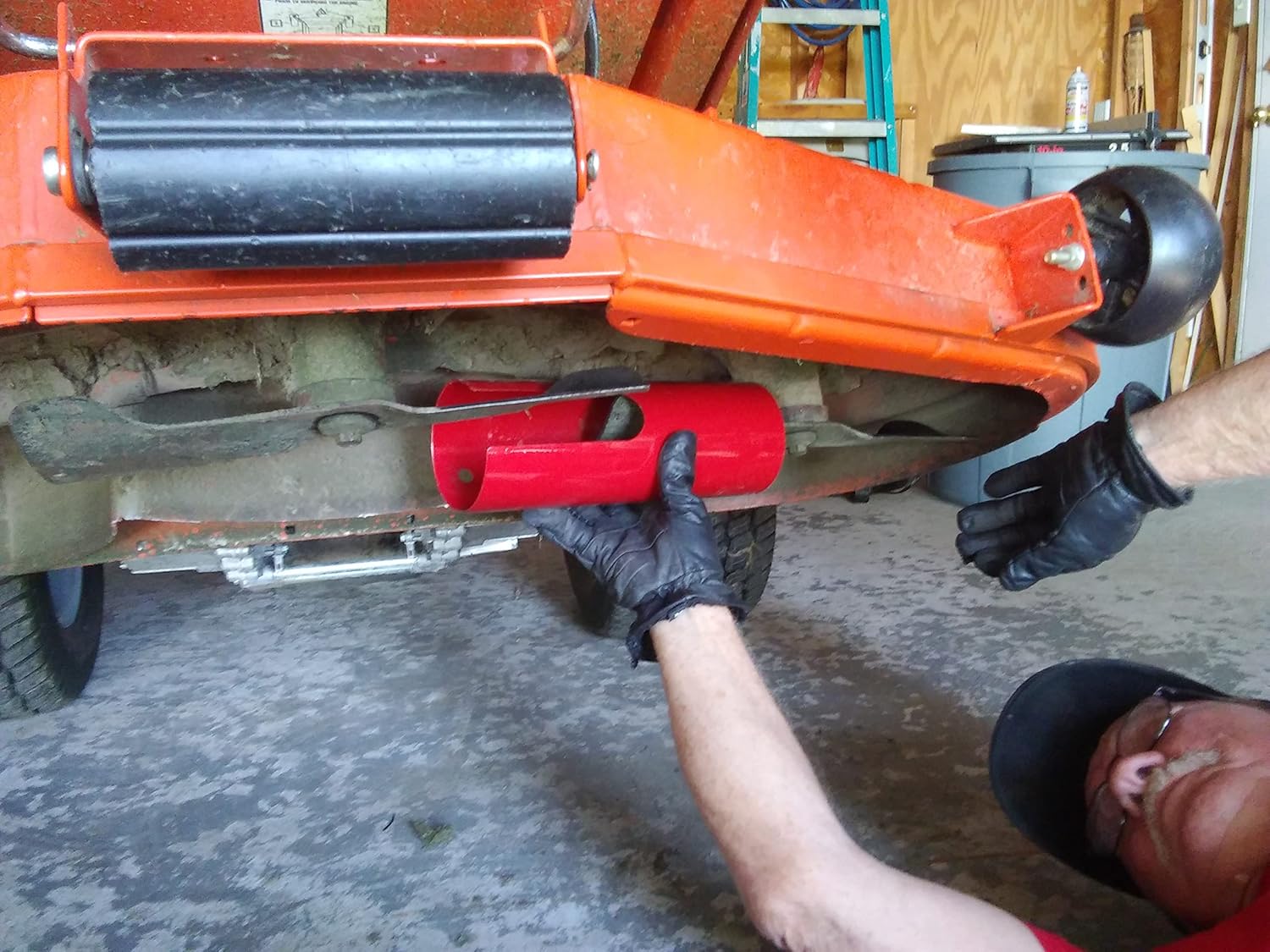
The BLADZ-LOK XL is a purpose-built blade removal tool for riding lawn mowers, specifically designed for blades that are 2-3/4 inches wide or larger. Unlike generic clamps or the old wood-block trick, this tool locks two blades together, letting you break stubborn bolts loose without removing the mower deck. It's a simple but effective solution for anyone who maintains a zero-turn, garden tractor, or other large mower with wide blades.
This tool is best suited for homeowners and DIYers who sharpen or replace their own blades regularly. If you've ever wrestled with a deck removal just to swap blades, you'll appreciate the time savings. The XL coupler works on wing-tipped blades and standard wide blades alike. Installation takes about 30 seconds: slide it over one blade, rotate to catch the second blade, and tighten the knob. That's it.
In real-world use, the BLADZ-LOK delivers consistent performance. Reviewers report that it holds blades securely even at high torque settings (90 ft-lbs), and it's much faster than clamp-on tools that can slip or strip. The carbon steel construction feels solid, and the powder coating resists rust. At 2.75 pounds, it's heavy enough to feel durable but not cumbersome to handle under the deck.
Build quality is excellent. The tool is made in the USA and backed by a 5-year limited warranty. Customer service gets high marks for responsiveness and fairness. However, the price is a sticking point for some. It's more expensive than a piece of pipe you could cut yourself, but the precision cut and finish justify the cost for most users. A minor drawback: it only works on blades 2-3/4 inches and wider, so it won't help with standard push mower blades. Also, one reviewer noted it didn't stabilize three blades on a Scag Tigercat II, so check your deck configuration.
Overall, the BLADZ-LOK XL is a worthwhile investment for anyone with a large riding mower who values efficiency and safety. If you change blades more than once a season, this tool will pay for itself in saved time and frustration. Just measure your blade width before ordering to ensure compatibility.

Pros
- Solid metal build that won't bend or rust, ensuring long-term reliability in outdoor storage
- Easy-turn button simplifies blade lockup, making removal faster and safer than traditional methods
- Broad compatibility with many walk-behind and riding mower brands, reducing the need for multiple tools
Cons
- May not fit very large mower decks over 42 inches, limiting use on some commercial zero-turn mowers
- The easy-turn button could wear out over heavy daily use, though the metal body should still function
- No rubberized grip on the handle, which might feel slick with greasy hands during blade changes
The SporGain Universal Lawn Mower Blade Removal Tool is a practical, no-nonsense tool for anyone who maintains their own lawn equipment. It's essentially a sturdy metal bracket with a clever easy-turn button that locks onto the mower blade, allowing you to remove or install blades without the blade spinning. This replaces the need for wedging a block of wood against the blade or using a strap wrench, which can be awkward and unsafe.
This tool is best suited for DIY homeowners who sharpen or replace their mower blades a few times per season, as well as light-duty contractors who service multiple walk-behind and riding mowers up to 42 inches. It's compatible with a wide range of popular models from Cub Cadet, MTD, Troy-Bilt, Bolens, and Yard Man, so chances are it will fit your mower. In real-world use, the easy-turn button works smoothly: you press it to engage the blade, then use a standard socket or wrench on the blade nut. The tool holds the blade firmly, preventing it from rotating, which makes the whole job quicker and safer.
Build quality is a standout here. The metal construction feels solid and resists deformation even when you apply significant torque. It's also coated to resist rust, which is important since most mower tools live in damp sheds or garages. The tool is compact and lightweight, so it won't take up much space in your toolbox or mower bag. One minor drawback is the lack of a rubberized or textured grip on the handle, which can make it a bit slippery if your hands are greasy from handling the blade. Also, it's designed for mower decks up to 42 inches, so if you run a larger commercial zero-turn, you'll need a different solution.
Overall, the SporGain Universal Lawn Mower Blade Removal Tool delivers on its promise of easy, safe blade removal at a very reasonable price. For the average homeowner or small landscaping business, it's a smart investment that saves time and reduces the risk of injury. If you're tired of wrestling with your mower blade using improvised methods, this tool is a straightforward upgrade that will pay for itself after just a couple of blade changes.
Practical Step-by-Step Guide to Removing Riding Lawn Mower Blades
Removing a riding mower blade requires immobilizing the blade assembly, stabilizing the machine, and applying controlled counter-torque to the center retaining bolt. Because mower engines spin cutting assemblies at thousands of rotations per minute, spindle hardware is tightened under substantial factory torque. Attempting to loosen these fasteners without proper blade-locking gear often leads to spinning spindles, damaged knuckles, or stripped bolt threads. A methodical approach keeps the work safe and preserves the mechanical integrity of your mower deck.
Essential Safety Preparations Before Servicing the Deck
Safety begins with completely disabling the engine ignition system so the machine cannot start under any circumstance. Disconnect the spark plug wire from each spark plug boot and tuck the rubber terminal away from the metal engine block. Remove the ignition key from the dashboard switch and engage the manual parking brake firmly. These precautions prevent accidental engine rotation when you manually manipulate the cutting blade underneath the housing.
Fuel management is another critical safety consideration whenever a lawn tractor or zero-turn mower is elevated for service. If you plan to lift the front axle using ramps or a mower lift, check that the fuel cap is tightly sealed and the tank is less than half full. Overfilled fuel tanks can leak gasoline through vented caps or saturate the air filter assembly when tilted back. Disconnecting the negative battery cable also prevents inadvertent starter activation while hands are positioned near moving parts.
Deck Removal Versus Raising the Mower Chassis
Lawn tractor owners must decide whether to unbolt blades with the cutting deck installed or drop the entire deck shell onto the floor. Raising the front wheels with heavy-duty service ramps or a specialized hydraulic mower jack provides sufficient clearance without disassembling deck linkages. This method saves substantial time during quick mid-season sharpenings or blade inspections. However, working under an elevated chassis requires solid jack stands to support the frame securely before placing your hands under the deck.
Removing the complete deck assembly takes a bit more effort upfront but delivers unobstructed access to every spindle. Dropping the deck involves lowering the height adjustment lever, slipping the drive belt off the electric PTO clutch, and releasing several cotter pins from the draft arms. Once disconnected, sliding the deck out from underneath the tractor frame lets you work comfortably from an upright kneeling position. Complete deck removal is especially helpful if spindle hardware is severely rusted or if you plan to scrape accumulated turf buildup from the deck underside.
Blade Immobilization Methods and Removal Tools
Because mower spindles rotate freely on internal bearings, applying wrench torque simply spins the blade rather than loosening the retaining hardware. Homeowners historically wedged scrap pieces of two-by-four lumber between the blade wing and the inner deck wall. While scrap wood can work in an emergency, soft lumber often slips, splinters, or shifts under heavy breaker bar pressure. A slipping block creates sudden momentum that can easily pinch fingers against the steel deck flange.
Dedicated deck clamp stoppers provide a far more reliable, slip-free solution for single and multi-spindle decks. Universal clamps such as the MaxPower 339079 and the KINTLE 490-850-0005 attach directly to the outer lip of mower decks up to 42 inches in size. Models like the Otoolling 2 Pack 750-058 and the SporGain Universal Blade Removal Tool use sturdy metal frames with easy-turn threaded handles to lock the cutting edge solidly in place. These tools feature durable metal bodies and protective thread caps to prevent galling, allowing a single operator to apply high torque safely.
Twin-blade riding mowers can also utilize dual-blade locking couplers such as the patented BLADZ-LOK removal system. Instead of clamping to the deck flange, this tool couples adjacent blades together beneath the tractor so the opposing blade prevents rotational movement. Standard couplers accommodate blade widths up to 2-3/4 inches, while larger high-lift and commercial decks require the BLADZ-LOK XL coupler designed for blade widths exceeding 2-3/4 inches. Verifying blade width before selecting a coupler prevents fitment problems and ensures clean mechanical engagement.
Step-by-Step Procedure for Loosening Hardware
Position your chosen blade lock firmly against the trailing, non-sharpened edge of the mower blade. Tighten the clamping knob on tools like the VoltRidge 490-850-0005 until the clamp jaws hold the deck rim without wobbling. Verify that the tool cannot shift when upward or downward pressure is applied to the wrench handle. A secure setup protects both the deck shell and your hands from sudden shifting.
Select the correct socket size and attach it to a long-handled breaker bar or heavy-duty ratchet. Most riding lawn mowers use standard right-hand threaded hardware, which loosens by turning counterclockwise when looking directly up at the bolt head. Some dual-spindle or timed-deck mowers utilize reverse left-hand threads on one spindle, so always check your machine manual if the bolt resists normal movement. Fit the socket completely over the bolt head to prevent rounding off the hex corners under pressure.
Apply firm, steady force on the wrench handle until you feel the initial factory torque break free. Avoid jerking the tool abruptly, as sudden shock can damage spindle teeth or crack aluminum spindle housings. Once the fastener loosens, unthread it by hand while supporting the bottom of the cutting blade with a thick leather work glove. Lower the blade, concave washer, and retaining bolt carefully to keep the assembly sequence intact for future installation.
Managing Spindle Adapters and Hardware Orientation
Riding mower blades attach to the spindle shaft through specialized star-point splines or round center holes. Many popular brands employ 5-point, 6-point, or triangular star centers that match matching splines cast into the spindle shaft. Carefully inspect the spindle star teeth as you slide the blade off the shaft. If the teeth appear rounded or deformed from loose blade operation, the spindle shaft or adapter must be replaced before installing another blade.
Pay close attention to the concave Belleville or disc spring washer located beneath the bolt head. These cupped washers maintain constant tension on the blade and must always be installed with the domed crown facing the bolt and the outer rim pressing against the blade. Installing cupped washers upside down reduces clamping pressure and allows the cutting blade to vibrate loose during operation. Exploring a proper replacement mower blade setup provides useful guidance on matching hardware patterns and center-hole geometry.
Diagnosing and Freezing Seized Retaining Bolts
Corrosion, acidic grass residue, and overtightening frequently cause spindle bolts to seize solidly over time. If a breaker bar bends without breaking the fastener free, stop immediately before stripping the bolt head corners. Spray a generous amount of penetrating oil directly around the bolt shoulder and spindle interface, allowing it to soak for at least fifteen minutes. Tapping the bolt head lightly with a small brass hammer helps create micro-fractures in rust bonds without damaging spindle bearings.
Never apply open torch flame to loosen seized spindle bolts on a riding mower deck. Intense direct heat can burn spindle shaft seals, boil internal bearing grease, and warp thin stamped steel deck shells. If penetrating fluid and manual breaker bars fail to loosen the hardware, an electric impact wrench with an impact-rated six-point socket can provide safe vibratory torque. Keep the blade clamp firmly engaged even when using impact tools to avoid shock transmission to spindle internal components.
Inspecting Deck Components and Spindle Assemblies
With the cutting blade removed, take the opportunity to inspect the bare spindle assembly thoroughly. Grasp the spindle pulley or shaft and check for noticeable vertical or horizontal play. A healthy spindle should spin smoothly with gentle resistance and produce zero grinding, rattling, or squealing noises. Incorporating regular spindle checks into your broader riding lawn mower maintenance routine helps catch failing bearings before catastrophic deck failure occurs.
Examine the underside of the deck housing for structural fatigue, cracking, or metal deformation around the spindle mounting points. Riding mowers that strike buried obstacles often suffer subtle deck warping that misaligns the cutting plane between adjacent spindles. Clean away compacted grass clippings and moist mulch using a stiff plastic putty knife to inhibit corrosion. Scraping the deck underside also improves under-deck airflow, which directly influences bagging and discharging efficiency.
Blade Condition Assessment and Static Balancing
Examine the removed blade carefully to determine whether it can be resharpened or requires complete replacement. Look for deep gouges, thinned sail sections near the uplift wings, or hairline cracks radiating from the center mounting hole. Blades with bent cutting planes or excessively thinned metal cannot be safely salvaged and must be discarded. Operating a compromised blade risks catastrophic metal separation at full mowing RPM, creating severe safety hazards.
Sharpening a serviceable blade requires restoring the cutting angle without removing excessive metal from one end. After filing or grinding the cutting bevel, checking static balance is essential to prevent engine and spindle vibration. Compact balancing tools like the Silcpall zinc alloy round balancer allow DIYers to check horizontal balance in seconds. Placing the center hole of the blade onto the balancer cone reveals whether one wing is heavier than the other. Grind additional material from the non-cutting rear edge of the heavier wing until the blade rests completely level.
Correct Reinstallation and Proper Torque Verification
Reinstalling a sharpened or new blade demands strict attention to blade orientation. Mower blades are directional, featuring uplift wings designed to generate airflow toward the discharge chute or mulching baffles. Ensure the raised sail wings face upward toward the deck interior and the flat cutting surface faces the lawn. Installing a blade upside down causes terrible cutting quality, scalps turf, and increases strain on the engine drive system.
Hand-thread the retaining bolt and concave spring washer to confirm the threads engage smoothly without cross-threading. Secure your deck clamp or blade lock against the opposite side of the deck lip to resist clockwise tightening rotation. Use a calibrated click-type torque wrench rather than an impact tool to achieve the exact foot-pound rating specified in your mower operator manual. Correct torque prevents hardware from backing out during mowing while protecting spindle threads from stretching.
Post-Assembly Verification and Final Safety Checks
Before lowering the mower back to the ground, remove all clamps, blade couplers, and hand tools from underneath the deck shell. Spin the cutting blade carefully by hand while wearing heavy gloves to confirm proper clearance from the deck baffles and adjacent blades. Reconnect the spark plug leads and negative battery terminal only after verifying that all tools are cleared and safety guards are in position. A quick, smooth test run at low throttle confirms the cutting deck runs quietly without abnormal vibration.






Write Your Review
No reviews yet. Be the first to share your experience!