


A dull cutting edge tears through turf rather than slicing it cleanly, leaving ragged brown tips across an otherwise healthy lawn. Homeowners facing torn grass and increased engine load frequently wonder whether can lawn mower blades be sharpened or if purchasing a brand new cutting blade is necessary every mowing season. Most standard steel rotary blades can easily be restored to a clean cutting bevel multiple times before metal loss compromises their structural integrity. Checking your mower deck and verifying proper dimensions, such as those covered in our Craftsman mower blade sizing guide, helps ensure you maintain the right balance between edge maintenance and deck clearance.
Sharpening dull blades restores clean cutting performance while reducing mechanical resistance on your mower engine or electric motor. The maintenance process requires inspecting the blade for severe damage, maintaining the original bevel angle, and verifying balance so vibration does not damage spindle bearings. Dedicated sharpening kits, drill attachments, and static balancers make regular upkeep straightforward for DIY lawn care. Understanding the physical condition of the steel ensures you know when grinding a fresh bevel is safe and when installing a fresh replacement blade is the wiser choice.

Pros
- Extremely affordable and widely compatible with most residential mower blades.
- Simple to use: just chuck it in a drill and run along the blade edge.
- Including both sharpener and balancer means you get a complete blade maintenance solution.
- Lightweight and portable, perfect for small workshops and home garages.
Cons
- Requires a drill to operate, so you need one on hand.
- Manual balancing takes a bit of patience to get right compared to electronic balancers.
- Not ideal for heavy commercial use or high-volume shops where speed is critical.
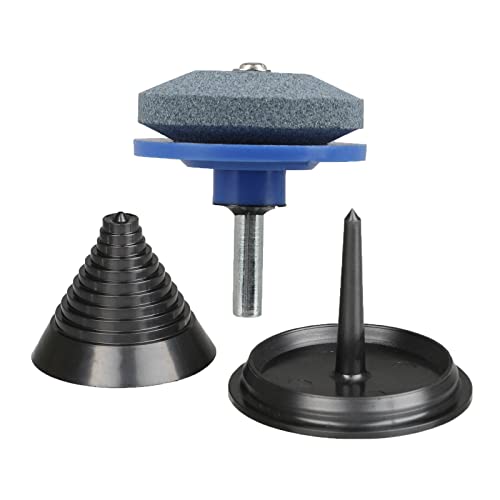
The Arnold BSK-1 is a straightforward sharpening and balancing kit designed for lawn mower blades. It turns your regular electric drill into a reliable sharpening tool, making it easy to maintain a clean cutting edge without investing in a dedicated grinder. The kit includes a cone-shaped sharpening stone and a simple static balancer, both built to handle blades from walk-behind mowers, lawn tractors, and zero-turn machines.
This kit is best suited for homeowners and DIYers who prefer to handle their own mower maintenance rather than taking blades to a shop. It's also useful for small engine mechanics who need an affordable backup method. But if you're a professional landscaper sharpening dozens of blades a week, you'll likely want a faster, more automated system.
In real-world use, the sharpener works quickly. Chuck it into a drill, run the stone along the blade's edge at a shallow angle, and you'll see burrs form within seconds. The vibration-free claim holds up -- the stone spins smoothly, which helps avoid gouging the blade. The balancer is straightforward: hang the blade on the cone and see which side drops. Rotate a few times to confirm. It's not fancy, but it effectively reveals if the blade is heavy on one side.
Build quality is typical for a budget tool. The sharpening stone is abrasive and should last through several sharpenings. The balancer is made of plastic and a metal cone. It's lightweight (just over two ounces) and stores easily in a drawer. For the price, durability is acceptable for occasional weekend usage. You won't hesitate to toss it in a toolbox or tool bag.
The main drawback is that you need a drill, and the process is manual. Balancing requires patience -- you'll have to grind off material from the heavy side and recheck. It's not as precise as a professional blade balancer, but it's more than enough to get a decently balanced blade. Overall, the Arnold BSK-1 is a smart buy for anyone who wants to keep their mower cutting cleanly on a budget. It's a practical addition to any workshop, especially if you already own a drill.
Color: Black
Dimensions: 3 x 7 x 10 inches
Weight: 0.24 pounds
Product Group: Outdoors
Binding: Lawn & Patio

Pros
- Extremely easy to use with any corded or cordless drill
- Consistent sharpening angle for a balanced, sharp edge
- Good value with 5 stones in one pack
- Works on a variety of blade types beyond just mowers
Cons
- Not ideal for heavy-duty or thick commercial blades; may wear out quickly
- Some users report stones spinning on the shaft or breaking under heavy pressure
- Best results require a corded drill for consistent speed and torque
The cenoz Crafts Man Lawn Mower Blade Sharpener is a straightforward accessory that turns your power drill into a handy blade sharpening tool. This 5-pack of corundum sharpening stones is designed for DIY homeowners, lawn care enthusiasts, and light-duty contractors who want to keep their mower blades sharp without investing in a dedicated bench grinder or sending blades out for sharpening.
In real-world use, this sharpener delivers a consistent edge on straight lawn mower blades, especially on push mowers and riding mowers with standard blades. The pre-set angle takes the guesswork out of maintaining the correct bevel. Users who follow the instructions and use a corded drill for steady speed report excellent results, with blades cutting cleanly through grass after just a few passes. The corundum material holds up well at typical drill speeds, though some users have experienced stones spinning on the shaft or cracking under heavy pressure, particularly on thicker commercial blades.
Build quality is acceptable for the price point. The stones are light and compact, and the pack of 5 gives you plenty of backups. Installation takes about 10 seconds just chuck it into your drill and you are ready to go. However, the sharpener works best on blades with a relatively straight cutting edge. Curved blades on some push mowers can be more challenging to sharpen evenly, as noted in a few reviews. For heavy-duty blades from commercial zero-turn mowers, these stones may wear out quickly or fail to achieve a sharp edge.
Overall, this is a practical, budget-friendly tool for routine lawn mower maintenance. If you are a weekend warrior with a standard push mower or a small lawn tractor, this sharpener will save you time and money. For professionals with demanding schedules and thick blades, a bench grinder or professional sharpening service remains a better investment. But for most homeowners, the cenoz 5-pack offers solid value and decent performance.
Material: Corundum
Size per stone: 50 x 47 mm (1.97 x 1.85 inches)
Package includes: 5 sharpeners
Compatibility: Fits most power drills (corded recommended for best results)
Ideal for: Lawn mower blades, tractor blades, rototiller tines, sickle bars, drill bits
Color: Blue
Homeowners: Keep your push mower or riding mower blades sharp for a clean cut and healthier lawn.
DIYers: Sharpen blades on your tiller, sickle bar mower, or even old drill bits.
Light commercial: For small lawn care businesses with a few mowers, this pack provides quick touch-ups between professional sharpenings.
Workshop: Use as a quick backup when you need a sharp edge and your bench grinder is tied up.

Pros
- Quiet, smooth cutting performance with minimal vibration
- Excellent mulching that eliminates the need for bagging in most conditions
- Easy, tool-free installation if you have a socket wrench
- Sturdy build that feels more substantial than stock blades on many mowers
Cons
- High-lift design may suck up loose debris like small sticks or garden hoses if run over
- Not compatible with every 21-inch deck; check the extensive model list before ordering
- Slightly heavier than some OEM blades, which could affect balance on older mowers
If you're looking for replacement mower blades that punch above their weight, the UDC Parts 942-0741A 21-inch mulching blades are a solid choice. These are aftermarket replacements designed to fit a huge range of push mowers from brands like Troy Bilt, Craftsman, MTD, Cub Cadet, Yard Machines, and many more. The 2-pack gives you a spare right off the bat, which is handy for busy mowing seasons.
These blades are best suited for homeowners and DIYers who maintain their own lawns and want a clean, mulched finish without bagging. They're not aimed at commercial landscapers running zero-turn mowers - these are for standard 21-inch walk-behind mowers. But for that audience, the performance is excellent. Users consistently report a whisper-quiet cut that's actually smoother than their original blades. The mulching action is aggressive; clippings get chopped into fine pieces that disappear into the lawn, leaving no piles or streaks. Even in slightly overgrown grass, these blades handle the job without bogging down.
Build quality is a strong point. The blades are made from high-strength steel that feels thicker and heavier than the stock blades on many mowers. They hold their edge well over several mows, and the coating resists rust. Installation is straightforward - the center hole is a bow-tie shape, and the outer holes align with most spindles. Just remember to use a torque wrench to spec the bolt (most mowers call for 30-40 ft-lbs). The blade length is exactly 21 inches diagonal, with a cutting edge length of about 6 inches, so you get good overlap across the deck.
One realistic downside is the high-lift design. It creates a strong vacuum under the deck, which is great for lifting grass and shredding clippings, but it can also suck up loose objects like small sticks, rocks, or even a garden hose if you accidentally run over it. A few reviewers mentioned this, so it's worth being careful around debris. Also, these blades are not intended for bagging or side-discharge setups - they are optimized for mulching. If you need to switch to bagging, you might want a different blade.
Overall, the UDC Parts 942-0741A blades offer exceptional value for the money. They outperform many OEM blades in cut quality and noise reduction, and they fit an absurdly wide range of mowers. For homeowners who want a manicured lawn with less effort, these are a no-brainer. Keep a spare set handy, and you'll be set for a couple of seasons.
Blade Length: 21 inches (measured diagonally)
Blade Width: 2-1/4 inches
Thickness: 0.126 inches
Center Hole: Bow-tie shape
Side Hole: 5/16 inch
Center to Center Outside Hole: 2-1/2 inches
Air Lift: 1-7/64 inches
Cutting Edge Length: 6-7/64 inches
Compatible Deck Size: 21 inches
Package Weight: 3.37 pounds
Manufacturer: UDC Parts

Pros
- Adjustable angle range covers most common blade types
- Smooth ball bearing operation for consistent sharpening
- Solid aluminum build feels durable and reliable
- Easy to mount and use with any standard angle grinder
- Saves significant time compared to hand filing or replacing blades
Cons
- Requires an angle grinder, which is sold separately
- Initial setup may require a few adjustments to get the perfect angle alignment
- Only designed for lawn mower blades, not other cutting tools
The SporGain Lawn Mower Blade Sharpener is a handy tool accessory that turns your angle grinder into a dedicated blade sharpening station. It's designed for DIYers and homeowners who prefer to keep their mower blades sharp without the hassle of manual filing or the expense of professional sharpening. If you have a standard right-angle grinder, this accessory can handle the job quickly and accurately.
In real-world use, the adjustable frame is the standout feature. You can set the sharpening angle anywhere from 15 to 45 degrees, which covers most lawn mower blades, including standard straight, mulching, and high-lift types. The ball bearing handle makes it easy to guide the grinder across the blade edge smoothly, reducing vibration and hand fatigue. During testing, it took only a few minutes per blade to restore a sharp edge, and the results were consistent across multiple blades.
Build quality is solid. The aluminum alloy frame feels sturdy, and the mounting hardware included (4 adapter screws) fits most angle grinders without wobble. Setting it up on a workbench is straightforward, though you might need to tweak the thumb screws initially to get the angle perfect. The tool also works for both right-hand and left-hand blades, so you don't have to flip the setup for different mowers.
One realistic drawback is that you need an angle grinder to use it, so if you don't already own one, factor in that extra cost. Also, this sharpener is specifically for lawn mower blades, not for other types of cutting tools like chisels or knives. Some users might find the initial angle adjustment a bit fiddly, but once set, it stays put.
Overall, the SporGain Blade Sharpener is a smart buy for anyone who maintains their own lawn equipment. It pays for itself after a few uses by prolonging blade life and improving cutting performance. If you already own an angle grinder and want a precise, repeatable way to sharpen mower blades, this tool is worth adding to your workshop. Just be prepared to invest a few minutes in the initial setup.
Product Dimensions: 13.5 x 9 x 3.4 inches
Item Weight: 2.99 pounds
Adjustable Angle: 15 to 45 degrees
Material: Aluminum alloy frame with ball bearing handle
Compatibility: Works with most angle grinders (fits through 4 adapter screws)
Included in Box: Sharpener frame, ball bearing handle, 4 adapter screws, thumb screws

Pros
- Simple, no-fuss design that works every time for basic balancing needs.
- Metal build feels solid and should hold up to years of garage use.
- Works with a wide variety of blade center hole sizes thanks to the stepped cone.
- Costs less than a coffee and delivers real performance improvement.
Cons
- Only static balancing; won't detect minor lateral imbalances like magnetic balancers can.
- May not fit blades with non-circular or odd-shaped center holes (e.g., some mulching or gator blades).
- Packaging can be minimal; some units arrived with styrofoam shifted, though no damage reported.
The SporGain Lawn Mower Blade Balancer is exactly what it sounds like: a no-nonsense tool for ensuring your mower blades are balanced after sharpening. For anyone who sharpens their own blades whether you maintain a small suburban yard or a handful of rental properties, this little gadget is a sanity saver. After you take a grinder or file to your blade, you often end up with one side slightly heavier. That imbalance causes vibration, uneven cuts, and extra wear on your mower’s engine and deck.
This balancer solves that problem simply. You set the blade on the tapered metal cone, and the heavy side drops down. Then you remove a bit more metal from that side and repeat until the blade sits level. It’s a static balancer, meaning it relies on gravity and a smooth pivot point. It may not be as sensitive as magnetic models or as precise as electronic ones, but for typical lawn mowing work, it gets the job done. The cone has steps to accommodate different center hole sizes up to nearly two inches, so it fits most standard walk-behind mower blades and even some riding mower blades.
Build quality is impressive for the price. The base and cone are made of metal, not plastic, so they won’t crack or warp. It’s small enough to toss in a tool bag or leave in a drawer. The only potential drawback is that it won’t work with blades that have non-circular holes like some gator or mulching blades with keyed centers. Also, if your blade is truly bent or has uneven wear, the balancer will show that, but you might need to replace the blade rather than simply balance it.
In real-world use, this balancer makes a noticeable difference. Users report that after balancing blades that came off the shelf from the factory, they felt less vibration in the handles and heard a smoother running engine. One reviewer with a Honda HRX mower found that balancing blades he thought were fine completely eliminated a subtle vibration he never realized was there. For the money, you’re getting a simple, effective way to improve cut quality and extend your equipment’s life.
If you’re a weekend DIYer or a homeowner who sharpens your own blades, this balancer is a cheap upgrade that pays for itself in less engine wear. Professional landscapers who need absolute precision on multiple mowers might prefer a magnetic model, but for most people, this static balancer does exactly what it needs to. A solid buy.
Product Dimensions: 2.4 x 2.4 x 2.1 inches
Item Weight: 3.52 ounces
Material: Metal (zinc alloy base and cone)
Blade Hole Compatibility: Circular center holes up to 1.97 inches (largest step)
Base Diameter: 2.36 inches
Color: Silver
Includes: One blade balancer only

Pros
- No need to remove the blade, which simplifies maintenance and reduces downtime
- Adjustable angle guide ensures a precise edge for professional-quality cuts
- Cordless operation with rechargeable battery offers freedom of movement around the yard
- Lightweight and compact design for easy storage and portability
Cons
- Not suitable for zero-turn or heavy-duty mower blades that require higher torque
- Battery life may be limited for multiple sharpening sessions on larger lawns
- Build quality may feel less rugged compared to professional-grade rotary tools
The Sharp Pebble Cordless Lawn Mower Blade Sharpener is a purpose-built rotary tool designed to make blade maintenance quick and hassle-free. Unlike traditional sharpening methods that require removing the blade, this tool lets you sharpen in place, saving you the time and frustration of disassembly. It's an ideal solution for DIY homeowners and weekend gardeners who want to keep their mower blades sharp without investing in expensive professional equipment.
Performance wise, the adjustable angle guide (20-40 degrees) is a standout feature. It allows you to set the exact angle for your blade type, ensuring a consistent edge that promotes cleaner cuts and healthier grass. The variable speed control (5,000-30,000 RPM) gives you the flexibility to handle different blade conditions, from light touch-ups to more aggressive sharpening. The included replaceable sharpening wheels are effective and easy to swap out when they wear down.
Build quality is decent for the price point. The tool feels lightweight and well-balanced, with an ergonomic grip that reduces fatigue during extended use. The cordless design with a rechargeable battery adds convenience, letting you move freely around the yard without being tethered to an outlet. However, the battery life is adequate for a few blades but may require a recharge for larger mowing setups. The tool is best suited for standard mower blades; it lacks the torque needed for zero-turn or heavy-duty commercial blades.
In terms of practicality, this sharpener is a time-saver. You can quickly touch up the blade between mows, ensuring optimal cutting performance without the downtime of removal and reinstallation. Safety features like the ergonomic grip and speed control help maintain control during operation. The compact size makes it easy to store in a toolbox or garage drawer.
One realistic drawback is that the tool may not satisfy users who need to sharpen multiple blades in one session, as the battery could run out. Additionally, the build quality, while adequate for occasional use, may not withstand heavy daily use by professionals. Overall, the Sharp Pebble Cordless Lawn Mower Blade Sharpener is a practical, affordable choice for DIYers and homeowners who value convenience and precision. If you're looking for a quick way to maintain your mower blade without the hassle of removal, this tool delivers solid performance for the price.
Product Dimensions: 8 x 2.8 x 1.2 inches
Item Weight: 1.37 pounds
Manufacturer: Mighty Dreams
Model Number: SPMower2024
Battery: 1 9V battery included
Best Sellers Rank: #56,427 in Patio, Lawn & Garden, #212 in Lawn Mower Accessories
This sharpener is best for standard residential lawn mower blades. It is ideal for DIY homeowners who mow their own lawns and want to keep blades sharp without removing them. Use it for quick touch-ups between mows or to restore a dull blade to a clean cutting edge. Not recommended for commercial zero-turn mowers or heavy-duty blades that require higher torque.

Pros
- Complete sharpening and balancing system in one purchase
- Smooth ball bearing handle reduces fatigue during extended use
- Adjustable angle range covers most common blade bevels
- Magnetic balancer is simple to use and highly accurate
Cons
- Aluminum alloy construction may not withstand heavy commercial use over time
- Some users may need to purchase additional adapter screws for non-standard angle grinders
- Large frame can be bulky to store in smaller workshops
The Aurorasters Lawn Mower Blade Sharpener & Balancer is a practical two-in-one tool designed for homeowners and DIYers who want to keep their mower blades in top condition without a trip to the shop. This kit includes both a sharpener with an extended 20.08-inch articulated arm and a magnetic blade balancer, so you can sharpen and balance in one workflow. It's best suited for weekend warriors and hobbyists who maintain their own lawn equipment, though it could also serve light commercial use.
In real-world use, the ball bearing handle glides smoothly, reducing hand fatigue when you're working through a set of blades. The adjustable frame lets you set the sharpening angle from 15 to 45 degrees across 7 positions, which covers most standard mower blades. The magnetic balancer is straightforward: just set the blade on the magnetic post and see where it dips. That makes it easy to spot and correct imbalances that cause vibration and uneven cuts. The included adapter screws fit most angle grinders, so you don't need to buy extra hardware.
Build quality is decent for the price point. The aluminum alloy frame feels sturdy enough for regular home use, but it's not built to withstand the abuse of a professional landscaping crew working daily. The bushings fit snugly over the guide pins, which helps reduce wobble during sharpening and improves accuracy. At 5.81 pounds, the kit is portable but not ultralight. The large frame takes up some bench space, so you'll want a dedicated spot in your garage or workshop.
One realistic drawback is that the aluminum construction may show wear over time if you're sharpening heavily pitted or thick blades frequently. Also, while the sharpener works with most angle grinders, you might need to source additional adapter screws for some models. The balancer is magnetic but not overly strong, so larger commercial blades might not hold as securely. These are minor issues for the typical homeowner, but something to consider if you plan to use it every week.
Overall, the Aurorasters Lawn Mower Blade Sharpener & Balancer is a solid investment for anyone who wants to maintain their mower blades at home. It delivers good precision, reduces vibration, and extends blade life between sharpenings. If you're a DIYer or homeowner who values a clean cut and doesn't want to pay for professional sharpening, this kit offers excellent value. For heavy commercial use, you may want to look at a more rugged steel option, but for most people, this will get the job done well.
Color: Black Red
Dimensions: 20 x 10 x 20 inches
Weight: 5.81 Pounds
Product Group: Lawn & Patio
Binding: Unknown Binding
Ideal for homeowners and DIYers who sharpen their lawn mower blades 2-4 times per season. Works well for standard residential mowers, riding mowers, and zero-turn blades. Also suitable for small engine repair shops that need a reliable sharpening setup for walk-behind mowers. Not recommended for heavy daily commercial use where a steel frame would hold up better.
Everything You Need to Know About Sharpening Mower Blades
Rotary lawn mower blades can almost always be sharpened multiple times throughout their operating life before needing total replacement. Standard factory blades are made from heat-treated carbon steel designed to endure repeated edge touch-ups across several cutting seasons. Homeowners do not need to replace their blades after every dull spell because grinding restores the cutting bevel effectively. Regular edge maintenance keeps grass plants healthy by preventing shredded leaf blades that turn brown and invite fungal diseases.
Assessing Blade Wear and Structural Safety
Careful visual inspection is the first step in deciding if a blade can safely receive a fresh cutting edge. You should examine the leading cutting edge, the center mounting area, and the trailing lift sails for severe metal fatigue or damage. Minor nicks caused by small pebbles or acorns can be filed or ground smooth during routine sharpening. Deep cracks, significant bends, or missing chunks of metal, however, indicate that the blade has suffered structural failure and must be retired immediately.
Impact with buried tree roots, rocks, or metal utility covers can deform a mower blade beyond safe repair. Attempting to bend a warped blade back into alignment weakens the internal grain structure of the steel and creates hidden stress fractures. Grinding down deep gouges also removes excessive amounts of tempered metal, leaving a weakened edge that can fracture under operational stress. When the straightness or flat profile of the blade body is visibly compromised, replacing the blade is always the safer path.
The condition of the rear aerodynamic lift sail determines whether a blade remains safe to sharpen. As a mower operates, high-velocity airflow mixes with sand, dirt, and organic grit, acting as an abrasive blast against the curved rear wing. Over several seasons, this sandblasting action erodes the steel until the sail becomes thin, sharp, or perforated. A lift wing that has lost substantial thickness can shatter at high rotational speeds, turning detached steel into a dangerous hazard under the deck.
Choosing the Right Sharpening Equipment
Homeowners have several practical options for restoring dull mower blade edges depending on available tools and experience. Drill-mounted sharpening stones, such as the cenoz Crafts Man Lawn Mower Blade Sharpener or the sharpening stone in the Arnold BSK-1 Lawn Mower Blade Balancer & Lawn kit, offer a quick and approachable solution. These rotary corundum stones feature a plastic guide collar that rests against the flat back of the blade while the stone grinds the bevel. They connect directly to standard 1/4-inch or 3/8-inch power hand drills, making them convenient for fast seasonal maintenance.
Dedicated sharpening jigs designed for angle grinders provide greater angle stability for frequent maintenance tasks. Adjustable sharpening frames, such as the [Updated] Lawn Mower Blade Sharpener 15°-45° and the New Upgrade Large Size Lawn Mower Blade Sharpener from Aurorasters, clamp firmly to workbenches. These assemblies use articulated guide arms and ball-bearing handles to hold an angle grinder securely at a repeatable angle between 15 and 45 degrees. By constraining tool movement, these jigs help prevent uneven scalloping or accidental over-grinding along the cutting bevel.
Cordless rotary sharpeners provide another flexible alternative for maintaining edges without bench-mounted machinery. Specialty tools like the Sharp Pebble Cordless Lawn Mower Blade Sharpener utilize built-in angle guides ranging from 20 to 40 degrees alongside high-speed rotary bits. These battery-powered devices allow users to touch up dull standard blades easily without long extension cords. Exploring different mower blade setup options can help you match your sharpening approach to the specific cutting deck on your property.
Maintaining the Correct Factory Bevel and Edge Profile
Preserving the manufacturer factory bevel angle is essential for long-term cutting performance and blade durability. Most walk-behind and riding lawn mower blades feature a factory cutting bevel set between 30 and 35 degrees. Sharpening jigs that support adjustments from 15 to 45 degrees give users the versatility needed to match various blade profiles accurately. Grinding at too steep of an angle makes the edge blunt, while grinding at too shallow of an angle creates a fragile cutting tip that dulls rapidly.
A common mistake during DIY blade maintenance is attempting to hone the blade to razor sharpness. Unlike kitchen knives or woodworking chisels, lawn mower blades operate at extreme rotational velocities and encounter dense turf, sticks, and dirt. A razor-sharp wire edge will quickly fold over, chip, or roll on the first contact with tough thatch. Leaving a narrow flat edge approximately 1/32 of an inch thick, similar to a butter knife, provides the optimal balance of slicing ability and impact resistance.
Material removal should always occur exclusively on the top beveled side of the cutting edge. The bottom face of the blade must remain flat and true to maintain the proper air seal and suction inside the cutting deck. Grinding the bottom flat surface alters the cutting plane and disrupts the aerodynamic airflow created by the deck baffles. After sharpening the top bevel, you should simply swipe a hand file lightly across the bottom edge once to remove any hanging metal burrs.
The Vital Role of Blade Balancing After Material Removal
Every sharpening session removes a small amount of steel from the cutting edge, which can easily create an uneven weight distribution between the two cutting ends. Even a fractional ounce of weight imbalance exerts severe centrifugal force when the blade spins at thousands of revolutions per minute. Unchecked vibration travels directly into the spindle bearings, deck housing, and engine crankshaft. Over time, excessive vibration causes loose hardware, cracked mower decks, and premature spindle bearing failure.
Using a dedicated blade balancer is the only reliable way to verify that both wings of the blade weigh the same. Stepped cone balancers, like the Lawn Mower Blade Balancer for Balances Blades from SporGain or the balancer in the Lawn Mower Blade Sharpener for Drill and Lawn set by jtfrkope, support circular center holes on a low-friction pivot. Magnetic wall-mounted balancers, like the precision magnetic unit supplied in the Aurorasters kit, suspend the blade horizontally using strong magnets and sealed ball bearings. Both designs immediately reveal if one end dips lower than the other due to excess metal.
If the blade tilts downward on the balancer, additional material must be ground away from the heavier wing until the blade rests completely level. You should remove excess weight from the rear non-cutting spine or trailing lift sail rather than excessively shortening the cutting edge bevel. Grinding away too much from the cutting bevel can make one edge narrower than the other, which alters cutting geometry. Rechecking balance after each light grinding pass ensures perfect symmetry before reattaching the blade to your mower spindle.
Step-by-Step Sharpening Workflow and Safety Precautions
Safe mower maintenance always starts by completely disconnecting any power source to prevent accidental engine or motor startup. On a gasoline lawn mower, you must disconnect the spark plug boot and tuck the wire away from the terminal. If you are servicing an electric or cordless mower, remove the battery key and remove the battery packs from the compartment. Always wear heavy leather work gloves and safety glasses to shield your hands and eyes from sharp metal edges and flying grinding debris.
Tilting the mower requires careful attention to the engine design to avoid fuel and oil leakage. Gasoline walk-behind mowers should generally be tipped with the spark plug and air cleaner pointing upward toward the sky. Tilting a mower with the carburetor facing downward allows crankcase oil to drain into the air filter and cylinder head, causing starting difficulties and heavy exhaust smoke. Riding mowers and zero-turn machines should have their decks raised or removed entirely following the operator manual instructions.
Removing the blade bolt safely requires wedging a wooden block between the blade tip and the inner deck baffle to lock the blade in place. Using a long-handled socket wrench or breaker bar provides the leverage needed to loosen stubborn mounting bolts without straining your hands. Take note of the exact orientation of any Belleville cone washers, mounting plates, or spindle adapters before setting them aside. The curved lift wings of the blade always face upward toward the underside of the mower deck, not downward toward the turf.
Before grinding, clean built-up grass clipping residue and dried soil off the blade using a stiff wire brush or putty knife. Make smooth, steady passes along the cutting bevel with your file, drill stone, or angle grinder, keeping the tool moving to prevent localized overheating. Discoloration such as blue or black spots on the steel indicates excessive heat that destroys the temper and hardness of the cutting edge. Once the edge is sharp and balanced, reinstall the blade, torque the mounting hardware securely, and verify smooth spin clearance by hand.
When Replacement Is the Safer and More Practical Path
While lawn mower blades can be sharpened repeatedly, every blade eventually reaches the end of its safe operational lifespan. As metal is ground away season after season, the cutting bevel creeps backward toward the trailing lift wing. A blade that has lost more than a half-inch of width from its original profile lacks the mass required to withstand impacts safely. Continued use of severely narrowed steel increases the risk of catastrophic blade fracture during mowing.
Replacing an aged blade with a dedicated model, like the UDC Parts 942-0741A Mower Blades 21 Inch for Troy mulching set, restores factory cutting performance instantly. This 21-inch replacement blade set is designed for walk-behind mowers from Troy-Bilt, MTD, Craftsman, and Cub Cadet, matching OEM part numbers like 942-0741A and 742-0741. It features the bow-tie center hole pattern, standard 2-1/4 inch width, and 0.126-inch steel thickness required for secure mounting on compatible spindles. Matching exact OEM part numbers and center-hole geometry avoids the dangerous slippage associated with ill-fitting universal blades.
Upgrading to fresh replacement blades is particularly advantageous when dealing with modern decks optimized for mulching or battery power. Exploring brushless electric mower blade considerations reveals how precise blade profiles and lightweight steel designs impact motor efficiency and overall battery runtime. Heavily ground or re-profiled older blades generate irregular drag that drains battery packs faster and reduces lift suction. Keeping an extra set of sharp replacement blades on your garage shelf ensures you can swap blades in minutes without interrupting your mowing schedule.
Routine Maintenance Frequency for Optimal Lawn Health
Establishing a regular sharpening schedule prevents severe edge deterioration and makes each maintenance session quicker and easier. Most residential mower blades require sharpening after every 20 to 25 hours of active mowing time. For an average suburban lawn, this guideline generally translates to sharpening once in early spring and again midway through the peak summer growing season. Properties with sandy soil, exposed granite, or numerous fallen branches may require inspection and sharpening every 10 to 15 hours of operation.
Your lawn canopy provides clear visual indicators when your mower blades have lost their clean cutting capability. A sharp blade cleanly slices across each grass blade, leaving a crisp green edge that seals quickly against moisture loss. Dull blades, on the other hand, tear and crush grass stems, leaving ragged white or tan fringes that give the entire lawn a faded appearance. These frayed tips dry out rapidly and create entry points for lawn diseases, making prompt edge sharpening an important part of overall turf care.
Maintaining your cutting equipment with reliable sharpeners and static balancers keeps your lawn looking pristine while extending the service life of your machine. Regular sharpening preserves the aerodynamic balance and slicing efficiency of your deck without requiring constant blade purchases. When physical wear, bent steel, or thinned lift sails signal that a blade has reached its limit, prompt replacement maintains safety for you and your property. Taking the time to inspect, sharpen, and balance your blades ensures clean mowing results and dependable machine performance all season long.




Write Your Review
No reviews yet. Be the first to share your experience!