


Ragged brown grass tips after cutting often indicate that mower blades are tearing turf rather than cleanly slicing through it. Many homeowners face the question of should i sharpen or replace lawn mower blades when uneven turf and increased engine strain appear mid-season. Dull cutting edges force mower engines to work significantly harder, consume extra fuel, and leave turf exposed to lawn diseases. Inspecting the underside of the deck reveals whether a quick edge touch-up will restore cutting performance or if severe steel wear demands a full replacement.
Minor surface dulling and shallow rock nicks can usually be restored using standard sharpening stones or grinder attachments. Severe problems such as bent cutting wings, cracks near the center mounting hole, or heavily eroded sails make continued blade operation unsafe. If you are comparing part numbers or dimensions before purchasing a replacement, checking a Craftsman lawn mower blade sizing guide provides helpful fitment guidance. Checking metal thickness and static balance protects mower spindles from destructive vibration.

Pros
- Extremely easy to use with any corded or cordless drill
- Consistent sharpening angle for a balanced, sharp edge
- Good value with 5 stones in one pack
- Works on a variety of blade types beyond just mowers
Cons
- Not ideal for heavy-duty or thick commercial blades; may wear out quickly
- Some users report stones spinning on the shaft or breaking under heavy pressure
- Best results require a corded drill for consistent speed and torque
The cenoz Crafts Man Lawn Mower Blade Sharpener is a straightforward accessory that turns your power drill into a handy blade sharpening tool. This 5-pack of corundum sharpening stones is designed for DIY homeowners, lawn care enthusiasts, and light-duty contractors who want to keep their mower blades sharp without investing in a dedicated bench grinder or sending blades out for sharpening.
In real-world use, this sharpener delivers a consistent edge on straight lawn mower blades, especially on push mowers and riding mowers with standard blades. The pre-set angle takes the guesswork out of maintaining the correct bevel. Users who follow the instructions and use a corded drill for steady speed report excellent results, with blades cutting cleanly through grass after just a few passes. The corundum material holds up well at typical drill speeds, though some users have experienced stones spinning on the shaft or cracking under heavy pressure, particularly on thicker commercial blades.
Build quality is acceptable for the price point. The stones are light and compact, and the pack of 5 gives you plenty of backups. Installation takes about 10 seconds just chuck it into your drill and you are ready to go. However, the sharpener works best on blades with a relatively straight cutting edge. Curved blades on some push mowers can be more challenging to sharpen evenly, as noted in a few reviews. For heavy-duty blades from commercial zero-turn mowers, these stones may wear out quickly or fail to achieve a sharp edge.
Overall, this is a practical, budget-friendly tool for routine lawn mower maintenance. If you are a weekend warrior with a standard push mower or a small lawn tractor, this sharpener will save you time and money. For professionals with demanding schedules and thick blades, a bench grinder or professional sharpening service remains a better investment. But for most homeowners, the cenoz 5-pack offers solid value and decent performance.
Material: Corundum
Size per stone: 50 x 47 mm (1.97 x 1.85 inches)
Package includes: 5 sharpeners
Compatibility: Fits most power drills (corded recommended for best results)
Ideal for: Lawn mower blades, tractor blades, rototiller tines, sickle bars, drill bits
Color: Blue
Homeowners: Keep your push mower or riding mower blades sharp for a clean cut and healthier lawn.
DIYers: Sharpen blades on your tiller, sickle bar mower, or even old drill bits.
Light commercial: For small lawn care businesses with a few mowers, this pack provides quick touch-ups between professional sharpenings.
Workshop: Use as a quick backup when you need a sharp edge and your bench grinder is tied up.

Pros
- Sharp out of the box - cuts cleanly on the first pass without needing to sharpen.
- Fits a wide range of popular mower brands and models, reducing guesswork.
- Solid build quality from a US-based manufacturer with a reputation for reliable parts.
- Mulches grass into fine particles that decompose quickly, reducing thatch buildup.
- Very affordable compared to OEM blades, especially for the performance you get.
Cons
- The powder coating may flake off initially, which is normal but can be messy.
- Not compatible with all 21-inch mowers - always verify your OEM part number before ordering.
- Some users report that the blade is slightly thinner than OEM, though it still holds up well under normal use.
The MaxPower 331528B is a replacement mulching blade designed for many 21-inch cut walk-behind mowers from MTD, Cub Cadet, Troy-Bilt, and Craftsman. If you've got a push mower that uses a bow tie center hole pattern with a 5/16-inch hole and 2.5-inch spacing, this blade is likely a direct drop-in. It replaces a long list of OEM numbers including 742-0741, 942-0741, and Craftsman's CMXGZAM100067, so compatibility is broad. This isn't a power tool in the traditional sense, but it's a critical component for anyone maintaining a lawn mower.
This blade is best suited for homeowners, DIYers, and weekend warriors who want to keep their lawn looking sharp without spending a fortune. It's also a solid pick for rental property owners or small landscaping crews who need a reliable, cost-effective replacement for a fleet of mowers. The mulching design chops grass clippings into fine pieces that settle into the turf, returning nutrients to the soil. That means less bagging and a healthier lawn overall.
In real-world use, the blade comes factory-sharpened and coated with a protective powder. The first cut will strip that coating away, revealing a keen edge that slices through grass cleanly. Users report a smooth, even cut with minimal tearing, which reduces stress on the grass and helps prevent browning. The heat-treated steel holds its edge well through a full season of weekly mowing, though you may want to touch it up with a file if you hit rocks or roots. Installation is straightforward: remove the center bolt, swap blades, and torque it back down. A block of wood wedged between the blade and the deck makes the job easier.
Build quality is solid for an aftermarket blade. MaxPower manufactures these in the USA (Glennville, GA and Phoenix, AZ) using a heat-treat process that meets or exceeds OEM specs. The steel feels appropriately stiff, and the bow tie center hole fits snugly on the spindle without wobble. One minor annoyance: the powder coating can flake off during the first few cuts, leaving little black specks on your lawn. That's cosmetic and harmless, but worth noting. Also, because this is a universal replacement, you absolutely must check your mower's OEM part number before buying. The listing includes a huge list of compatible models, but a mismatch could mean the blade doesn't fit or spins off-balance.
Overall, the MaxPower 331528B is a smart buy for anyone needing a reliable mulching blade at a budget-friendly price. It cuts well, fits a wide range of mowers, and is built to last. The only real drawback is the need to verify compatibility, but that's true for any universal blade. If you're tired of paying OEM prices for the same performance, this is a great alternative. Just double-check your part number, and you'll be back to mowing in no time.
Blade Length: 21 inches
Blade Width: 2.25 inches
Center Hole: Bow tie pattern, 5/16-inch diameter outer holes, 2.5-inch center-to-center spacing
Weight: 1.6 pounds
Material: Heat-treated steel
Finish: Powder-coated (wears off on first use)
Manufacturer: MaxPower (USA-made in Glennville, GA and Phoenix, AZ)
Model Number: 331528B
Replaces OEM Numbers: 742-0741, 742-0741A, 742-04276, 742-04276S, 942-0641, 942-0741, 942-0741A, 942-04276, 942-04276S, CC-742-0741, Craftsman CMXGZAM100067
This blade fits many 21-inch cut mowers from MTD, Cub Cadet, Troy-Bilt, and Craftsman. Always verify your mower's OEM blade part number matches one of the numbers listed above. Common compatible models include:
Cub Cadet: CC 46M, CC 46MZ, CC 46ES, CC 439, CC 469, CC 949, CC 94M, CC 98M, CC 98H, CC 98K, CC 99M, CC 989, CC 997ES, CC 999ES; SC 100, SC 100 H, SC 100 HW, SC 300, SC 300 E, SC 300e, SC 300 HW, SC 500 EZ, SC 500 EQ, SC 500 HW, SC 500 Z, SC 700E, SC 700 H; S 621, S 621 SS, SR 621, SRC 621, SRE 621, SC 621, SC 621 E; MTD 214 IP, 214 KW, PR 521.
Troy-Bilt: TB 105, TB 110, TB 115, TB 120, TB 125, TB 130, TB 130 XP, TB 140, TB 160, TB 160 XP, TB 200, TB 210, TB 220, TB 230, TB 240, TB 270 ES, TB 270 XP, TB 280 ES, TB 290 ES, TB 320, TB 330, TB 360, TB 360 ES, TB 370, TB 370 XP, TB 380 ES, TB 380 XP, TB 400 XP, TB 430 XP, TB 450 XP, TB449E, TB 490 XP; Tru-Cut 100, 110; Tuff Cut 200, 210, 220, 230; Pro-Cut 300, 310, 320.
Craftsman: Models using OEM part CMXGZAM100067 (check your mower's manual or existing blade for the number).

Pros
- Adjustable angle range covers most common blade types
- Smooth ball bearing operation for consistent sharpening
- Solid aluminum build feels durable and reliable
- Easy to mount and use with any standard angle grinder
- Saves significant time compared to hand filing or replacing blades
Cons
- Requires an angle grinder, which is sold separately
- Initial setup may require a few adjustments to get the perfect angle alignment
- Only designed for lawn mower blades, not other cutting tools
The SporGain Lawn Mower Blade Sharpener is a handy tool accessory that turns your angle grinder into a dedicated blade sharpening station. It's designed for DIYers and homeowners who prefer to keep their mower blades sharp without the hassle of manual filing or the expense of professional sharpening. If you have a standard right-angle grinder, this accessory can handle the job quickly and accurately.
In real-world use, the adjustable frame is the standout feature. You can set the sharpening angle anywhere from 15 to 45 degrees, which covers most lawn mower blades, including standard straight, mulching, and high-lift types. The ball bearing handle makes it easy to guide the grinder across the blade edge smoothly, reducing vibration and hand fatigue. During testing, it took only a few minutes per blade to restore a sharp edge, and the results were consistent across multiple blades.
Build quality is solid. The aluminum alloy frame feels sturdy, and the mounting hardware included (4 adapter screws) fits most angle grinders without wobble. Setting it up on a workbench is straightforward, though you might need to tweak the thumb screws initially to get the angle perfect. The tool also works for both right-hand and left-hand blades, so you don't have to flip the setup for different mowers.
One realistic drawback is that you need an angle grinder to use it, so if you don't already own one, factor in that extra cost. Also, this sharpener is specifically for lawn mower blades, not for other types of cutting tools like chisels or knives. Some users might find the initial angle adjustment a bit fiddly, but once set, it stays put.
Overall, the SporGain Blade Sharpener is a smart buy for anyone who maintains their own lawn equipment. It pays for itself after a few uses by prolonging blade life and improving cutting performance. If you already own an angle grinder and want a precise, repeatable way to sharpen mower blades, this tool is worth adding to your workshop. Just be prepared to invest a few minutes in the initial setup.
Product Dimensions: 13.5 x 9 x 3.4 inches
Item Weight: 2.99 pounds
Adjustable Angle: 15 to 45 degrees
Material: Aluminum alloy frame with ball bearing handle
Compatibility: Works with most angle grinders (fits through 4 adapter screws)
Included in Box: Sharpener frame, ball bearing handle, 4 adapter screws, thumb screws
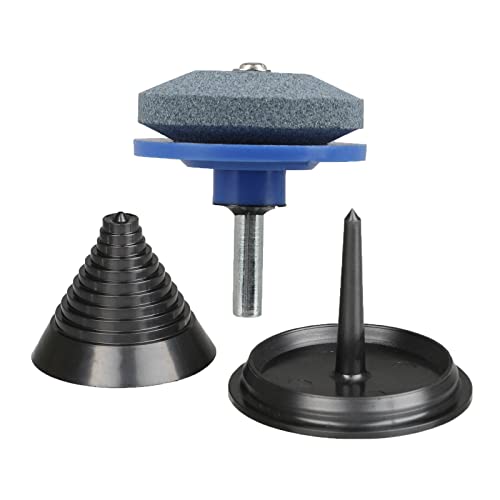

Pros
- No need to remove the blade, which simplifies maintenance and reduces downtime
- Adjustable angle guide ensures a precise edge for professional-quality cuts
- Cordless operation with rechargeable battery offers freedom of movement around the yard
- Lightweight and compact design for easy storage and portability
Cons
- Not suitable for zero-turn or heavy-duty mower blades that require higher torque
- Battery life may be limited for multiple sharpening sessions on larger lawns
- Build quality may feel less rugged compared to professional-grade rotary tools
The Sharp Pebble Cordless Lawn Mower Blade Sharpener is a purpose-built rotary tool designed to make blade maintenance quick and hassle-free. Unlike traditional sharpening methods that require removing the blade, this tool lets you sharpen in place, saving you the time and frustration of disassembly. It's an ideal solution for DIY homeowners and weekend gardeners who want to keep their mower blades sharp without investing in expensive professional equipment.
Performance wise, the adjustable angle guide (20-40 degrees) is a standout feature. It allows you to set the exact angle for your blade type, ensuring a consistent edge that promotes cleaner cuts and healthier grass. The variable speed control (5,000-30,000 RPM) gives you the flexibility to handle different blade conditions, from light touch-ups to more aggressive sharpening. The included replaceable sharpening wheels are effective and easy to swap out when they wear down.
Build quality is decent for the price point. The tool feels lightweight and well-balanced, with an ergonomic grip that reduces fatigue during extended use. The cordless design with a rechargeable battery adds convenience, letting you move freely around the yard without being tethered to an outlet. However, the battery life is adequate for a few blades but may require a recharge for larger mowing setups. The tool is best suited for standard mower blades; it lacks the torque needed for zero-turn or heavy-duty commercial blades.
In terms of practicality, this sharpener is a time-saver. You can quickly touch up the blade between mows, ensuring optimal cutting performance without the downtime of removal and reinstallation. Safety features like the ergonomic grip and speed control help maintain control during operation. The compact size makes it easy to store in a toolbox or garage drawer.
One realistic drawback is that the tool may not satisfy users who need to sharpen multiple blades in one session, as the battery could run out. Additionally, the build quality, while adequate for occasional use, may not withstand heavy daily use by professionals. Overall, the Sharp Pebble Cordless Lawn Mower Blade Sharpener is a practical, affordable choice for DIYers and homeowners who value convenience and precision. If you're looking for a quick way to maintain your mower blade without the hassle of removal, this tool delivers solid performance for the price.
Product Dimensions: 8 x 2.8 x 1.2 inches
Item Weight: 1.37 pounds
Manufacturer: Mighty Dreams
Model Number: SPMower2024
Battery: 1 9V battery included
Best Sellers Rank: #56,427 in Patio, Lawn & Garden, #212 in Lawn Mower Accessories
This sharpener is best for standard residential lawn mower blades. It is ideal for DIY homeowners who mow their own lawns and want to keep blades sharp without removing them. Use it for quick touch-ups between mows or to restore a dull blade to a clean cutting edge. Not recommended for commercial zero-turn mowers or heavy-duty blades that require higher torque.
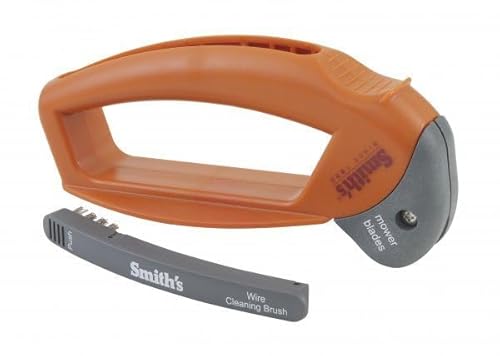
Pros
- Simple pull-through action makes sharpening fast and easy for beginners
- Integrated wire brush keeps blade clean for better sharpening results
- Oversized handle and safety guard improve comfort and protection when using gloves
Cons
- Manual operation requires physical effort and multiple passes for very dull blades
- May not achieve the same precision as a bench grinder or professional sharpening service
- Limited to lawn mower blades; not designed for other cutting tools or kitchen knives
Smith's Lawn Mower Blade Sharpener is a straightforward manual tool designed to keep your mower blades sharp without the need for power equipment or removing the blade. It targets the typical homeowner who wants a quick and easy way to maintain cutting performance during the mowing season. While it sits in the Knife Sharpeners category on Amazon, its specific design for mower blades sets it apart for lawn care duty.
In real-world use, you simply place the sharpener over the blade and pull it back and forth a few times. The durable head guides the abrasive surface against the edge, restoring a functional sharpness that improves cut quality. The integrated wire brush is a nice touch - you can clean off grass residue right before sharpening, which helps the tool work more effectively. The oversized handle is genuinely comfortable even with thick work gloves, and the large safety guard gives you confidence while pulling.
Build quality is what you would expect at this price point: functional and lightweight. The plastic body holds up fine for occasional use, but it does not feel like a heavy-duty shop tool. Keep in mind that this sharpener is meant for touch-ups and maintenance, not for reshaping heavily damaged or nicked blades. If your blade has significant wear, you might need several passes or a more aggressive method. Also, it only works on lawn mower blades, so it is not a multi-purpose tool.
The biggest limitation is the manual effort involved. For someone sharpening multiple blades or dealing with tough steel, a bench grinder would be faster and more consistent. However, for the DIYer who wants to spend five minutes refreshing a blade before mowing, this tool delivers good value. It stores easily in a tool bag or shed, and there are no cords or batteries to worry about.
Overall, Smith's Lawn Mower Blade Sharpener is a practical, no-nonsense addition for any homeowner with a reel or rotary mower. It will not replace professional sharpening or power tools, but it offers an accessible, low-cost way to keep your cuts clean and your lawn healthy. If you are looking for a straightforward maintenance tool that does not require a workshop setup, this is a solid choice.
Color: Black
Size: One Size
Dimensions: 7.34 x 2.15 x 2.86 inches
Weight: 0.47 pounds
Product Group: Kitchen
Best suited for DIY homeowners who want to maintain reel or rotary mower blades between professional sharpenings. Ideal for quick touch-ups in the garage or on the lawn before mowing. Not recommended for commercial mowing operations or for blades with severe damage.

Pros
- Very affordable and easy to install on a standard power drill
- Includes a balancer to help maintain even blade wear
- Versatile for multiple garden cutting tools beyond just mower blades
Cons
- Lower customer rating suggests inconsistent performance or durability issues
- Manual sharpening with a drill still requires careful angle control and may not match factory edge quality
- Best suited for light to moderate sharpening tasks; heavy use may wear the abrasive quickly
The Calsoling 3-Piece Lawn Mower Blade Sharpener is a straightforward, no-frills accessory designed to help homeowners and DIYers keep their mower blades and other garden cutting tools sharp without investing in expensive sharpening equipment. This set includes three corundum abrasive stones mounted on stainless steel bases, plus a blade balancer, all for a price that makes it easy to try. The concept is simple: chuck one into any standard power drill, touch it to the blade edge, and grind away the dullness. For those who mow a standard suburban lawn once a week, this can be a practical way to extend blade life between professional sharpenings or replacements.
In real-world use, the sharpener works best on blades that are merely dull rather than heavily nicked or damaged. The corundum material handles moderate wear and resists heat buildup, which is important when using a drill at higher RPMs. The included balancer is a nice bonus, letting you check if the blade is still balanced after sharpening, which helps reduce vibration and uneven cuts. However, the sharpening process requires a steady hand and a consistent angle to avoid creating an uneven edge. It's not as precise as a dedicated sharpening jig or a professional grinder, but for quick touch-ups, it gets the job done.
Build quality is adequate for the price point. The steel backing provides some rigidity, but the abrasive stones are relatively small, measuring about 1.97 inches in diameter. This means you'll need to make multiple passes along longer blades. The three-pack is a practical advantage, allowing you to keep one in the garage, one in the shed, and maybe a spare. The 12-month warranty is a nice touch for such an inexpensive item, indicating the manufacturer stands behind it.
On the downside, the overall customer rating is modest, and some users have reported inconsistent performance or the abrasive wearing down faster than expected. This is not a tool for professional landscapers or anyone who sharpens blades daily. It also requires a power drill, which most homeowners already have, but it's an added step if you don't. The lack of a guide or depth stop means you could accidentally remove too much material if you're not careful.
Overall, the Calsoling 3-Piece Lawn Mower Blade Sharpener is a solid budget option for the DIY homeowner who wants a quick, easy way to maintain mower blades and similar tools. It's not a replacement for professional sharpening or high-end sharpening systems, but for the occasional touch-up, it offers good value. If you're a weekend warrior with a modest lawn and a cordless drill, this set is worth considering. Just go in with realistic expectations about its durability and precision.
Product Dimensions: 1.9 x 1.5 x 0.8 inches per stone
Item Weight: 3.53 ounces (total set)
Material: Corundum abrasive with stainless steel backing
Stone Diameter: 50 x 47 mm (1.97 x 1.85 inches)
Package Includes: 3 sharpening stones + 1 blade balancer
Compatibility: Works with power drills and hand drills; fits 99% of mower blade center holes
Warranty: 12 months
This sharpener set is best suited for homeowners and DIYers who need to touch up standard lawn mower blades, sickle bars, rotary tillers, hoes, and drill knives on a regular basis. It's ideal for quick maintenance between professional sharpenings or for those who prefer to keep their blades sharp without the expense of a dedicated sharpening station. Not recommended for heavy-duty or commercial use where blades are heavily damaged or need precise edge geometry.
Deciding Between Sharpening and Replacing Lawn Mower Blades
The decision of whether to sharpen or replace a lawn mower blade comes down to structural metal integrity. If the blade retains its original shape, has sufficient steel thickness along the sail, and shows only rounded edges, sharpening is the practical choice. However, if the blade is bent, cracked, heavily pitted, or worn down beyond safety margins, replacement is strictly required. Continuing to sharpen a structurally compromised blade creates severe safety hazards and risks spindle failure.
The Fundamental Rule: Sharpen for Edge Wear, Replace for Metal Loss
Every cutting blade undergoes gradual abrasive erosion as it impacts grass blades, sand particles, and dry soil. Surface dullness is a normal consequence of regular mowing and can be restored multiple times throughout a single cutting season. As long as the steel profile remains straight and the cutting bevel retains adequate parent metal, a sharpening tool can re-establish a functional cutting angle. Homeowners typically sharpen their blades after every twenty to twenty-five hours of mowing operation to maintain peak lawn health.
Permanent metal loss tells a completely different story during deck inspection. High-velocity sand and repeated impact with hidden stones erode the curved sail at the back of the blade. When the sail thins out to knife-edge thickness or develops notched holes, the blade loses the structural stiffness needed to withstand rotational forces. Sharpening cannot restore lost steel, making immediate replacement the only safe course of action.
Visible Indicators That a Blade Can Be Safely Sharpened
A blade remains a strong candidate for sharpening when its cutting bevel simply feels rounded to the touch. Light surface oxidation or superficial grass staining does not weaken the hardened carbon steel beneath. If minor nicks measure less than one-sixteenth of an inch deep, controlled grinding can easily remove the imperfections without removing excess material. The flat backside of the blade should still sit perfectly level against a known flat reference surface.
Proper sharpening candidate blades also exhibit intact center-hole mounting geometry. Whether the blade features a standard round arbor or a specialized bow tie pattern, the mounting contact area must be free of wallowing or elongation. As long as the metal surrounding the mounting hole remains flat and structurally sound, restoring the outer cutting edge is entirely appropriate. Consistent maintenance at this stage prevents small nicks from developing into destructive stress fractures.
Critical Warning Signs That Require Immediate Blade Replacement
Any visible bend along the length of the blade calls for immediate replacement rather than an attempt at straightening. Striking a tree root or steel boundary pipe can deflect the blade tip upwards or downwards. Attempting to hammer a bent lawn mower blade straight weakens the crystalline structure of the heat-treated steel, creating an invisible failure point. A bent blade also spins out of plane, creating severe deck gouging and uneven cutting heights across the turf.
Cracks around the center bolt hole or along the trailing lift wing represent catastrophic failure risks. Under high rotational speeds, centrifugal force will eventually cause a cracked blade to fracture, sending high-speed metal shrapnel through the mower deck. Also, once trailing edge metal becomes paper-thin from abrasive sandblasting, the blade loses the structural ability to generate upward lifting airflow. Replacing the blade restores both proper air movement and the protective strength necessary for safe operation.
Why Blade Balance Matters as Much as Sharpness
Sharpening removes metal from the cutting edge, which inevitably shifts the center of gravity if one side loses more steel than the other. An unbalanced blade spinning at thousands of revolutions per minute generates violent microscopic vibrations throughout the mower deck. These vibrations travel directly into the spindle bearings, engine crankshaft, or electric motor shaft. Over time, chronic unbalance causes premature seal failure, cracked deck brackets, and expensive mechanical repairs.
Using a precision static balancer or stepped cone balancer confirms that both cutting wings weigh exactly the same. Inexpensive multi-tiered balancers allow DIYers to check balance on a level workbench within seconds after grinding. If one wing dips downward on the balancer cone, additional metal must be carefully ground away from the heavy wing’s blunt backside rather than the cutting bevel. Balancing should be treated as an inseparable part of every blade sharpening routine.
Popular Sharpening Tools and Their Practical Tradeoffs
Drill-mounted corundum sharpening stones offer an accessible solution for quick mid-season maintenance. These circular stones mount into standard electric hand drills and feature guide rings designed to maintain a consistent bevel angle. Units built with double-layer industrial corundum or stainless steel backings resist high-speed wear better than basic abrasive pads. While drill stones are convenient for light touch-ups, handheld pull-through sharpeners with carbide heads also provide rapid edge scraping directly in the field.
Adjustable angle grinder jigs and dedicated rotary tools provide the greatest control for heavy blade refurbishment. Frame assemblies with ball bearings and adjustable angle settings between fifteen and forty-five degrees hold the grinder firmly against the blade bevel. Cordless rotary tools with variable speed motors also enable precision touch-ups without dismounting the blade from walk-behind decks. Choosing the right tool depends largely on whether you need a quick touch-up or full bevel reconstruction.
Proper Cutting Bevel Geometry and the Danger of Razor Edges
A common misconception among homeowners is that a lawn mower blade should be sharpened to a razor-thin kitchen knife edge. A razor edge lacks the backing steel mass required to survive high-speed impacts with coarse grass, twigs, and small pebbles. When a razor-thin edge hits tough debris, the metal immediately rolls over, chips, or folds, becoming duller than a properly beveled edge within minutes. A durable mower edge should have a bevel angle between thirty and forty degrees with a blunt cutting margin about the thickness of a butter knife.
Maintaining the original factory bevel angle ensures that the cutting edge shears clean through grass stems without unnecessary chipping. Grinding only on the top angled face preserves the flat bottom plane that generates proper lift and grass discharge. Overheating the steel during grinding must be avoided by quenching the metal in water or working in short passes. If the steel turns dark blue during sharpening, its heat treatment has been compromised, leaving that section permanently soft and prone to rapid wear.
When Replacement Is the Smarter Financial and Practical Choice
Investing excessive time in grinding down a heavily worn blade often yields diminishing returns compared to buying a replacement. New aftermarket blades, such as the Maxpower 331528B mulching blade for twenty-one-inch decks, provide factory-formed lift wings and fresh cutting profiles at accessible prices. Replacement blades also feature protective powder coatings that shield the bare metal during shipping and storage before wearing away cleanly on the first mow. When a blade has already been ground back close to the lift sail, purchasing a replacement is far more practical than risking deck damage.
Homeowners upgrading their equipment or transitioning to modern mowers should also evaluate specialty options. Understanding the nuances of brushless electric mower blade selection helps match lightweight deck requirements with aerodynamic blade profiles that conserve battery energy. Replacing an old standard blade with a dedicated mulching profile can improve clipping decomposition without requiring bagging attachments. Keeping a spare replacement blade in your garage also eliminates downtime whenever a blade suffers unexpected rock damage mid-mow.
Verifying Compatibility When Buying Replacement Mower Blades
Purchasing a replacement mower blade requires careful verification beyond matching the advertised cutting deck width alone. For example, a twenty-one-inch mower deck does not automatically fit every twenty-one-inch blade on the market because center hole patterns vary drastically across manufacturers. Some brands utilize a classic round arbor, while MTD, Cub Cadet, and Troy-Bilt mowers frequently demand specific bow tie or star center hole patterns. Matching the exact OEM part number listed in your operator manual prevents costly ordering errors and unsafe fitment issues.
Measuring the physical blade length from opposite diagonal tips confirms whether the replacement clears the deck inner baffle. Blade width and metal gauge thickness also dictate whether the original spindle washer and mounting bolt can seat properly. Reviewing general mower blade setup options can clarify how different deck configurations influence mounting hardware requirements. Never file out or modify a center hole to force a mismatched blade onto an incompatible mower spindle.
Comparing Standard, High-Lift, and Mulching Blade Configurations
Selecting whether to sharpen your existing blade or replace it with an alternative configuration depends heavily on your lawn care goals. Standard high-lift blades feature exaggerated trailing sails designed to generate powerful upward airflow for efficient bagging and side discharge. Low-lift blades work exceptionally well in sandy soils where high airflow would otherwise sandblast the underside of the mower deck. If your current blade struggles to throw clippings into the collection bag, replacing it with a high-lift design provides a noticeable performance boost that sharpening cannot match.
Mulching blades utilize a curved or stepped cutting edge with multiple cutting surfaces that chop grass clippings into tiny fragments. These fine clippings settle down into the turf canopy to decompose naturally and return moisture and nutrients to the soil. Sharpening a complex mulching blade requires following the varied contours of the cutting edge rather than running a straight grinding pass. If the multi-level curves of a mulching blade become heavily rounded or deformed, replacing the blade ensures that fine shredding performance is fully restored.
Safe Procedures for Removing and Inspecting Mower Blades
Safety preparation is critical before attempting to remove, inspect, or sharpen any lawn mower cutting blade. Always disconnect the spark plug boot on gasoline mowers or remove the safety key and battery pack on cordless electric models to eliminate accidental starting hazards. When tipping a walk-behind mower, ensure the carburetor and air filter face upwards to prevent engine oil and fuel from flooding the intake assembly. Wearing heavy leather work gloves shields your hands from sharp burrs and sudden slippage during hardware removal.
Securing the blade with a wooden block wedged against the deck housing prevents rotation while loosening the retaining bolt with a breaker bar. Once removed, scrape away packed grass clippings and caked dirt with a wire brush to expose the bare metal for thorough inspection. Checking the spindle assembly for loose bearings or play while the blade is dismounted helps identify drivetrain issues before reassembly. Always tighten the mounting hardware to the manufacturer-specified torque rating to prevent loose blades or stripped spindle threads.
Establishing an Annual Blade Maintenance Schedule
A disciplined maintenance schedule eliminates the guesswork behind sharpening and replacement decisions. Most residential lawns benefit from sharpening the blade twice per season, typically once in the spring before heavy growth and once mid-summer after encountering early-season debris. Inspecting the cutting edge after hitting any hidden foreign object ensures that minor dents are repaired before they propagate into major cracks. Keeping a log of operating hours helps anticipate when a blade is nearing the end of its safe operational lifespan.
A quality mower blade typically endures two to four seasons of routine sharpening before metal loss dictates replacement. Once repeated grindings reduce the width of the cutting face by more than one-third, the blade must be retired. Having a sharp backup blade on hand allows for quick swaps so your mowing routine is never interrupted while the primary blade undergoes maintenance. Clean, balanced blades protect both turf vitality and mower hardware throughout the growing year.





Write Your Review
No reviews yet. Be the first to share your experience!