


A jagged, shredded lawn often points directly to a dull cutting edge rather than an engine performance problem. Learning how to sharpen lawn mower blade with drill attachment gives homeowners a fast, accessible way to restore clean cutting performance without removing bulky bench grinders from the garage shelf. When cutting edges wear down against sandy soil and tough turf, blades tear grass fibers instead of slicing cleanly, leaving yellowed lawn tips and increasing susceptibility to turf disease. Utilizing a compact rotary drill stone allows users to re-establish a sharp cutting bevel right at the workbench in minutes.
Most drill attachments feature a molded plastic guide or metal backer that automatically aligns the abrasive stone against the factory bevel. Reviewing detailed mower blade feedback analysis confirms that keeping blades regularly dressed reduces deck vibration and improves overall mulching efficiency. A simple cordless or corded hand drill provides ample rotational speed to spin corundum stones or diamond abrasive wheels effectively. With proper safety precautions and steady pressure, this technique extends cutting life and preserves crisp lawn striping throughout the growing season.
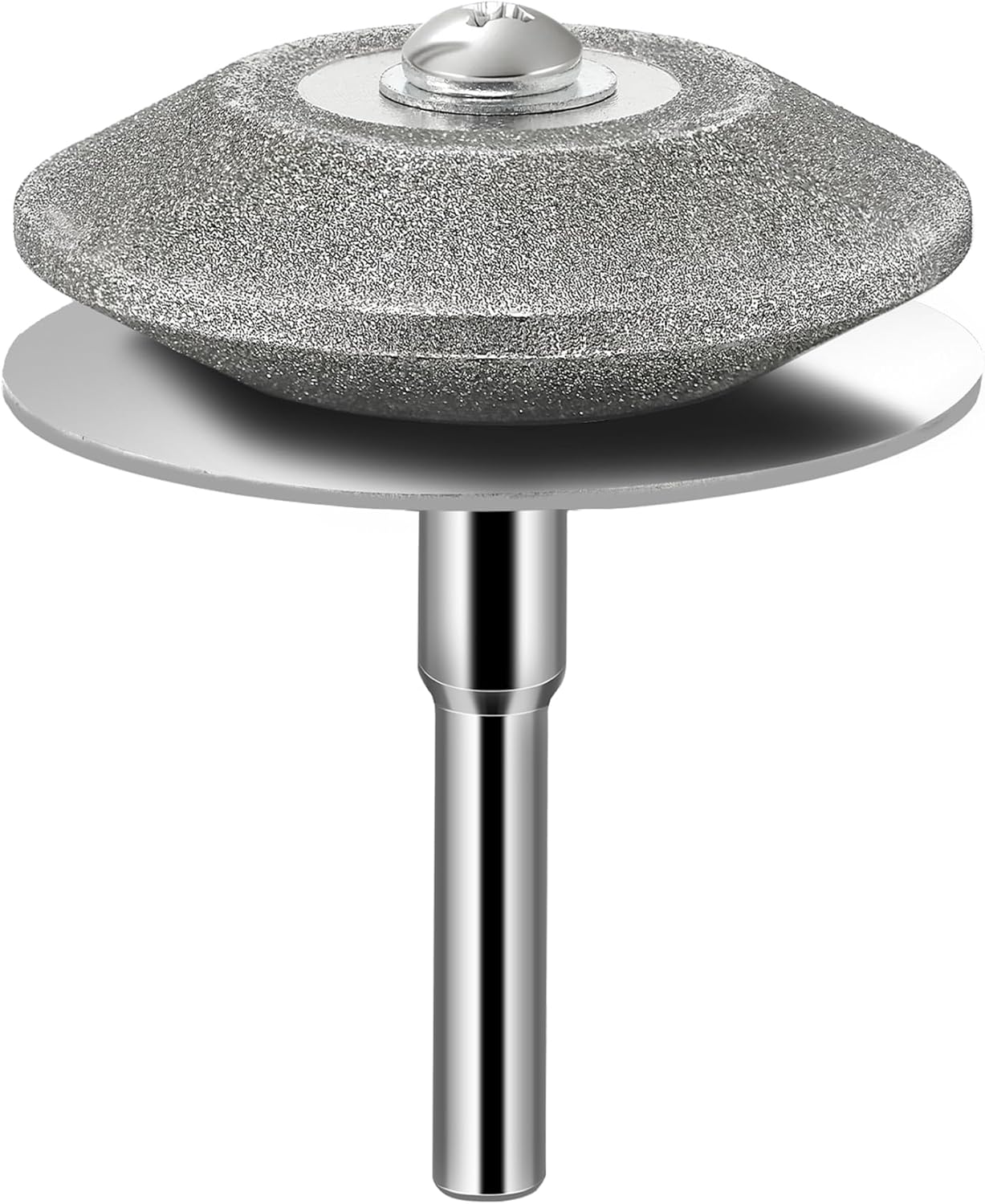
Pros
- Extremely easy to use – simply chuck it in your drill and run it along the blade bevel.
- Versatile enough for multiple tool types beyond just lawn mowers.
- Compact and lightweight at 7 ounces, stores easily in any toolbox or drawer.
- Diamond grit holds its edge far longer than traditional abrasive stones.
Cons
- 120 grit is a medium finish – very dull or nicked blades may require multiple passes or a coarser stone first.
- No angle guide included, so you need a steady hand to maintain the factory bevel angle.
- Not ideal for heavy-duty commercial sharpening or extremely hard blade steels.
If you maintain your own lawn mower, you know that dull blades tear grass instead of cutting it clean. That leads to brown tips and a ragged lawn. The KURSTOL Diamond Lawn Mower Blade Sharpener is a simple solution that turns any power hand drill into an effective sharpening tool. It's not a standalone power tool but an accessory that belongs in every DIY homeowner's workshop.
This sharpener uses a steel matrix base coated with electroplated diamond. The electroplating process exposes more diamond particle surface, which makes the sharpener cut aggressively. In practice, it removes material noticeably faster than common aluminum oxide stones. The 120 grit leaves a fine enough finish for a mower blade. It also works well on axes, shovels, and even drill bits. Just clamp the blade securely, run the rotating sharpener along the existing bevel, and check progress often.
Setup takes literally 10 seconds. The 1/4 inch shank fits any drill with a standard chuck. You want to run it at medium speed around 2000 RPM for best results. The compact 2.95 x 2.36 x 2.36 inch size and 7 ounce weight mean it won't clutter your tool box. It feels solid in hand, and the diamond surface shows minimal wear after several sharpenings.
The main limitation is that 120 grit isn't coarse enough for heavily nicked or extremely dull blades. For those cases, you might need a separate coarse stone to reshape the edge first. Also, there's no built-in angle guide, so you must keep a consistent angle yourself. With a little practice, it becomes second nature. This tool is best suited for homeowners who maintain their own lawn equipment and want to avoid the cost of replacement blades. It also earns a spot in any workshop where you sharpen axes, shovels, or garden tools.
Overall, the KURSTOL Diamond Lawn Mower Blade Sharpener delivers reliable, fast sharpening at a budget-friendly price. It's a practical addition to any DIYer's sharpening kit. If you already own a drill and need to restore dull edges, this is a smart buy.
Product Dimensions: 2.95 x 2.36 x 2.36 inches
Item Weight: 7 ounces
Grit: 120
Shank Size: 1/4 inch (fits most power drills)
Material: Steel matrix with diamond electroplating
Manufacturer: KURSTOL
ASIN: B0FMJQD9V3

Pros
- Extremely easy to use with any corded or cordless drill
- Consistent sharpening angle for a balanced, sharp edge
- Good value with 5 stones in one pack
- Works on a variety of blade types beyond just mowers
Cons
- Not ideal for heavy-duty or thick commercial blades; may wear out quickly
- Some users report stones spinning on the shaft or breaking under heavy pressure
- Best results require a corded drill for consistent speed and torque
The cenoz Crafts Man Lawn Mower Blade Sharpener is a straightforward accessory that turns your power drill into a handy blade sharpening tool. This 5-pack of corundum sharpening stones is designed for DIY homeowners, lawn care enthusiasts, and light-duty contractors who want to keep their mower blades sharp without investing in a dedicated bench grinder or sending blades out for sharpening.
In real-world use, this sharpener delivers a consistent edge on straight lawn mower blades, especially on push mowers and riding mowers with standard blades. The pre-set angle takes the guesswork out of maintaining the correct bevel. Users who follow the instructions and use a corded drill for steady speed report excellent results, with blades cutting cleanly through grass after just a few passes. The corundum material holds up well at typical drill speeds, though some users have experienced stones spinning on the shaft or cracking under heavy pressure, particularly on thicker commercial blades.
Build quality is acceptable for the price point. The stones are light and compact, and the pack of 5 gives you plenty of backups. Installation takes about 10 seconds just chuck it into your drill and you are ready to go. However, the sharpener works best on blades with a relatively straight cutting edge. Curved blades on some push mowers can be more challenging to sharpen evenly, as noted in a few reviews. For heavy-duty blades from commercial zero-turn mowers, these stones may wear out quickly or fail to achieve a sharp edge.
Overall, this is a practical, budget-friendly tool for routine lawn mower maintenance. If you are a weekend warrior with a standard push mower or a small lawn tractor, this sharpener will save you time and money. For professionals with demanding schedules and thick blades, a bench grinder or professional sharpening service remains a better investment. But for most homeowners, the cenoz 5-pack offers solid value and decent performance.
Material: Corundum
Size per stone: 50 x 47 mm (1.97 x 1.85 inches)
Package includes: 5 sharpeners
Compatibility: Fits most power drills (corded recommended for best results)
Ideal for: Lawn mower blades, tractor blades, rototiller tines, sickle bars, drill bits
Color: Blue
Homeowners: Keep your push mower or riding mower blades sharp for a clean cut and healthier lawn.
DIYers: Sharpen blades on your tiller, sickle bar mower, or even old drill bits.
Light commercial: For small lawn care businesses with a few mowers, this pack provides quick touch-ups between professional sharpenings.
Workshop: Use as a quick backup when you need a sharp edge and your bench grinder is tied up.

Pros
- Durable all-metal build with diamond grit for long-lasting performance
- Simple attachment to any drill makes sharpening quick and convenient
- Extends the life of your mower blades, saving money over time
- Versatile tool that can sharpen various blades and garden tools
- Compact size for easy storage
Cons
- Requires a hand drill for operation, not a standalone tool
- May not be suitable for very dull or damaged blades that need professional grinding
- Limited to 100 grit, which may not provide the finest edge for all users
The UF-SHARP Diamond Lawn Mower Blade Sharpener is a handy accessory designed to help homeowners and lawn care enthusiasts keep their mower blades sharp without the hassle or expense of replacing them. This compact tool is particularly well-suited for budget-conscious shoppers, DIYers, and anyone who prefers to maintain their own lawn equipment. It also works well for suburban homeowners with medium-sized yards who want to extend the life of their blades between professional sharpenings.
In terms of performance, this sharpener attaches directly to any standard hand drill via its 5mm handle, making the sharpening process fast and straightforward. The 100-grit diamond grinding wheel provides consistent material removal, helping restore a sharp edge to dull blades. This directly improves cutting performance, resulting in cleaner grass cuts and reducing the risk of torn or ragged edges that can lead to lawn disease. Many users find that regular sharpening with this tool helps maintain a healthier lawn and better overall mowing results.
The build quality of the UF-SHARP sharpener is notable for its all-metal construction, which offers durability and reliability over plastic alternatives. The diamond grinding wheel is designed for long use and can be flipped to utilize both sides, effectively doubling its lifespan. This rugged design makes it a practical addition to any garage or shed, able to withstand repeated use without wearing down quickly.
Ease of use is a key advantage here. Simply insert the sharpener into your drill chuck, secure it, and run it along the edge of your mower blade. The process takes just a few minutes per blade, and the compact size of the tool allows for easy storage in a toolbox or drawer. Maintenance is minimal, as the grinding wheel requires no special care beyond occasional cleaning. This makes it an excellent option for first-time mower buyers or elderly users who want a simple, low-effort way to keep their blades sharp.
However, there are some realistic limitations to consider. The sharpener works best on blades that are moderately dull; severely damaged or excessively worn blades may still require professional grinding or replacement. Additionally, because it relies on a hand drill, you need to have a drill available and be comfortable using it. The 100-grit wheel provides a good balance of speed and finish, but some users may prefer a finer grit for a razor-sharp edge.
Overall, the UF-SHARP Diamond Lawn Mower Blade Sharpener offers excellent value for homeowners who want to maintain their lawn equipment without frequent blade replacements. It is a practical, cost-effective solution for suburban lawn owners, apartment dwellers with small mowers, and anyone who takes pride in keeping their yard tools in top shape. If you already own a hand drill and want to save money on blade changes, this sharpener is a smart investment for your lawn care routine.

Pros
- Very affordable and easy to install on a standard power drill
- Includes a balancer to help maintain even blade wear
- Versatile for multiple garden cutting tools beyond just mower blades
Cons
- Lower customer rating suggests inconsistent performance or durability issues
- Manual sharpening with a drill still requires careful angle control and may not match factory edge quality
- Best suited for light to moderate sharpening tasks; heavy use may wear the abrasive quickly
The Calsoling 3-Piece Lawn Mower Blade Sharpener is a straightforward, no-frills accessory designed to help homeowners and DIYers keep their mower blades and other garden cutting tools sharp without investing in expensive sharpening equipment. This set includes three corundum abrasive stones mounted on stainless steel bases, plus a blade balancer, all for a price that makes it easy to try. The concept is simple: chuck one into any standard power drill, touch it to the blade edge, and grind away the dullness. For those who mow a standard suburban lawn once a week, this can be a practical way to extend blade life between professional sharpenings or replacements.
In real-world use, the sharpener works best on blades that are merely dull rather than heavily nicked or damaged. The corundum material handles moderate wear and resists heat buildup, which is important when using a drill at higher RPMs. The included balancer is a nice bonus, letting you check if the blade is still balanced after sharpening, which helps reduce vibration and uneven cuts. However, the sharpening process requires a steady hand and a consistent angle to avoid creating an uneven edge. It's not as precise as a dedicated sharpening jig or a professional grinder, but for quick touch-ups, it gets the job done.
Build quality is adequate for the price point. The steel backing provides some rigidity, but the abrasive stones are relatively small, measuring about 1.97 inches in diameter. This means you'll need to make multiple passes along longer blades. The three-pack is a practical advantage, allowing you to keep one in the garage, one in the shed, and maybe a spare. The 12-month warranty is a nice touch for such an inexpensive item, indicating the manufacturer stands behind it.
On the downside, the overall customer rating is modest, and some users have reported inconsistent performance or the abrasive wearing down faster than expected. This is not a tool for professional landscapers or anyone who sharpens blades daily. It also requires a power drill, which most homeowners already have, but it's an added step if you don't. The lack of a guide or depth stop means you could accidentally remove too much material if you're not careful.
Overall, the Calsoling 3-Piece Lawn Mower Blade Sharpener is a solid budget option for the DIY homeowner who wants a quick, easy way to maintain mower blades and similar tools. It's not a replacement for professional sharpening or high-end sharpening systems, but for the occasional touch-up, it offers good value. If you're a weekend warrior with a modest lawn and a cordless drill, this set is worth considering. Just go in with realistic expectations about its durability and precision.
Product Dimensions: 1.9 x 1.5 x 0.8 inches per stone
Item Weight: 3.53 ounces (total set)
Material: Corundum abrasive with stainless steel backing
Stone Diameter: 50 x 47 mm (1.97 x 1.85 inches)
Package Includes: 3 sharpening stones + 1 blade balancer
Compatibility: Works with power drills and hand drills; fits 99% of mower blade center holes
Warranty: 12 months
This sharpener set is best suited for homeowners and DIYers who need to touch up standard lawn mower blades, sickle bars, rotary tillers, hoes, and drill knives on a regular basis. It's ideal for quick maintenance between professional sharpenings or for those who prefer to keep their blades sharp without the expense of a dedicated sharpening station. Not recommended for heavy-duty or commercial use where blades are heavily damaged or need precise edge geometry.
Comprehensive Guide to Sharpening Mower Blades With a Drill Attachment
Sharpening a mower blade with a dedicated drill attachment centers on maintaining the manufacturer-specified bevel angle while removing minimal steel. The process pairs a standard electric drill with a guide-assisted abrasive wheel designed to track along the existing edge. Homeowners often struggle with manual hand files that cause uneven bevel angles or heavy bench grinders that quickly overheat delicate blade steel. By guiding a spinning abrasive along the cutting surface, these compact attachments provide a practical middle ground for routine blade reconditioning.
How Rotary Drill Sharpeners Function on Mower Edges
A typical drill attachment sharpener consists of an abrasive grinding wheel, a shank that chucks into the drill, and a guide plate positioned behind the stone. The guide plate rests against the flat underside of the mower blade, positioning the angled grinding stone directly against the factory top bevel. As the drill spins the abrasive, moving the tool along the cutting edge removes burrs and flattens out minor nicks. This guided geometry eliminates guesswork, helping DIYers match the typical thirty-degree cutting angle without specialized grinding jigs.
Grinding wheels in these kits generally use either bonded corundum stone or electroplated diamond matrices. Bonded corundum wheels, like those found in traditional multi-packs, wear down gradually during use to expose fresh abrasive grit. Diamond-coated sharpening wheels utilize a solid steel core bonded with diamond particles, which resists shape deformation during aggressive sharpening tasks. Both attachment styles depend on stable drill rotation to create smooth passes rather than gouging into the blade face.
The shank design directly influences how securely the sharpener mounts into your drill chuck. Most models feature either a standard 1/4-inch round shank or a 5mm shank compatible with three-jaw power drill chucks. Ensuring the shank seats deeply and locks tightly prevents wobbling, which could otherwise create uneven scalloping along the edge. Operating at moderate drill speeds allows the user to monitor abrasive contact and prevent uncontrolled bouncing across the steel.
Essential Safety and Workspace Preparation
Safety preparation begins before touching the blade retaining bolt under the mower deck. Gasoline mowers require disconnecting the spark plug boot to eliminate any possibility of accidental engine starting while handling the blade. Battery-powered electric mowers require removing the safety key and disconnecting the main lithium-ion battery pack completely. Failing to disable the primary power source introduces severe risks during blade maintenance procedures.
Securing the mower blade in a heavy-duty bench vise provides the stability required for safe sharpening. Attempting to sharpen a blade while it remains mounted to the mower deck is unsafe and consistently yields irregular edge bevels. Removing the blade allows full visual inspection of the cutting wings, mounting holes, and overall straightness. Heavy leather work gloves and safety glasses are essential to guard against flying metal swarf and abrasive dust.
Before applying the drill attachment, thoroughly clean caked grass clipping buildup and dirt from the blade body. A wire brush and putty knife quickly remove dried organic matter that could interfere with the sharpener guide plate. When the guide plate cannot sit flush against bare metal, the grinding stone will tilt and alter the intended bevel profile. Inspecting the cleaned steel also reveals hidden cracks or structural flaws that might mandate blade replacement rather than sharpening.
Step-by-Step Sharpening Procedure With a Power Drill
Position the cleaned mower blade horizontally in your bench vise with the cutting bevel facing upward. Insert the sharpener shank into your drill chuck, tightening the jaws evenly to prevent runout. Rest the nylon or metal guide plate against the flat back face of the blade, allowing the beveled abrasive wheel to rest flush against the cutting edge. Aligning the tool prior to pulling the drill trigger ensures smooth engagement without kicking back off the steel.
Start the drill at a moderate speed and pull the spinning wheel smoothly from the inside of the cutting edge toward the outer blade tip. Apply light to moderate pressure, letting the abrasive do the cutting rather than forcing the tool down hard. Maintain a steady, consistent travel speed across the entire cutting length to ensure uniform metal removal. If you are servicing equipment such as riding tractors, consulting a Craftsman mower blade sizing guide helps verify that your specific blade profile matches your deck requirements before you spend time reconditioning worn edges.
Normally, four to five smooth strokes along the cutting edge are sufficient to remove minor dents and establish a clean surface. Count the passes taken on the first cutting edge so you can duplicate the exact number on the opposing side. Removing significantly more material from one end of the blade inevitably causes weight imbalances that generate severe deck vibration. After finishing the beveled side, flip the blade and lightly run a hand file flat across the underside to wipe away any raised wire burrs.
Corundum Versus Diamond Abrasives for Blade Maintenance
Corundum grinding wheels represent the most widespread option among affordable drill sharpening kits. These stones consist of bonded aluminum oxide particles engineered to fracture under pressure, continually exposing sharp mineral points. However, high-speed friction and excessive downforce can cause softer corundum stones to groove or cup over time. Upgraded corundum designs incorporate stainless steel backing plates to reinforce the stone base and prevent premature disintegration against hardened mower steel.
Diamond abrasive sharpeners utilize a steel substrate electroplated with industrial diamond particles, often rated between 100 and 120 grit. Because the underlying wheel body is solid metal, diamond sharpeners do not lose their flat surface geometry during repetitive passes. This dimensional stability ensures the bevel angle remains perfectly flat across multiple sharpening sessions. Diamond wheels also cut aggressively with lighter pressure, generating less localized heat that might compromise the blade temper.
Selecting between the two abrasive materials depends largely on blade hardness and how frequently you perform seasonal maintenance. Standard carbon steel blades on push mowers respond well to corundum wheels when sharpened two or three times each season. Premium commercial blades or hardened mulching edges benefit from the durability and cutting speed of diamond electroplated sharpeners. Both styles deliver dependable results when operated within sensible drill speed ranges and accompanied by steady tool movement.
Balancing the Blade and Checking for Vibration Issues
Blade balancing is an indispensable step that must follow every sharpening session. When one cutting wing weighs even slightly more than the other, the resulting centrifugal imbalance causes severe vibration at full operational engine speeds. Over time, that vibration damages spindle bearings, loosens deck hardware, and degrades overall cut quality. Checking balance requires only a few seconds and prevents costly mechanical repairs down the road.
A stepped cone balancer provides a simple, highly effective method for identifying weight discrepancies. Seat the center hole of the mower blade onto the appropriate step of the balancer cone placed on a level surface. If the blade remains horizontal, the wings are evenly balanced and ready for service. If one wing dips toward the table, that heavier side requires additional material removal to match the lighter end.
When correcting an unbalanced blade, never grind down the freshly sharpened cutting edge to shed weight. Instead, grind a small amount of metal off the back edge or the curved lift sail of the heavier wing. Removing material from the non-cutting rear profile preserves your newly established cutting bevel while restoring equilibrium. If you work with battery mowers, our Ryobi mower blade setup guide offers additional perspective on keeping lighter electric decks running smoothly without excess spindle strain.
Common Mistakes When Using Drill Sharpening Attachments
Running the power drill in reverse is one of the most frequent errors encountered by beginners. The drill must rotate in forward mode so the abrasive wheel spins against the cutting edge properly. Running in reverse tends to unscrew the sharpener arbor hardware, sending the stone loose or creating severe tool chatter. Always confirm rotation direction before touching the abrasive wheel to the mower blade steel.
Another common mistake involves sharpening the blade to a razor-thin, knife-like edge. A lawn mower blade is designed to slice grass at high rotational speeds, not shave hair like a kitchen knife. A razor edge is exceptionally fragile and will roll over, chip, or dull upon impact with the very first pinecone or soil mound. Mower manufacturers recommend leaving a blunt edge landing approximately 1/32 of an inch thick, often compared to the edge of a butter knife, for maximum durability.
Applying excessive downward pressure while grinding represents another pitfall that ruins blade temper. Heavy friction heats the steel rapidly, causing it to glow or turn bluish-black. This discoloration indicates the heat treatment has annealed the steel, making it soft and unable to retain a sharp edge. Keep the drill moving continuously along the edge without pausing in one spot to prevent excessive thermal buildup.
Knowing When to Sharpen Versus Replacing the Blade
While rotary drill sharpeners excel at routine maintenance, they cannot rescue blades that have suffered structural degradation. Minor rounding and shallow nicks can easily be ground out during regular sharpening sessions. However, deep gouges exceeding 1/8 inch or structural cracks near the center mounting hole mean the blade must be retired immediately. Operating a cracked or severely compromised blade creates catastrophic safety hazards if metal fragments detach during operation.
Inspect the thickness of the upward-curved sail at the back of the blade during your evaluation. Sandy soil and abrasive lawn debris act like a sandblaster, gradually thinning the metal of the lift wings over multiple seasons. When the lift sails wear thin or develop jagged holes, the blade can break apart under high rotational stress. In such cases, attempting to sharpen the leading edge is counterproductive because the structural integrity of the wing is already lost.
Check for bent blades by laying the unmounted blade flat on a level concrete floor or workbench. Both cutting tips should make symmetrical contact with the surface when viewed from either end. A blade that has bent from striking a hidden tree root or metal pipe will produce an uneven cut and place severe stress on the mower spindle. Bent blades cannot be safely hammered back into alignment and should always be replaced with a compatible new unit.
Practical Takeaways for Safe and Reliable Cutting
Reinstalling your newly sharpened blade requires close attention to orientation and proper fastener tightening. The curved lift wings must always point upward toward the mower deck, never down toward the lawn. Position the blade adapter and any Belleville washers according to manufacturer directions, ensuring cupped washers face the correct direction. Tightening the blade bolt to the torque specification noted in your mower operator manual ensures the assembly stays safely anchored.
Establishing a regular blade maintenance routine keeps your turf healthy and minimizes seasonal equipment wear. Homeowners mowing typical suburban lawns should inspect and touch up cutting edges every twenty to twenty-five mowing hours. Using a drill attachment makes this periodic reconditioning fast, requiring only a few minutes once the blade is secured in a vise. Consistent edge care rewards you with cleaner cutting action, improved fuel or battery efficiency, and a lush, uniformly manicured yard.



Write Your Review
No reviews yet. Be the first to share your experience!