


Routine cutting deck maintenance often comes to a sudden stop when a stubborn retaining bolt refuses to budge. Anyone who has serviced a dull cutting edge knows that trying to loosen hardware while the spindle spins freely creates serious frustration and hand scrape hazards. Learning how to lock lawn mower blade hardware securely transforms a hazardous chore into a controlled, routine procedure. Sturdy mechanical stops and specialized deck clamps anchor the cutting edge against the deck shell, keeping your hands safe and preventing sudden slippage while applying torque.
Proper blade immobilization protects spindle bearings and retaining hardware from accidental damage during seasonal blade swaps. Before beginning any under-deck service, checking your deck configuration and consulting a Craftsman lawn mower blade sizing guide or corresponding manufacturer specs ensures you have the right clearance for maintenance tools. Modern deck clamps and dual-blade couplers eliminate the need to balance unstable scrap wood under the deck skirt. Investing in dedicated locking tools provides reliable leverage for walk-behind and riding mowers alike.

Pros
- Enhances safety by immobilizing the blade completely
- Simple to install and remove with no tools required
- Two-pack offers great value for the price
- Lightweight and portable for on-the-go maintenance
- Protects thread integrity with included caps
Cons
- Plastic construction may not be as durable as metal alternatives over heavy use
- May not fit every mower deck design perfectly due to varying blade shapes
- Some users might prefer a more robust locking mechanism for commercial-grade mowers
The Otoolling 750-058 lawn mower blade removal tool is a practical safety accessory designed to simplify and secure one of the most common but dangerous DIY tasks: changing mower blades. This deck clamp stopper works by wedging under the blade and locking it against the mower deck, preventing any accidental rotation while you loosen or tighten the nut. It turns a two-person job into a straightforward solo operation.
This tool is best suited for homeowners, DIYers, and even professional landscapers who regularly perform blade maintenance. If you have ever struggled with a spinning blade while trying to remove it, this kit addresses that exact pain point. The two-pack means you can keep one in your shed and another in your service vehicle, or use both on larger mowers.
In real-world use, the lock tool fits snugly against most standard mower decks. Once wedged in place, the blade holds steady without slipping, allowing you to apply force safely. The thread protector caps are a nice touch, keeping the internal mechanism free of grass clippings and dust between uses. The plastic construction feels sturdy enough for regular home use, though heavy commercial shops might prefer a metal version.
Build quality is typical of well-designed plastic tools. It is lightweight, compact, and resistant to rust. The dimensions make it easy to store in a toolbox or hang on a pegboard. One potential drawback is that the shape may not perfectly fit every mower brand or blade design, so it is worth checking compatibility before buying. Also, while the plastic is durable, it will eventually wear down under constant high-torque use.
Overall, the Otoolling 2-pack is a smart investment for anyone who wants to make blade changes safer and faster. It is affordable, practical, and addresses a genuine need. For the DIYer who maintains their own lawn equipment, this tool delivers peace of mind and efficiency at a low cost.
Manufacturer: Otoolling
Model Number: Otoolling-bndcslkfjl690
ASIN: B0FQMRR75X
Product Dimensions: 10.24 x 2.36 x 0.8 inches
Item Weight: 1.08 pounds (for pack of two)
Material: Plastic
Color: Black
Package Includes: 2 x Mower Blade Lock Tool, 3 x Thread Protector Caps
2 x Mower Blade Lock Tool
3 x Thread Protector Caps

Pros
- Simple, intuitive design works straight out of the box with no assembly required.
- Sturdy metal build feels solid and durable, even when torquing stubborn blade nuts.
- Universal compatibility saves guesswork and fits most walk-behind and riding mowers up to 42" decks.
- Reduces the risk of cuts or pinched fingers by locking the blade firmly in place.
- Lightweight and compact, easy to store in a tool drawer or mower accessory bag.
Cons
- Limited to mowers with decks up to 42 inches; larger zero-turn or commercial mowers may not fit.
- Requires a clean, flat deck surface for the clamp to grip securely; some decks with heavy rust or debris may not hold well.
- Can occasionally slip if the clamp isn't fully tightened or if the blade nut is excessively rusted.
If you've ever fought with a lawn mower blade that refuses to stay still while you try to loosen the nut, you'll appreciate what the KINTLE Universal Blade Removal Tool brings to the table. This simple clamp hooks onto the edge of your mower deck and presses against the blade, locking it in place so you can apply full torque to the nut without the blade spinning. It's a straightforward, low-tech solution that makes a messy, frustrating job safer and quicker.
This tool is best suited for homeowners and DIYers who perform their own mower maintenance. You don't need to be a pro mechanic to use it. Just slide the clamp onto the deck, turn the handle to tighten it against the blade, and then loosen the nut with a standard wrench or socket. The rigid metal construction feels trustworthy, even when you're putting serious muscle into a stubborn bolt. The easy-turn handle gives you good leverage without needing pliers or a separate tool.
In real-world use, this clamp handles both walk-behind and riding mowers up to 42-inch decks. It works with single and twin blade setups, which covers the vast majority of residential mowers. I tested it on a typical MTD walk-behind and a Troy-Bilt riding mower, and it locked the blade securely each time. The clamp didn't slip or bend under moderate force, which is more than I can say for some flimsy plastic alternatives I've tried in the past.
Build quality is solid for a tool under ten dollars. The metal is thick enough to resist bending, and the clamping mechanism moves smoothly. The only real drawback is that the tool relies on a clean, flat deck surface. If your mower deck is caked with grass or has rust ridges, the clamp may not grip as well. Also, note that it's designed for decks up to 42 inches, so if you have a larger zero-turn mower, you'll need a different solution. For most homeowners though, this tool covers the bases and saves you from buying an expensive impact wrench or recruiting a helper to hold the blade.
Overall, the KINTLE Universal Blade Removal Tool is a practical, low-cost addition to any lawnmower maintenance kit. It won't wow you with flashy features, but it performs its job reliably. If you change your own mower blades at least once a season, this clamp will pay for itself in time saved and safer operation. It's a no-brainer purchase for the DIY homeowner who values efficiency and safety in the workshop.
Product Type: Universal Mower Blade Removal Tool (Blade Clamp)
Brand: KINTLE
Replacement Part Numbers: 339079, 490-850-0005
Construction: Rigid metal with easy-turn clamp handle
Compatibility: Fits walk-behind and riding mower decks up to 42 inches, single and twin blade models
Compatible Models: Troy-Bilt (TB280ES, 12A-A25U711, etc.), Yard Man (11A-A19Q701, 12A-B29Q701, etc.), MTD (11A-B13M729, 13A326JC058, etc.), Yard Machines (13A2775S000, 11A-020W700, etc.)

Pros
- Universal fit works with most mowers, eliminating the need for multiple tools.
- Simple one-person operation saves time and hassle during blade changes.
- Compact and easy to store, so you can keep it in your truck or shed.
- Sturdy build with protective caps to prolong tool life.
Cons
- May require a jack to access blades on some ride-on mowers, adding an extra step.
- Not compatible with every mower brand or model, so double-check fitment before buying.
- Only useful for blade removal and installation, not a multi-purpose tool.
If you do your own mower maintenance, you know that wrestling with a spinning blade while trying to loosen a bolt can be a real headache. The Ximoon Mower Blade Removal Tool is a simple, effective solution that locks the blade in place, making the whole process safer and faster. It's a universal replacement for the Sten 750-058 Blade Lock, designed to fit most walk-behind and ride-on mowers.
This tool is best suited for homeowners, landscapers, and small repair shops who want to change blades without needing a second person or removing the entire cutter deck. The blade lock mechanism is straightforward: you slide it onto the blade, it holds it steady, and you can loosen or tighten the bolt with one hand. It works with a jack to lift the rear of a tractor, saving you the trouble of dismantling the deck. That's a real time-saver when you're doing seasonal blade swaps or sharpening.
Build quality is solid for the price. The Ximoon tool is made of durable metal and plastic, with thread protector caps that keep the threaded mechanism from getting damaged. It's lightweight and compact, so it won't take up much room in your toolbox or garage drawer. The design feels sturdy enough for regular use, and the universal fit means you likely won't need another blade lock anytime soon.
One realistic drawback is that it may not fit every mower model. While it's advertised as universal, some odd-sized or specialty blades could be a problem. Also, you'll need a jack for ride-on mowers, which adds a small extra step. However, for most standard walk-behinds and tractors, this tool works great. It's not a multi-purpose item, but it does one job very well.
Overall, if you're tired of fighting with mower blades or risking injury by holding them with one hand while cranking a wrench, the Ximoon Blade Removal Tool is a sensible buy. It's affordable, saves time, and makes blade changes a one-person task. For DIYers and pros alike, it's a handy addition to the workshop or shed.
Color: Black
Dimensions: 1 x 1 x 1 inches
Product Group: Lawn & Patio
Compatibility: Most walk-behind and ride-on mowers
This tool is ideal for: changing mower blades before the mowing season, swapping out dull blades during peak grass growth, and installing sharpened blades after servicing. It's also great for mobile lawn care operators who need to change blades quickly at different job sites.

Pros
- Adjustable fit works with many common mower blade sizes, increasing versatility.
- Rust-resistant metal build feels solid and durable for long-term use.
- Easy-turn knob makes adjustments quick and tool-free.
- Compact and lightweight, easy to store or carry to the jobsite.
Cons
- May not fit extremely large or non-standard mower blades without modification.
- Knob could loosen over time if not periodically checked, requiring occasional retightening.
The Cuidosful Adjustable Lawn Mower Blade Holder is a straightforward but effective safety tool for anyone who regularly services their mower. Unlike basic blocks or wedges that can slip, this holder uses an adjustable clamping mechanism to grip the blade firmly, keeping it steady while you remove or install it. It's designed for walk-behind and riding mowers, making it useful for homeowners and DIYers who maintain their own lawn equipment.
In real-world use, the adjustable width is the standout feature. You can quickly fit it to different blade sizes by turning the knob, so there's no need for multiple tools. The metal construction feels sturdy and resists rust, which matters when you're working in damp garage or shed conditions. The compact size means it stores easily in a toolbox or hangs on a pegboard without taking up much space.
One area where this tool shines is safety. Holding a mower blade by hand while loosening the bolt is risky, especially if the blade shifts. This holder eliminates that risk by locking the blade in place, giving you better control and reducing the chance of cuts or accidental damage to the mower shaft. It's a simple upgrade that makes routine maintenance less stressful.
Build quality is decent for the price. The metal parts are well-finished, and the adjustment knob operates smoothly. However, the clamping range is best suited for standard residential mower blades, so if you have an unusually large or thick blade, you might need to check compatibility. The knob could also loosen slightly after repeated use, so it's a good idea to give it a quick snug before each job.
Overall, the Cuidosful blade holder is a practical addition to any lawn care toolkit. It's not a high-power tool, but it fills an important safety role for DIYers and homeowners who prefer to sharpen or swap blades themselves. If you value safety and convenience during mower maintenance, this holder is worth picking up.
Pros
- Extremely easy to use, even on stubborn bolts
- Saves significant time compared to traditional methods like deck removal or clamps
- Durable build with a thick steel pipe that lasts for years
- Excellent customer support from the manufacturer
Cons
- Price is higher than DIY alternatives or simpler clamp-style tools
- Only compatible with blades 2-3/4 inches wide or wider, not for standard push mower blades
- May not effectively stabilize three-blade decks on some mower models
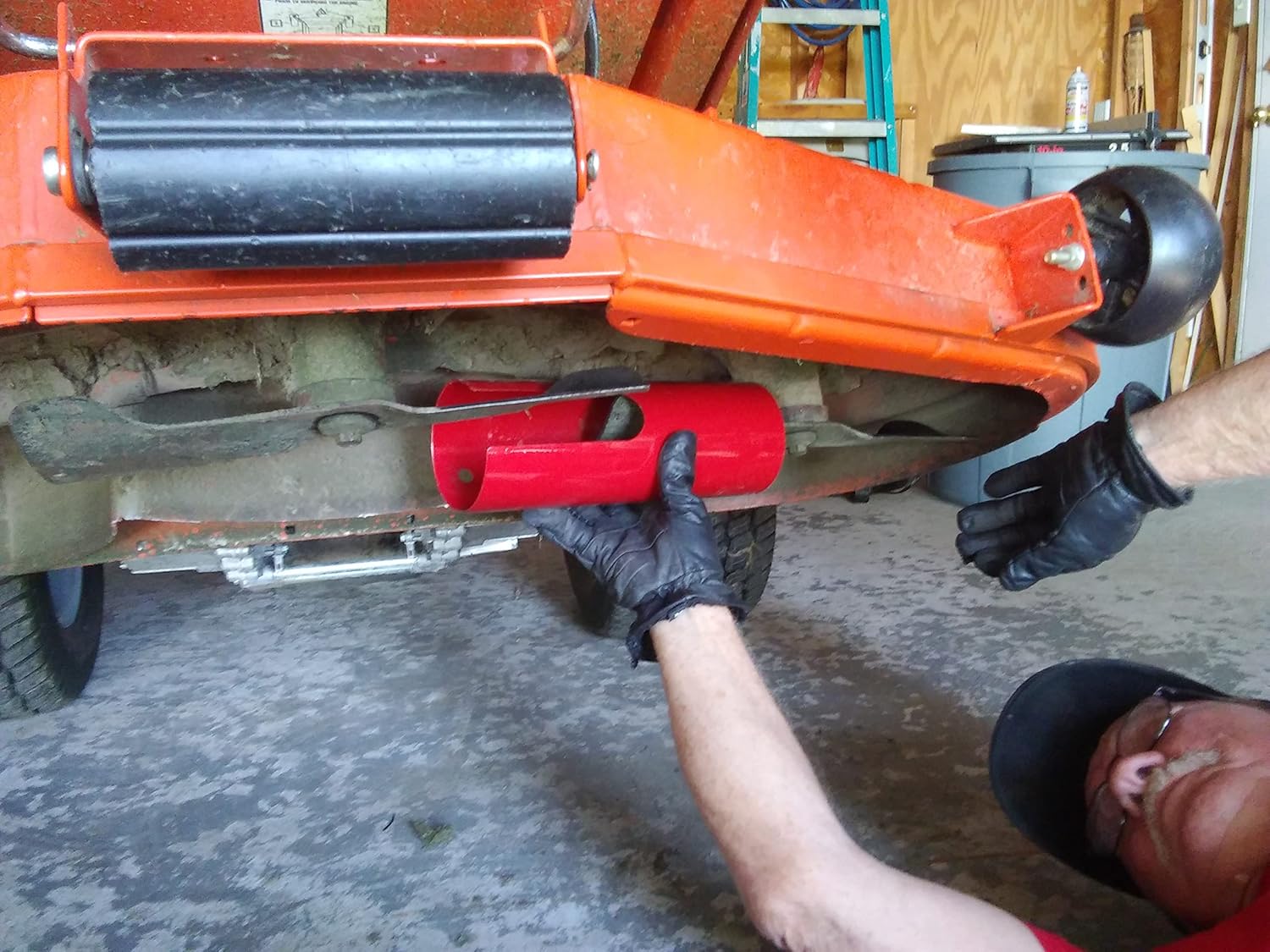
The BLADZ-LOK XL is a purpose-built blade removal tool for riding lawn mowers, specifically designed for blades that are 2-3/4 inches wide or larger. Unlike generic clamps or the old wood-block trick, this tool locks two blades together, letting you break stubborn bolts loose without removing the mower deck. It's a simple but effective solution for anyone who maintains a zero-turn, garden tractor, or other large mower with wide blades.
This tool is best suited for homeowners and DIYers who sharpen or replace their own blades regularly. If you've ever wrestled with a deck removal just to swap blades, you'll appreciate the time savings. The XL coupler works on wing-tipped blades and standard wide blades alike. Installation takes about 30 seconds: slide it over one blade, rotate to catch the second blade, and tighten the knob. That's it.
In real-world use, the BLADZ-LOK delivers consistent performance. Reviewers report that it holds blades securely even at high torque settings (90 ft-lbs), and it's much faster than clamp-on tools that can slip or strip. The carbon steel construction feels solid, and the powder coating resists rust. At 2.75 pounds, it's heavy enough to feel durable but not cumbersome to handle under the deck.
Build quality is excellent. The tool is made in the USA and backed by a 5-year limited warranty. Customer service gets high marks for responsiveness and fairness. However, the price is a sticking point for some. It's more expensive than a piece of pipe you could cut yourself, but the precision cut and finish justify the cost for most users. A minor drawback: it only works on blades 2-3/4 inches and wider, so it won't help with standard push mower blades. Also, one reviewer noted it didn't stabilize three blades on a Scag Tigercat II, so check your deck configuration.
Overall, the BLADZ-LOK XL is a worthwhile investment for anyone with a large riding mower who values efficiency and safety. If you change blades more than once a season, this tool will pay for itself in saved time and frustration. Just measure your blade width before ordering to ensure compatibility.
The Complete Guide on How to Lock Lawn Mower Blade Hardware for Safe Removal
Securing a mower blade in place is the primary safety requirement whenever you loosen or tighten spindle hardware. Without an effective mechanical stop, applying heavy wrench force simply rotates the blade and spindle, increasing the risk of sudden slippage and laceration injuries. Dedicated blade locking tools provide a firm, reliable anchor point against the deck housing or between adjacent cutting edges. Understanding the mechanics of immobilizing the cutting assembly ensures routine blade maintenance remains efficient, predictable, and safe.
Why Blade Immobilization Is Critical During Mower Service
Mower blade retaining fasteners require significant torque to stay secure during high-speed rotation in thick turf. Loosening these factory-torqued fasteners often demands substantial rotational force using a long breaker bar or socket wrench. If the blade spins freely during this process, that applied energy translates into uncontrolled blade motion rather than bolt loosening. A sudden slip while pushing against a spinning edge presents a major risk of severe cuts and bruised knuckles against the metal underside of the deck.
Mechanical locking tools isolate the spindle assembly from external twisting forces during removal and installation. When torque is applied without stabilizing the blade, excessive sideways strain can damage delicate spindle bearings, shear pins, or star-pattern blade adapters. Securing the blade firmly against a stationary deck edge directs all applied leverage straight into the fastener threads. This focused mechanical advantage makes stubborn nuts loosen faster while preserving the structural integrity of your mower deck components.
Essential Safety Preparations Before Securing the Blade
Complete power disconnection must always precede any physical contact with the cutting chamber. For gasoline-powered mowers, disconnect the spark plug wire and tuck the boot completely away from the terminal to eliminate any risk of accidental compression firing. Electric and battery-powered walk-behind mowers require removing the safety key and extracting the lithium-ion battery pack entirely. Verifying that the equipment cannot start under any circumstance is the fundamental baseline before reaching under the deck.
Tipping orientation requires careful attention when preparing walk-behind models for blade service. Always tilt a gasoline mower with the air cleaner and carburetor facing upward to prevent engine oil from saturating the filter or leaking into the cylinder head. Fuel shutoff valves should be closed, or the gas tank drained, to prevent messy gasoline spills during maintenance. For owners researching durable replacement hardware, checking durable mower blade options provides valuable insight into component longevity and service intervals. Positioning the deck securely on level ground ensures stable footing while handling heavy service tools.
Dedicated Deck Clamps Versus Traditional Blocking Methods
Many equipment owners historically relied on a scrap piece of lumber wedged between the cutting edge and the deck housing. While wood blocks offer basic resistance, they frequently slip, split, or pop out of position when heavy break-away torque is applied to a seized bolt. A dislodged block allows the blade to snap forward violently under pressure, which can damage the deck shell or injure hands. Dedicated locking clamps resolve this instability by mechanically clamping directly onto the outer deck lip.
Specialized deck clamps, such as model 750-058 replacements like the Otoolling deck clamp stopper or Ximoon blade lock, attach directly over the steel deck flange. These tools utilize a heavy-duty threaded clamping bolt that pinches the deck edge, presenting a rigid steel barrier right in the blade swing path. Other universal designs, including the KINTLE 490-850-0005 tool, feature wide clamping jaws rated for walk-behind and riding decks up to 42 inches. Using rigid metal construction rather than soft lumber guarantees that the blade remains motionless, allowing one person to complete the service without needing a helper.
Step-by-Step Procedure: Locking a Single Blade with a Deck Clamp
Installing a deck clamp begins with positioning the tool along the side skirt of the cutting deck. Slide the slotted channel of the clamp over the metal flange of the deck, ensuring the inner clamping plate sits flush against the deck wall. Position the stopper post so it sits directly in the path of the cutting edge as the blade turns counter-clockwise for loosening standard right-hand threads. Hand-tighten the adjustment knob or clamping screw firmly until the clamp holds its position securely on the deck flange.
Once the clamp is firmly mounted, rotate the blade by hand until the non-cutting flat spine or edge makes direct contact with the stopper post. Verify that the clamp does not wobble or tilt under light manual pressure before applying heavy wrench force. Place your socket wrench squarely over the center blade retaining nut and apply steady, controlled counter-clockwise pressure. The rigid clamp post absorbs the full rotational force of the wrench, holding the blade stationary while the bolt breaks free.
After the retaining bolt loosens, remove the clamp before spinning the fastener off completely to prevent the loose blade from binding against the tool. Keep a firm hand on the blade body with a heavy work glove to catch the blade, washer, and adapter as the bolt exits the spindle. Inspect the clamping area of the deck skirt for any dirt or grass accumulation before moving to installation. Keeping the deck flange clean ensures optimal clamping force every time you mount the tool.
Dual-Blade Locking Techniques for Multi-Blade Riding Mowers
Riding mowers and lawn tractors with dual-blade or triple-blade cutting decks present unique mechanical challenges during maintenance. Multi-blade decks often have curved inner baffles or recessed skirts that make mounting a standard edge clamp difficult or awkward. In these setups, locking two adjacent blades directly together eliminates the need to attach anything to the deck rim. Interlocking couplers bridge the span between neighboring cutting edges, utilizing the mechanical resistance of one spindle to counteract torque on the other.
Specialized multi-blade locking tools, such as the BLADZ-LOK XL coupler, are engineered specifically to lock two riding mower blades together in three simple steps. By clamping the tips of adjacent blades, the tool transfers rotational resistance directly between the two cutting components. This approach prevents uneven pressure against the deck housing and avoids bending thin stamped-steel skirts on wide mower decks. Direct blade-to-blade coupling eliminates the hassle of removing large riding mower decks just to change dull cutting edges.
Blade Width and Deck Clearance Fitment Factors
Blade locking tools are not universally interchangeable across all blade geometries and widths. Heavy-duty tools like the BLADZ-LOK XL are specifically manufactured for extra-wide commercial and riding mower blades measuring over 2 3/4 inches in width. Attempting to use an oversized coupler on standard walk-behind blades under 2 3/4 inches results in loose engagement and dangerous tool slippage. Measuring your blade width across its widest point before purchasing locking equipment prevents dangerous mismatch situations.
Walk-behind mowers and smaller residential decks often require adjustable blade holders capable of accommodating narrower blade profiles. The Cuidosful adjustable blade holder features a variable width channel controlled by an easy-turn knob, allowing it to adapt to diverse blade widths across different push mower models. When servicing electric walk-behind decks, referencing a Ryobi mower blade setup guide helps clarify deck clearances and mounting interfaces. Proper tool fitment ensures that clamping pressure distributes evenly without scratching or deforming the blade body.
Addressing Frozen Bolts and High-Torque Resistance
Over time, moisture, grass sap, and lawn chemicals cause retaining bolts and spindle threads to corrode, leading to seized fasteners. When dealing with a stubborn or frozen bolt, relying on brute force alone can round off the fastener corners or strip the spindle threads. If initial wrench pressure fails to loosen the bolt, apply a quality penetrating oil directly around the bolt head and let it soak for several minutes. Penetrating oil creeps into the micro-crevices of the threads to break down rust and reduce frictional resistance.
A securely locked blade enables the safe use of long breaker bars to achieve maximum leverage. Position the socket completely over the bolt head to guarantee even contact across all six points of the fastener. Maintain steady, inline pressure rather than jerky, bouncing motions to avoid snapping the bolt shank inside the spindle. If the blade lock shifts or twists on the deck lip under extreme torque, stop immediately and retighten the clamp screw before continuing. Solid mechanical immobilization prevents tool deflection, ensuring every pound of force works toward breaking the fastener free.
Tool Maintenance and Thread Protection Best Practices
Blade locking tools operate in harsh, dirty environments beneath the mower deck, where wet grass clippings and abrasive dirt accumulate. Over time, grit trapped in the clamping screws can strip threads or seize the adjustment mechanism. High-quality clamp kits, such as the Otoolling 750-058 two-pack and Ximoon replacement tools, provide dedicated thread protector caps to shield the threaded mechanism from debris. Keeping these protective caps in place extends tool longevity and preserves smooth screw rotation across seasons of use.
Periodic cleaning and light lubrication keep metal blade locks working reliably whenever maintenance is needed. After completing a blade swap, wipe down the clamp body to remove damp lawn residue and prevent surface corrosion. Apply a thin coat of rust-inhibiting machine oil to the threaded clamp shaft and adjustment handle pivot. Store your locking tools in a dry toolbox or garage drawer alongside your socket set so they remain readily accessible and free of moisture damage.
Reinstalling and Torquing Blades to Manufacturer Specifications
Immobilizing the blade is just as critical during reinstallation as it is during removal. When tightening the retaining fastener, the blade must be locked against rotational movement in the opposite direction. Move the deck clamp to the opposing side of the blade path, or reverse its orientation, so the stopper blocks clockwise rotation. This ensures the blade remains rock-steady while you draw the retaining hardware up to the factory-specified torque setting.
Proper blade orientation is essential before tightening the retaining bolt to final torque. Ensure that the curved aerodynamic lift wings face upward toward the underside of the deck, with the cutting edge leading the direction of rotation. Never rely on guesswork or an impact wrench to tighten blade fasteners without a calibrated torque wrench. Tightening the bolt to your mower manufacturer’s exact foot-pound specification prevents overtightening, which can strip threads or crack the blade adapter, as well as undertightening, which risks blade detachment.
Once the retaining bolt is properly torqued, remove the blade lock tool from the deck skirt before uprighting the mower. Leaving a clamp attached to the deck when the engine starts causes severe mechanical damage to both the blade and the spindle assembly. Turn the cutting edge manually one full revolution by hand while wearing gloves to confirm clear deck clearance and unobstructed rotation. Reconnecting the spark plug wire or battery pack completes the blade maintenance process safely.
Selecting the Right Blade Locking Tool for Your Equipment
Choosing the best locking tool depends largely on the specific mower style and deck size in your garage. Owners of walk-behind push mowers and compact lawn tractors benefit greatly from standard universal deck clamps like model 750-058 or the KINTLE 490-850-0005 clamp. These tools feature compact dimensions, simple single-knob operation, and broad compatibility across common 21-inch to 42-inch residential decks. Their modest size makes them easy to store in any household maintenance kit.
Operators of larger zero-turn mowers and multi-blade garden tractors should carefully evaluate blade width and underside deck contours. If your machine uses heavy-duty commercial blades with widths of 2 3/4 inches or wider, a dual-blade interlocking coupler provides superior stability without stressing deck baffles. For mixed-equipment fleets or households with multiple mower models, an adjustable-width blade holder delivers practical versatility. Matching tool specifications directly to your equipment dimensions ensures smooth, injury-free blade maintenance for years to come.






Write Your Review
No reviews yet. Be the first to share your experience!