


Achieving a clean cut across your lawn depends heavily on having the proper blade geometry and balance. When planning a seasonal Sun Mower Blade Setup, homeowners must account for the specific mechanical design of their equipment, whether they operate a manual reel mower, a standard rotary deck, or an automated robotic unit. Dull cutting edges or misaligned cutting reels tear grass blades rather than slicing them cleanly, which leaves brown tips across the turf and stresses the root system. A thoughtful approach to your blade arrangement helps preserve lawn health and ensures that your cutting deck operates smoothly without unnecessary engine or motor vibration.
Different cutting systems demand dedicated maintenance routines and specialized setup tools. While rotary mowers require careful static balancing on metal cones to protect deck spindles, manual reel units depend on precise bedknife contact and cylinder adjustments. Exploring modern alternatives like a robotic mower blade setup shows how multi-blade disc systems prioritize light, frequent trimming over heavy single-blade impacts. Selecting the correct sharpening accessories and replacement components makes seasonal mower deck preparation much more straightforward for any yard size.

Pros
- Extremely affordable and widely compatible with most residential mower blades.
- Simple to use: just chuck it in a drill and run along the blade edge.
- Including both sharpener and balancer means you get a complete blade maintenance solution.
- Lightweight and portable, perfect for small workshops and home garages.
Cons
- Requires a drill to operate, so you need one on hand.
- Manual balancing takes a bit of patience to get right compared to electronic balancers.
- Not ideal for heavy commercial use or high-volume shops where speed is critical.
The Arnold BSK-1 is a straightforward sharpening and balancing kit designed for lawn mower blades. It turns your regular electric drill into a reliable sharpening tool, making it easy to maintain a clean cutting edge without investing in a dedicated grinder. The kit includes a cone-shaped sharpening stone and a simple static balancer, both built to handle blades from walk-behind mowers, lawn tractors, and zero-turn machines.
This kit is best suited for homeowners and DIYers who prefer to handle their own mower maintenance rather than taking blades to a shop. It's also useful for small engine mechanics who need an affordable backup method. But if you're a professional landscaper sharpening dozens of blades a week, you'll likely want a faster, more automated system.
In real-world use, the sharpener works quickly. Chuck it into a drill, run the stone along the blade's edge at a shallow angle, and you'll see burrs form within seconds. The vibration-free claim holds up -- the stone spins smoothly, which helps avoid gouging the blade. The balancer is straightforward: hang the blade on the cone and see which side drops. Rotate a few times to confirm. It's not fancy, but it effectively reveals if the blade is heavy on one side.
Build quality is typical for a budget tool. The sharpening stone is abrasive and should last through several sharpenings. The balancer is made of plastic and a metal cone. It's lightweight (just over two ounces) and stores easily in a drawer. For the price, durability is acceptable for occasional weekend usage. You won't hesitate to toss it in a toolbox or tool bag.
The main drawback is that you need a drill, and the process is manual. Balancing requires patience -- you'll have to grind off material from the heavy side and recheck. It's not as precise as a professional blade balancer, but it's more than enough to get a decently balanced blade. Overall, the Arnold BSK-1 is a smart buy for anyone who wants to keep their mower cutting cleanly on a budget. It's a practical addition to any workshop, especially if you already own a drill.
Color: Black
Dimensions: 3 x 7 x 10 inches
Weight: 0.24 pounds
Product Group: Outdoors
Binding: Lawn & Patio

Pros
- Sturdy metal build that won't crack or warp like plastic balancers.
- Accurately detects even small imbalances for improved cut quality.
- Works with a wide variety of blade center hole sizes thanks to the stepped cone design.
- Easy to use: place blade, watch gravity, and remove material from the heavy side.
Cons
- Some users report that the cone steps may not fit every blade perfectly, though most find a suitable step.
- Requires a bit of trial and error to center the blade precisely on the cone.
- The balancer itself has a narrow base that can tip if bumped during use.
The Oregon Precision Mower Blade Balancer (model 42-100) is a simple, no-fuss tool that belongs in every mower maintenance kit. After you sharpen your blade, tossing it back on the mower without checking balance is a gamble. Even a tiny imbalance can cause excessive vibration, rough cutting, and accelerated wear on your mower's engine and spindle bearings. This compact metal balancer solves that problem with a straightforward gravity-based design.
Best suited for homeowners who sharpen their own blades as well as professional landscapers, the balancer works with virtually any rotary mower blade. The stepped metal cone accommodates different center hole sizes, so it fits push mowers, riding mowers, and zero-turn machines from brands like Stihl, Husqvarna, Troy-Bilt, and more. The zinc die-cast body feels solid and substantial easily outlasting cheap plastic alternatives that can crack or warp over time.
Using the Oregon balancer is refreshingly simple. Place the blade flat on the cone, let it settle, and gravity will tell you if one side is heavier. If the blade dips, grind a bit more material off that side and recheck. The process takes only a minute or two but makes a real difference in how your mower runs. Users consistently report noticeably less vibration and a cleaner, more even cut after balancing.
One realistic limitation is that the cone steps might not align perfectly with every blade's center hole, though most users find a step that works. Also, the balancer has a narrow base, so you'll want to set it on a stable surface to avoid tipping. But these are minor tradeoffs for a tool that costs under ten dollars and can extend the life of your mower's engine and deck.
If you maintain your own mower blades, the Oregon Precision Blade Balancer is a smart, low-cost investment. It helps you get professional-level results at home, reduces vibration that leads to premature wear, and keeps your lawn looking its best. For the price and performance, there's little reason not to add one to your workshop gear.
Brand: Oregon
Model: 42-100
Material: Zinc die-cast metal
Weight: 0.2 pounds
Dimensions: 10 x 6 x 1 inches
Power Source: Manual
Color: Original Version
Compatibility: Fits most push mower and riding mower blades

Pros
- Complete wire-free setup eliminates tedious trenching or physical boundary wire repairs.
- All-wheel-drive traction system manages demanding grades up to 80 percent without losing grip.
- Package includes auxiliary blades, mounting screws, cleaning brush, and charging hardware.
- Broad cutting height range from 1.2 inches to 3.9 inches adapts to both low and high-cut turfgrass types.
- Supported by a 3-year manufacturer warranty and 3 years of included 4G connectivity.
Cons
- Substantial 52-pound chassis weight makes manual transport and seasonal storage more demanding.
- The auxiliary blade kit is shipped separately from the main robotic mower package.
- Coverage is rated for up to 0.5 acres, which may require supplemental zoning for larger properties.
The MOVA LiDAX Ultra 2000 AWD Robot Lawn Mower with Blades Kit is an autonomous lawn-care platform engineered for residential yards up to 0.5 acres. It combines wire-free navigation with a dual-disc cutting deck spanning 15.8 inches in cutting width. Rather than requiring buried perimeter wires or an external RTK reference station tower, the unit utilizes integrated 360-degree 3D LiDAR along with AI dual-vision cameras to map turf boundaries and recognize obstacles with centimeter precision.
This robotic mower package is best suited for homeowners, property managers, and lawn-care buyers managing sloped turf, multi-zone yards, and complex landscaping layouts. Thanks to its all-wheel-drive hub motor system rated for inclines up to 80 percent, it specifically addresses hilly terrain where standard push mowers or two-wheel-drive robotic mowers struggle with wheel slip. It also serves property owners who want to avoid perimeter wire installation and DIY enthusiasts who prefer having spare cutting blades ready for scheduled maintenance.
Physical construction centers on a 52-pound chassis measuring 29 by 21 by 12 inches, driven by four high-torque 116W hub motors and an active suspension system. The cutting deck incorporates floating dual cutting discs designed to adapt to uneven ground while spinning razor-sharp cutting blades. Power is supplied by an onboard 36V 243Wh battery delivering up to 0.25 acres of mowing per charge cycle before the unit automatically navigates back to its included charging tower. Cutting height is electrically adjustable from 1.2 inches to 3.9 inches through the smartphone app, letting users tailor cutting height across different grass species.
Package completeness is a clear strength, as MOVA supplies the LiDAX Ultra 2000 robot, a charging tower, power supply, cleaning brush, eight mounting screws, a pre-installed blade configuration, and an auxiliary blade kit that ships separately. Routine maintenance for robotic cutting discs involves inspecting the small razor-style blades for wear or grass residue and replacing them with the provided screws when edges dull. The manufacturer backs the setup with a 3-year warranty, 24/7 customer service, and 3 years of free 4G cellular tracking paired with PIN-lock security.
Realistic limitations involve the 52-pound overall weight and total rated acreage. While the 0.5-acre rating and dual-map functionality comfortably handle standard suburban lots, homeowners with multi-acre parcels will find the single-charge runtime and overall capacity limiting. Additionally, buyers should note that the replacement blade kit is shipped separately from the main mower unit. The 2.4-inch obstacle clearance handles lawn dips and small roots, though tall debris should still be cleared before initiating automated mowing routines.
For property owners seeking an automated mowing system capable of managing steep hills without trenching boundary wires, the MOVA LiDAX Ultra 2000 AWD represents a capable and feature-rich option. Its combination of 3D LiDAR sensing, floating dual cutting discs, included spare hardware, and comprehensive warranty coverage makes it a practical long-term investment for automated turf upkeep.
The cutting deck on the MOVA LiDAX Ultra 2000 AWD utilizes a dual-disc configuration delivering a wide 15.8-inch cutting path. The dual floating discs adjust continuously over ground contours to help prevent scalping on undulating turf.
Cutting height adjustments range from 1.2 inches to 3.9 inches and are managed digitally through the mobile application. The package includes a factory blade setup, eight mounting screws, and an auxiliary blade kit, ensuring users have replacement hardware on hand for routine maintenance.
Navigation relies on 360-degree 3D LiDAR point clouds combined with AI dual-vision cameras, eliminating the need to trench perimeter wires or position an external RTK base station. The system identifies and routes around more than 300 lawn obstacles automatically.
Mobility is driven by four independent 116W hub motors that provide all-wheel drive across wet grass and rough terrain. The chassis is rated to traverse slopes up to 80 percent and clear surface obstacles up to 2.4 inches.
MOVA includes a 3-year manufacturer warranty along with 24/7 after-sales technical support for the LiDAX Ultra 2000 AWD system.
The package also provides 3 years of complimentary 4G cellular connectivity for real-time GPS location tracking, remote scheduling, and anti-theft security alerts.

Pros
- Environmentally friendly with zero emissions and low noise
- Easy to assemble and operate with minimal maintenance
- Provides a good low-impact workout while mowing
- Effective on flat, well-groomed lawns with regular cutting
- Heavy-duty steel blades stay sharp for consistent performance
Cons
- Requires significant physical effort on thicker or taller grass, especially if mowing infrequently
- Struggles on uneven ground or slopes and may not cut grass cleanly without multiple passes
- Grass catcher can be less effective at capturing clippings, especially in damp or dense grass
The Sun Joe MJ502M is a manual reel mower that brings back the simplicity of old-school lawn care. Unlike gas or electric mowers, it runs entirely on human power, making it a clean, quiet, and low-maintenance choice for homeowners who want a smaller footprint. The all-steel build and 20-inch cutting width give it a solid feel, while the 30-pound weight is light enough to push around a modest yard or lift over garden beds.
This mower is best suited for DIYers, homeowners, or anyone with a small to medium flat lawn who doesn't mind trading some elbow grease for a workout and a greener mowing session. It shines on grass that's cut regularly, with the 9-position height adjustment letting you dial in cut length from 1 to 2.44 inches. The five-blade reel system works like a scissors, slicing grass cleanly rather than tearing it, which actually promotes healthier growth and a nicer finish than some rotary mowers.
In real-world use, the MJ502M rolls well on level ground but struggles on slopes or thick, overgrown grass. Users report that it requires firm pushing on initial start and can jam on clumps of dirt or debris. The grass catcher does an okay job but tends to let clippings fly when the bag gets full or if the grass is damp. Regular mowing is key: if you let the lawn go too long, you will have to make multiple passes at higher settings before dropping the blade lower.
Build quality is decent for the price. The steel frame and blades feel sturdy, though some users mention the blades may need sharpening out of the box. Assembly is straightforward, and the foam grip on the handle gives a comfortable hold. However, the mower is wide, so expect to leave a strip along edges and use a trimmer for a clean finish. It is not designed for rough terrain or large properties, but for a flat quarter-acre lot, it's a solid manual option.
Overall, the Sun Joe MJ502M is a smart buy if you want to avoid fuel and noise, get some light exercise, and keep a small flat lawn looking good. It is not a replacement for a powerful self-propelled mower on tough jobs, but for the right yard and the right user, it delivers dependable eco-friendly cutting with minimal fuss.
Brand: Sun Joe
Model: MJ502M
Power Source: Manual (push)
Cutting Width: 20 inches
Cutting Height: Adjustable from 1 to 2.44 inches (9 positions)
Blades: 5 hardened steel blades
Weight: 30 pounds
Wheel Size: 6 inches
Grass Catcher Capacity: 8.5 gallons
Product Dimensions: 52.4 x 20 x 9.9 inches
Material: Alloy Steel frame
Color: Green
Assembly Required: No

Pros
- Quiet and clean operation with no fuel or electricity needed
- Sharpener included saves money on professional servicing
- Excellent cut quality on low-growing, fine-textured grass types
Cons
- Not suitable for tall, thick, or weedy grass - requires frequent mowing
- Manual push can be tiring on larger lawns or uneven terrain
- Limited cutting height range may not suit all grass varieties
The American Lawn Mower Company 2607-16 is a 16-inch manual reel push mower designed for homeowners who want a precise, eco-friendly cut. Unlike typical rotary mowers, this reel mower uses a 7-blade heat-treated alloy steel reel to scissor grass cleanly, which promotes healthier turf with less browning. It is best suited for small to medium lawns with fine-textured grass types like Bentgrass, Bermuda, Zoysia, and hybrid turf varieties. If you have a traditional fescue or bluegrass lawn, this mower may not be ideal unless you keep it very short.
In real-world use, the 2607-16 delivers a clean, manicured cut that rivals a professional golf course. The 7-blade design provides more cuts per foot than standard 5-blade reels, resulting in a finer finish. The adjustable cutting height ranges from 1/2 inch to 2-1/2 inches, giving you control over turf appearance. The 16-inch cutting width is a good compromise for covering ground efficiently while staying light enough for easy maneuvering around flower beds and trees. At 21.8 pounds, it is easy to push on level lawns, but you will need to keep up with weekly mowing to avoid tall grass that can jam the reel.
Build quality is solid for a manual mower. The frame is sturdy, and the included SK-2 hand sharpener is a thoughtful addition that lets you maintain blade sharpness at home without taking the mower to a shop. Assembly is required but straightforward with basic tools. The mower operates silently, which is a huge plus if you mow early or live in a quiet neighborhood. There are no batteries, fuel, or cords to deal with, and maintenance is limited to keeping the blades sharp and occasionally lubricating the reel bearings.
That said, the 2607-16 has limitations. It struggles with thick, tall, or wet grass, and it won't mulch or bag leaves effectively. The manual push design means you provide all the power, so it is not ideal for large yards or hilly terrain. Also, the cutting height range is narrower than many gas or electric mowers, so it may not suit all grass types or seasonal growth patterns. If you have a small, flat lawn with fine grass and value a quiet, clean mowing experience, this mower is a great fit. For larger properties or mixed grass types, a powered mower might be a better choice.
Overall, the American Lawn Mower Company 2607-16 is a solid choice for the dedicated homeowner who wants a precision cut without the noise and emissions of a gas mower. It is affordable, easy to maintain, and built to last. If you are willing to mow frequently and have the right grass type, this reel mower will reward you with a beautiful lawn.
Complete Guide to Sun Mower Blade Setup and Turf Cutting Systems
Setting up mower blades correctly requires understanding the mechanical relationship between your cutting edges and the lawn surface. A proper Sun Mower Blade Setup ensures clean grass shearing, protects mower spindles from vibration stress, and promotes healthy turf regeneration throughout the active growing season. Whether maintaining a traditional push reel, balancing a rotary blade, or replacing pivoting razor blades on an automated robotic system, precise setup remains essential for optimal cutting performance.
Different mowing platforms approach grass management through distinct mechanical principles. Rotary blades rely on high-velocity rotational impact, manual reel mowers utilize a shearing action similar to scissors, and robotic cutting discs employ lightweight razor blades that shave small amounts of turf continuously. Matching your maintenance routine and blade setup to the specific equipment design prevents premature mechanical wear and keeps your lawn looking manicured.
Understanding Mower Blade Types and Cutting Mechanics
Rotary mower decks typically utilize a single long steel blade or multiple synchronized blades mounted directly beneath the deck. These blades generate upward aerodynamic lift that pulls grass blades vertical before the sharpened outer edges slice through the turf. Because these blades spin at thousands of revolutions per minute, any uneven mass distribution across the blade wings creates severe centrifugal vibration. That vibration quickly transfers into the mower deck, engine crankshaft, and spindle bearings, accelerating hardware fatigue.
Manual reel mowers use a completely different approach with a rotating cylinder of curved blades spinning against a stationary flat bedknife. For example, the Sun Joe MJ502M Reel Mower w/ 8.5-Gallon incorporates 5 durable steel blades across a 20-inch cutting path, which offers sufficient clearance for typical suburban lawns. In contrast, models like the American Lawn Mower Company 2607-16 16-Inch feature a 7-blade heat-treated alloy steel reel specifically optimized for fine-textured grasses such as Bentgrass, Bermuda, and Zoysia. Increasing blade count on a reel mower produces more cuts per forward foot of travel, creating a smoother finish on dense, low-growing turf varieties.
Robotic platforms represent a third category that relies on dual or single spinning discs fitted with several small, razor-sharp blades. The MOVA LiDAX Ultra 2000 AWD Robot Lawn Mower exemplifies this design by using a dual-disc system equipped with 12 razor-sharp blades across a 15.8-inch cutting width. Instead of heavy impact chopping, these lightweight blades slice tiny clippings that drop immediately into the turf canopy as natural mulch. Because the blades pivot loosely on shoulder screws, they can swing backward when striking hard debris, which protects the motor discs from sudden shock loads.
Manual Reel Mower Setup and Bedknife Alignment
Proper reel mower operation centers on the delicate clearance between the spinning cylinder blades and the stationary bottom bedknife. If the reel is adjusted too tightly against the bedknife, metal-on-metal friction will bind the cylinder, cause rapid blade dulling, and make the mower difficult to push. Conversely, if the clearance is too loose, the mower will pinch and tear grass blades instead of shearing them cleanly. Homeowners can test this adjustment by inserting strips of standard paper between the reel blades and bedknife while rotating the cylinder slowly by hand.
Adjusting the cutting height on a manual reel mower establishes how your grass responds after each pass. The Sun Joe MJ502M Reel Mower w/ 8.5-Gallon provides a 9-position height adjustment lever that allows grass heights up to 2.44 inches, offering flexible height control for varied lawn conditions. The American Lawn Mower Company 2607-16 16-Inch offers a range between 1/2 inch and 2-1/2 inches, making it well suited for turf enthusiasts who prefer tightly cropped turf. Regular height checks ensure the cutting bar remains parallel to the ground so that your lawn does not develop uneven ridges.
Using an attached grass catcher helps keep fine clippings from clumping on your yard during wet conditions. The Sun Joe reel unit includes an 8.5-gallon collection catcher that gathers clippings as you move across the lawn. Keeping the catcher properly attached prevents grass buildup behind the reel assembly, allowing the cylinder to spin freely without dragging excess clippings.
Rotary Blade Sharpening and Static Balancing Procedures
Servicing standard rotary blades begins with safe blade removal and thorough cleaning of accumulated grass clippings and dirt. Once the blade is removed from the spindle, sharpening should restore the factory bevel angle without overheating the steel. Universal sharpening tools, such as the drill-mounted stone in the Arnold BSK-1 Lawn Mower Blade Balancer & Lawn Mower Blade Sharpener Kit, attach to standard 1/4-inch or 3/8-inch electric drill chucks for quick edge touch-ups. Removing an equal amount of material from each cutting wing is essential for preserving the blade balance across its center mounting point.
Static balancing verifies whether both cutting ends weigh the exact same amount after sharpening. Balancing tools like the Oregon Precision Mower Blade Balancer feature a stepped zinc die-cast cone that accommodates various center-hole shapes and diameters. When the center hole rests on the cone, an unbalanced blade will immediately tip toward the heavier side. To correct this imbalance, you simply grind a small amount of steel away from the back edge or sail of the heavy wing until the blade remains level on the balancer.
Operating an unbalanced rotary blade leads to rapid spindle bearing deterioration and uneven turf cuts. Homeowners evaluating replacement lawn mower blades often overlook balancing, assuming newly purchased blades are automatically balanced. While quality replacement blades are balanced at the factory, seasonal re-sharpening inevitably removes metal unevenly over time. Regular static balancing checks extend mower engine longevity and prevent costly deck repairs caused by chronic harmonic vibration.
Robotic Mower Multi-Blade Disc Setup and Replacement
Robotic lawn mowers require an entirely different approach to blade setup due to their small, high-speed cutting discs. The MOVA LiDAX Ultra 2000 AWD Robot Lawn Mower utilizes two rotating discs fitted with a total of 12 small razor blades. These blades must be secured with genuine shoulder screws that allow each blade to pivot freely on its mounting boss. Tightening the screws so firmly that the blades cannot pivot prevents the safety swing-away mechanism from functioning if a blade strikes a stick, rock, or toy.
Routine inspection of robotic blades involves checking for edge nicking and cleaning fine clipping debris from the disc underside. The MOVA package includes a blade kit with replacement blades, dedicated mounting screws, and a cleaning brush to facilitate quick maintenance. Because these small blades encounter grass continuously during automated mowing cycles, replacing all blades simultaneously preserves disc balance. Swapping out worn blades every few weeks ensures the mower maintains its clean cutting efficiency across complex terrain.
Smart app controls on robotic mowers provide automated adjustment of cutting heights across different yard zones. The MOVA LiDAX Ultra 2000 AWD allows cutting height customization from 1.2 inches to 3.9 inches directly through smartphone settings. This height flexibility accommodates seasonal shifts in grass growth, allowing higher cuts during hot summer months to retain soil moisture. The floating cutting discs automatically articulate over undulating ground, ensuring consistent blade exposure even across slopes up to 80 percent.
Reel Sharpening and Maintenance Accessories
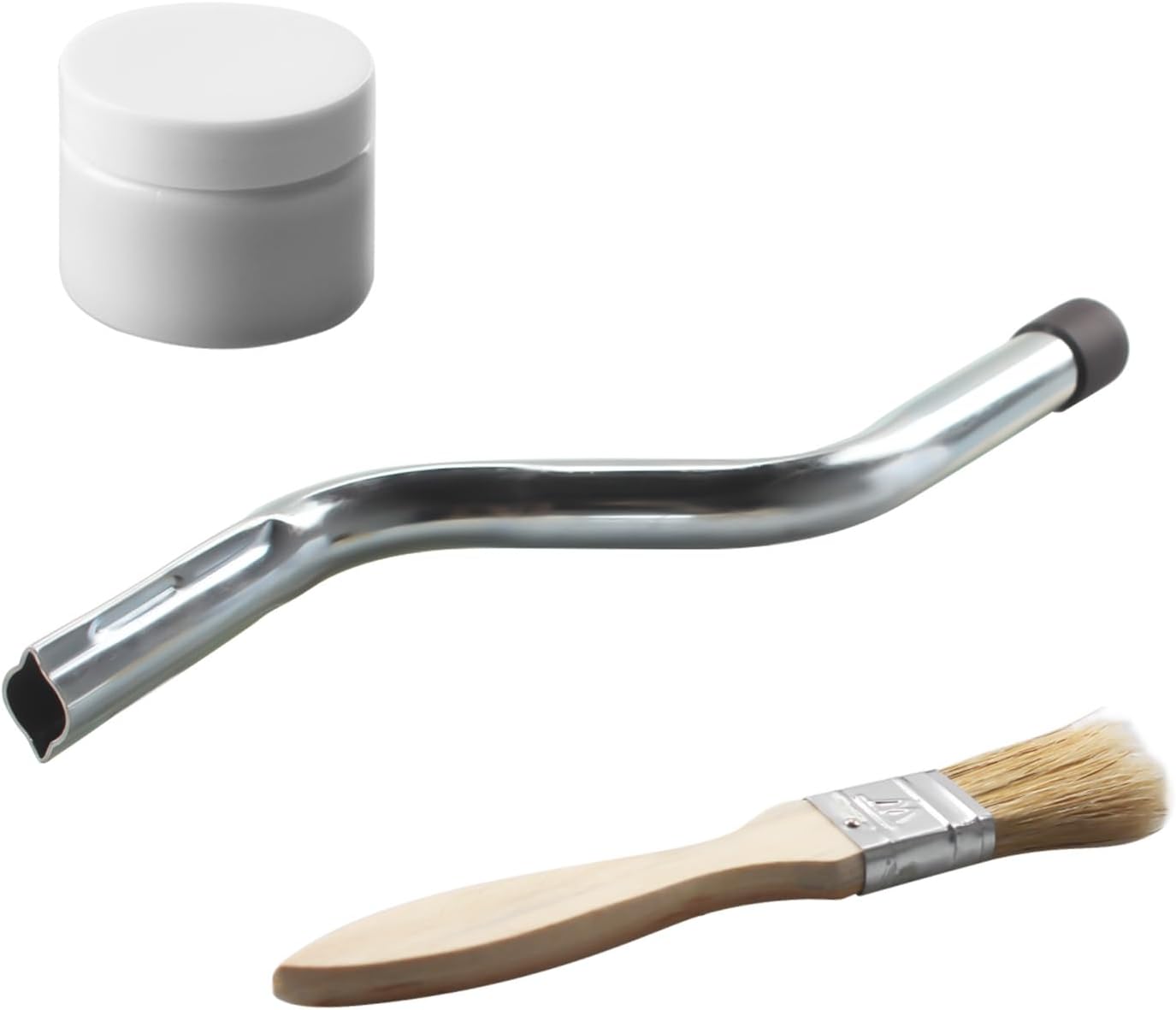
Maintaining manual reel blades requires specialized sharpening tools rather than high-speed rotary grinders. The American Lawn Mower Company 2607-16 16-Inch includes an SK-2 hand sharpener designed to maintain keen cutting edges on heat-treated alloy steel blades at home. Using a dedicated hand sharpener allows homeowners to dress the cylindrical edges without removing the reel assembly from the mower frame. This simple touch-up removes micro-burrs and restores the precise shearing edge needed for crisp grass cuts.
For deeper restoration of dull reel blades, backlapping provides a non-destructive method for re-establishing blade-to-bedknife contact. Backlapping involves rotating the reel backward while applying a mild abrasive lapping compound across the cylinder blades and bedknife face. As the backward-spinning blades lap against the stationary bar, the abrasive compound grinds complementary matching surfaces across every cutting edge. This technique eliminates high spots and produces a seamless contact line that shears thin turf blades with minimal effort.
Diagnosing Cut Irregularities, Vibration, and Spindle Wear
Observing the condition of grass tips after mowing provides clear clues regarding blade condition. Ragged, torn grass blades that turn brown within 24 to 48 hours indicate dull cutting edges or insufficient reel-to-bedknife contact. Streaking or uncut strips through the middle of a pass usually point to bent rotary blades, mismatched blade lengths, or severe deck leveling discrepancies. Inspecting the underside of the mower deck regularly helps identify whether blades are running true or dragging through accumulated grass mulch.
Deck vibration is another critical indicator that your blade setup requires immediate inspection. While commercial operators using heavy platforms often evaluate commercial mower blades built for extreme torsional loads, residential mowers have lighter deck shells that are especially sensitive to imbalance. If you feel unusual vibration through the push handle or floorboard, shut down the mower immediately and check the blade balance on a cone balancer. Ignoring vibration can crack deck welds, loosen mounting bolts, and permanently damage engine crankshafts or electric drive hubs.
Bent blades must never be straightened or welded back into service because bending compromises the crystalline structure of the heat-treated steel. Even a minor bend shifts the cutting plane, causing one blade tip to track lower than the other and creating scalloped turf patterns. If you notice a height difference between opposing blade tips, replace the damaged blade with a verified model-matched replacement. Verifying that the blade adapter and spindle shaft remain straight ensures your new cutting blade spins true without wobble.
Seasonal Care, Mounting Safety, and Hardware Inspection
Safe blade servicing requires disconnecting all power sources before touching any cutting assembly. On gas-powered mowers, disconnect the spark plug boot to prevent accidental engine startup while turning the blade. On battery-powered and robotic models, always remove the battery pack or turn off the master safety key before handling the cutting disc. Wearing thick leather work gloves protects your hands from razor-sharp edges and unexpected cylinder rotation when loosening tight hardware.
Inspecting mounting hardware during every blade service is vital for operating safety. Blade bolts, curved Belleville washers, and adapter keys can stretch, flatten, or deform after prolonged cutting cycles. Always verify that hardware is tightened to the torque specification listed in your mower operator manual to prevent blade slippage during operation. Storing spare sharpened blades in a dry garage or workshop ensures you can quickly swap cutting edges without delaying your weekend lawn care schedule.
A methodical approach to your mower blade setup preserves turf health, reduces machine strain, and delivers crisp, manicured lawn stripes every week. Whether you adjust bedknife clearance on a manual push reel, balance a rotary blade with a precision cone, or refresh razor blades on an autonomous robotic mower, proper blade geometry is the cornerstone of great yard maintenance. Keeping sharp, well-balanced blades installed on your equipment ensures a smoother mowing experience and a healthier, greener lawn throughout the season.



Write Your Review
No reviews yet. Be the first to share your experience!